U.K. Targets Key Figures in Russian Child Relocation Scheme with New Sanctions | World | london-news-net.preview-domain.com

U.K. Targets Key Figures in Russian Child Relocation Scheme with New Sanctions

U.K. Targets Key Figures in Russian Child Relocation Scheme with New Sanctions

On Wednesday, the United Kingdom enacted sanctions against eight Russian individuals and three organizations, accusing them of involvement in the purported forced relocation and “indoctrination” of Ukrainian children.

These measures aim to disrupt a network of officials and state-supported entities that the UK claims are integral to a systematic initiative to transfer children from occupied regions of Ukraine to what British authorities refer to as “re-education camps” in Russia.

British Foreign Secretary David Lammy stated, “It is unacceptable to take a child from their home and attempt to erase their heritage and upbringing through falsehoods and misinformation. No child should ever be a tool of war, which is why we are holding those accountable for these actions.”

According to estimates from the UK Foreign Office, nearly 20,000 children have been forcibly relocated to Russia since the invasion in 2022, with approximately 6,000 sent to “re-education camps.”

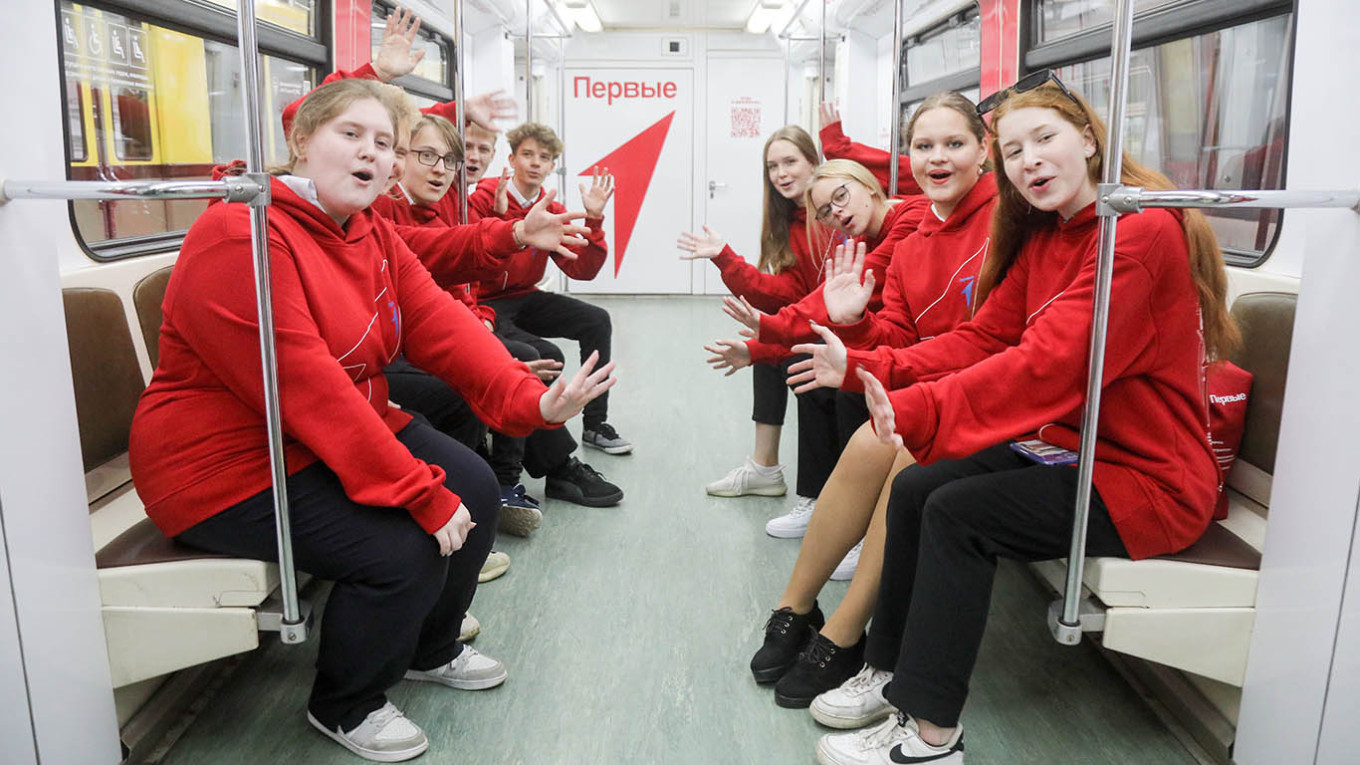
Included in the list of those sanctioned are Aymani Kadyrova, mother of Chechen leader Ramzan Kadyrov, and the Akhmat Kadyrov Foundation that she oversees. Other designated entities include the state-funded groups Volunteers of Victory and the government-backed youth organization Movement of the First.

The sanctioned individuals also comprise Zamid Chalaev, a Chechen police commander; Valery Mayorov, director of the government-supported Teenage Programs Center; and Anastasia Akkuratova, head of children’s rights at the Russian Education Ministry. Additionally, at least two high-ranking officials from Tatarstan were impacted by the sanctions.

The British government indicated that these latest sanctions are based on defense intelligence, highlighting a prolonged Russification campaign in illegally occupied territories of Ukraine aimed at erasing Ukrainian culture, identity, and sovereignty.

In response, Moscow has denied the accusations of forcibly taking children from Ukraine, claiming that their actions are intended to ensure the safety of these children by relocating them away from conflict zones.

In 2023, the International Criminal Court (ICC) rejected Moscow’s justification, issuing arrest warrants for President Vladimir Putin and his children’s rights commissioner, Maria Lvova-Belova, due to their involvement in the alleged forced relocations.

Related posts

‘Plush Troops’: The Pro-War Children’s Toys Taking Over Russia’s Online Marketplaces Текст: “In this strategy game, you lead a battalion aiming to liberate Ukraine from Nazi rule,” reads the description of Russia’s first board game about the war in Ukraine. The game,called“Special Operation on the Outskirts,” sells for about 1,600 rubles ($20) on Russian online marketplaces. Inspired by Monopoly and designed for two to six players, the game challenges participants to occupy as many Ukrainian cities as possible. Instead of Monopoly money, players use a fictional currency featuring the faces of President Vladimir Putin, Foreign Minister Sergei Lavrov and former General Sergei Surovikin. In the fourth year of the full-scale invasion, toys and merchandise featuring the pro-war Z symbol have become increasingly common on Russian marketplaces and social media. Listings include everything from car dashboard decorations to toy soldiers for children. “The plot grabs you from the first minutes. It’s great that part of the proceeds go to support participants of the special military operation. The perfect gift for patriots!”writesYekaterina, a recent buyer. Other reviewers share that they gave the game to their sons on Defenders of the Fatherland Day. Another board game, “Couch Expert,” promises to educate players about the invasion. Players have 30 seconds to answer questions about the progress of the “special operation.” Questions range from the late ultranationalist politician Vladimir Zhirinovsky’s position on the war to the roles of figures like Elon Musk and propagandist Olga Skabeyeva in shaping сoverage of the invasion. “I ordered 11 of them for school as gifts for the boys. But I got lucky — the boxes came wrapped in film, so it’s not embarrassing to give them. Thanks,”writesa woman named Natalia in a review. These toys span all price ranges, from an acrylic Z-minionto aroly-polytoy bearing the pro-war slogan “You can’t knock us down.” The latter sells for about 500 rubles ($6). “The idea to create a patriotic roly-poly toy came five years ago, when the Russian team was banned from competing under the national flag at the Olympics in Korea,”saysDmitry Zavidov, director of the Kotovsky Roly-Polies company. On VKontakte, Yulia from Moscowsells“knitted fighters” shaped like a tiger, mouse or dog. Each animal, stitched with a Z or V,costs1,500 rubles ($18). For an extra 250 rubles, Yulia offers to embroider a soldier’s callsign on the toy’s flak vest. “Any other inscription of your choice is also possible (price depends on the size),”readsthe product description. On some marketplaces, similar toys arepricedat around 1,100 rubles ($14). Another item on the market is a stuffedraccoonmarked with the Z symbol, a reference to the raccoon that Russian troops infamously stole from a zoo during their retreat from the southern Ukrainian city of Kherson. Sellers alsoofferstuffed bears in military uniforms with Z and V insignia. In some cases, the toys arehandmadeby widows of Russian soldiers. For younger children, “patriotic”coloring bookssell for about 300 rubles ($3.73). “My child is four. He liked it,” says one mother in a review. Some parents post videos of their children coloring tanks and other Russian military equipment. For about the same price, sellers alsooffera set of toy soldiers called the “Special Operation Recon Soldiers Set.” “Toy figures of the Russian Armed Forces will delight children with their quality and design. They’re perfect for role-playing games and help develop creativity and imagination,” the manufacturer claims. War-related games and toys may hold particular appeal for children,explainspsychologist Michael Brandl, a member of the German toy evaluation group Spiel Gut. One reason for their appeal, he says, is that they offer positive reinforcement of the media and propaganda messaging that children encounter daily. “From these sources, children form an image of a person they then try to imitate and act out in roleplay. Weapons and how to use them become part of the child’s perceived reality and a key attribute of the supposed image of the ‘ideal’ man,” Brandlwrote. A child psychologist from Russia, whose name has been withheld for safety reasons, voiced a similar view. “This is a protracted war, so the state and Vladimir Putin need boys, even from kindergarten, to already be preparing for the future battlefield,” the psychologist told The Moscow Times. “First, the state turns poor women into mothers who buy these toy soldiers. Then this Z-patriotism is nurtured with a mother’s milk. They’ll buy it without even noticing the Z, especially if it’s on sale.” Marketplaces also offer stuffed cat car decorations in camouflage colors that cost about 500 rubles ($6.20). In addition to a toy with the Russian tricolor and the letter Z, the manufacturer alsooffersa version bearing the Wagner mercenary group’s skull emblem. “You sent me a female cat, apparently — no male features and no Z. I specifically needed a male cat with a Z on it! I refused the order at pickup,”complainsa buyer named Elena. Other buyers note that the toy’s tail fell off quickly. Even toy robots are marked with the Z symbol. A set of these toys costing 784 rubles ($9.70) includes a robot with a Russian flag and weapons. For an extra 200 rubles, itcomeswith a glow-in-the-dark Z. “Satisfied with the purchase. Russia will win! Russia always wins!”saysMaria, who bought the Z-robot for her son, in her review.

Russian Leaders Push Back Against Trumps WWII Claims, Highlighting Historical Inaccuracies

State Duma Passes 2026-28 Budget and Tax Increase Bills Текст: State Duma lawmakers on ThursdaypassedRussia’s three-year federal budget and a package of tax increases, bills aimed at shoring up government revenues as spending on the war against Ukraine remains a top priority for the Kremlin. Under the budget plan, the government expects revenue of 40.3 trillion rubles ($491.7 billion) next year and spending of 44 trillion rubles ($548.3 billion), leaving a projected deficit of 3.8 trillion rubles ($47.3 billion). Defense and national security will account for roughly 38% of all spending in 2026, or 16.8 trillion rubles ($209.5 billion), which is slightly lower than in the previous two years but still far above pre-war levels. Lawmakers sought to highlight funding for domestic programs, including more than 10 trillion rubles ($124.6 billion) for family support measures and 50 billion rubles ($623 million) for a state-backed charity foundation that assists soldiers fighting in Ukraine and their families. Although overall spending will remain broadly stable, budget allocations reveal that the Kremlin’s priorities continue to lie in foreign policy and defense. Alongside the budget plan, the State Duma approved a series of tax changes aimed at closing the fiscal gap created by soaring military expenditures and falling oil and gas revenues under Western sanctions. Russia’s value-added tax (VAT) will increase to 22% from 20%, a move expected to raise consumer prices higher. Economists, including those at the Financial Ministry, havesaidthey anticipate a modest rise in inflation as the VAT hike takes effect starting next year. More small businesses will also be swept into the tax system. The annual revenue threshold for companies required to pay VAT will drop from 60 million rubles ($732,000) to 10 million rubles ($122,000). Some lawmakers havewarnedthat the change could strain small businesses and individual entrepreneurs, many of whom earn less than 200,000 rubles ($2,500) a month after taxes and salaries. Economists estimate the full package, which also includes a new levy on betting company profits, could bring in nearly 3 trillion rubles ($35 billion) in additional revenue. State Duma Speaker Vyacheslav Volodin said Thursday that lawmakers had approved the federal budget and tax hikes “under difficult circumstances,” citing more than 30,000 sanctions imposed on Russia and what he called “unfriendly actions” by the EU targeting Russian assets. The 2026-28 budget passed with 349 votes, while 56 lawmakers — mostly from the Communist Party — abstained. Only one deputy, Anton Krasnoshantov of the ruling United Russia party, was recorded as voting against the bill, though his “no” vote was allegedly the result of a technical error. The federal budget and tax bills now head to the Federation Council, where they are expected to receive swift approval before being sent to President Vladimir Putin’s desk for his signature.

rimmaruslan98@gmail.com

This website uses cookies to improve your experience. We'll assume you're ok with this, but you can opt-out if you wish. Accept Read More