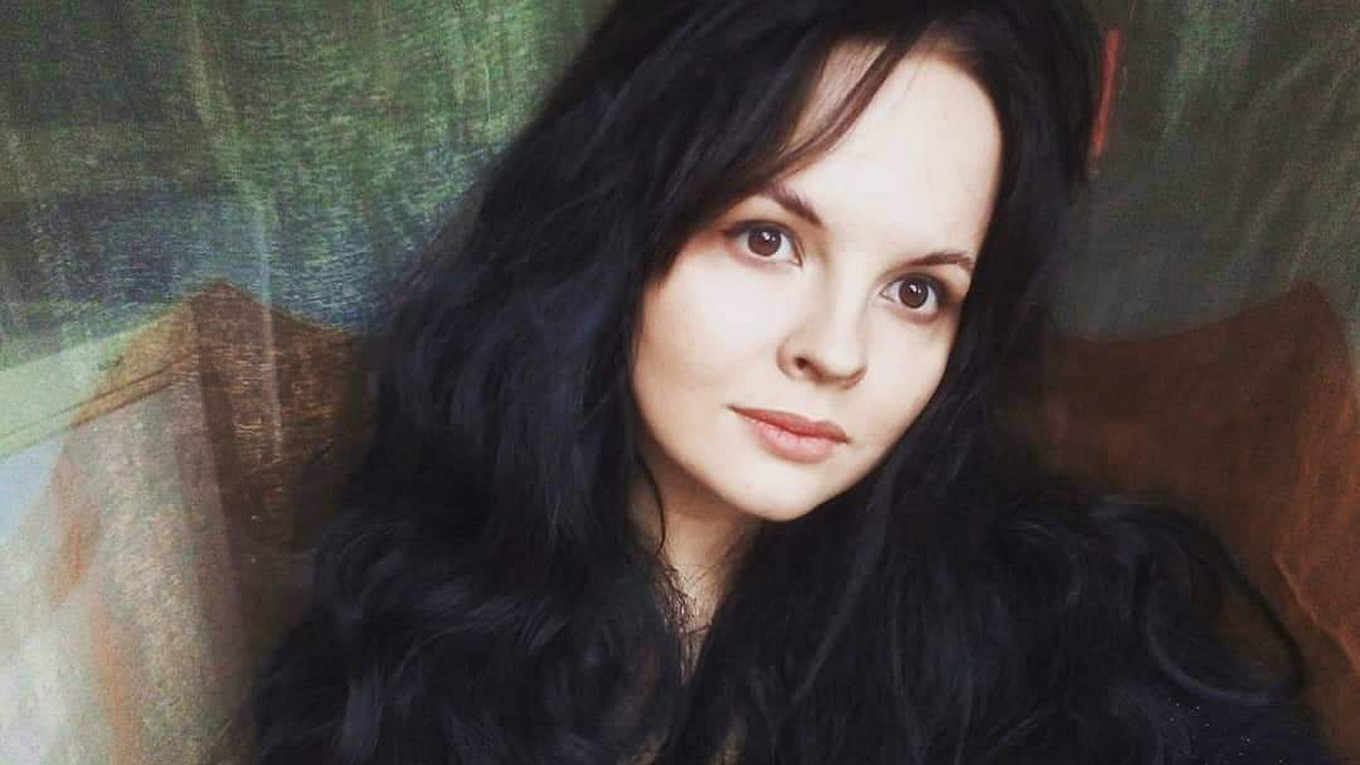
When prison authorities announced that Nika Novak was unavailable for visitation, her loved ones feared the worst. They speculated that the journalist had somehow vanished from her penal facility situated in the remote Siberian expanse.
For over a week, from late November into early December, Novak, 33, was officially a missing person—until suddenly she was not.
Even after several unanswered messages and an apparent absence during a lawyer’s visit, officials eventually provided a shocking revelation: She hadn’t left the facility at all.
According to a Telegram channel that reports on Novak’s imprisonment, “The staff simply refused to comment” when inquiries about her disappearance were made.
This period was marked by confusion and concern for those tracking Novak’s case.
On a larger scale, it highlighted a disturbing aspect of the Russian government’s crackdown on press freedoms, where it is reported that journalists in prison often endure particularly brutal treatment because of their profession.
On December 25, it will be two years since Novak was first taken into custody under what critics label repressive laws aimed at stifling free expression. She has spent part of her incarceration in solitary confinement and sharing her cell with a “dangerous” inmate, circumstances that led her to embark on a hunger strike this past autumn.
To gain insight into Novak’s imprisonment, The Moscow Times consulted a prominent authority on the decline of press freedoms in Russia, along with a previously imprisoned journalist advocating for her, and reviewed correspondence with her friends and family that had not been made public before.
What surfaced offers a rare glimpse into the severe realities faced by those jailed as part of the Kremlin’s efforts to silence independent journalism.
“The circumstances are incredibly dire,” remarked Gulnoza Said, the Europe and Central Asia program coordinator at the Committee to Protect Journalists (CPJ). “However, there appears to be no leverage for our advocacy efforts with the Russian government.”
The invasion of Ukraine did not halt independent journalism in Russia but instead inspired numerous reporters to refocus their efforts as they witnessed significant events unfold.
Novak was one such journalist who persisted in her work. She initially built her career reporting from Chita, a trans-Siberian stopover approximately 200 miles from Lake Baikal.
Her views on Russia’s involvement in Ukraine appeared to be somewhat ambiguous. According to the human rights group Memorial, she briefly reported from regions controlled by Russia-backed separatists in 2014-2015. Yet during the early stages of the full-scale invasion in 2022, she began collaborating with an organization known for exposing the adverse effects of the conflict: RFE/RL’s Russian-language service, Radio Svoboda.
Critics have long lamented the deterioration of press freedom in Russia under President Vladimir Putin. Nonetheless, both Russian and foreign independent media were largely able to continue functioning for a significant part of the post-Soviet era.
That changed with the onset of the full-scale invasion, when lawmakers swiftly enacted severe penalties, including prison terms of up to 15 years for anyone deemed to be disseminating “false” information about the military.
Many feared journalism had now been criminalized.
These concerns were validated as the government intensified a campaign of unprecedented pressure.
Russian journalists have been labeled as “foreign agents,” faced harassment, threats, and arrests, with authorities imposing severe prison sentences. In fall 2022, former defense reporter Ivan Safronov received a 22-year sentence—the longest ever imposed on a journalist since the invasion began.
Following her arrest in December 2023, Novak became the first journalist prosecuted under a new legal provision for her work with RFE/RL: being accused of “confidential collaboration with a foreign organization.” She is set to spend four years in the notoriously harsh Penal Colony No. 11 in the Irkutsk region.
Former inmates have reported that those at this facility endure beatings, coercion, and solitary confinement.
RFE/RL has condemned Novak’s arrest, claiming she is unjustly incarcerated.
“These politically motivated allegations are designed to silence individual journalists and create a chilling effect,” stated RFE/RL President Stephen Capus when she was sentenced in November 2024.
In total, the CPJ reports that 27 journalists have been imprisoned in Russia since 2022, with 15 of them being Russian nationals. During this time, the country has dropped nearly 20 positions in the widely referenced Press Freedom Index by Reporters Without Borders.
Russia’s penal institutions are notoriously opaque. Restrictions on visits are common, and correspondence between inmates and their families is frequently subject to censorship.
On multiple occasions, sources informed The Moscow Times that they felt unable to share certain information publicly for fear that prison authorities might retaliate against an imprisoned journalist.
Regarding Novak, updates about her situation in Penal Colony No. 11 have been shared through a public Telegram channel, which includes anecdotes of her prison life and her poetry.
It was through this channel that, on November 29, news broke of Novak’s disappearance. A post from her lawyer explained that a colleague had attempted to visit her but was denied entry. Attempts to inquire about her situation yielded no responses.
“Every minute and every action counts right now,” read the message urging followers to spread the word about her possible disappearance.
Such occurrences are not out of the ordinary in Russia and may indicate that an inmate is being moved. Novak’s supporters contacted various women’s prisons but were unable to find her.
Then, as abruptly as it had begun, the crisis seemed to resolve. A few days later, the same Telegram channel shared an update: Novak’s lawyer received confirmation that she was still in Penal Colony No. 11. Authorities claimed it had all been a misunderstanding.
The Moscow Times could not independently corroborate this narrative. However, sources monitoring the case suggest there may be additional factors at play.
A letter written by Novak dated November 30, which was shared with The Moscow Times, is heavily blacked out in sections where she may have detailed the events of her disappearance.
“No one knows [what occurred], and likely we will remain in the dark until she is liberated and shares the full story,” said Alsu Kurmasheva, a former journalist for RFE/RL who was imprisoned in Russia.
Kurmasheva was released in an exchange between the U.S. and Russia in August 2024, alongside 23 other journalists and political prisoners. She is now actively working to advocate for Novak’s freedom.
“We demand fair treatment for her and her release,” Kurmasheva stated.
“I empathize with her deeply and share her suffering,” she added. “Waking up in the mornings was the hardest for me, and I’m certain she experiences the same.”
Said from CPJ noted that prisoner swaps currently represent the sole feasible means of securing the premature release of journalists detained for political reasons. Even with that, the potential for such exchanges is constrained.
“We simply do not know for whom these journalists might be exchanged at this moment,” she indicated.
The U.S. State Department did not respond to The Moscow Times’ inquiries about its concerns regarding press freedom in Russia.
However, the administration appears to be aware of the issue. Journalists were included in two significant releases of Belarusian prisoners this fall after the Trump administration lifted sanctions on the country, a staunch Moscow ally.
Said also warned that ongoing efforts by authorities to funnel users toward state-sanctioned messaging platforms could threaten advocacy movements soon.
“In 2025 and looking into 2026, we anticipate a further decline in our ability to communicate with journalists and our sources,” Said stated. “This is quite alarming, as we observe this digital iron wall becoming ever higher.”
For individuals like Safronov, serving long sentences, this trend is particularly concerning.
A source familiar with Safronov’s situation, who wished to remain anonymous for fear of retaliation against the jailed journalist, mentioned that he relies on the strict letter-writing system to stay in touch with those outside of prison.
Three years into his 22-year sentence, there have been no positive updates regarding his case, the source revealed. He remains in a high-security facility in Krasnoyarsk and also went missing for several days in 2023.
Novak, who is serving a comparatively lighter sentence, is reportedly “mentally strong” and looks forward to receiving letters at the penal colony, according to Kurmasheva.
In her time of reflection, she has taken to writing poetry to navigate this challenging chapter of her life.
One poem, a reflection on learned silence, concludes with a line that could serve as a critique of the system that imprisoned her: “You speak and are led to executioners, distributing a bouquet of false accusations.”