Ukrainian Drones Strike Key Russian Oil Facility Again, Intensifying Energy Crisis | World | london-news-net.preview-domain.com

Ukrainian Drones Strike Key Russian Oil Facility Again, Intensifying Energy Crisis

Ukrainian Drones Strike Key Russian Oil Facility Again, Intensifying Energy Crisis

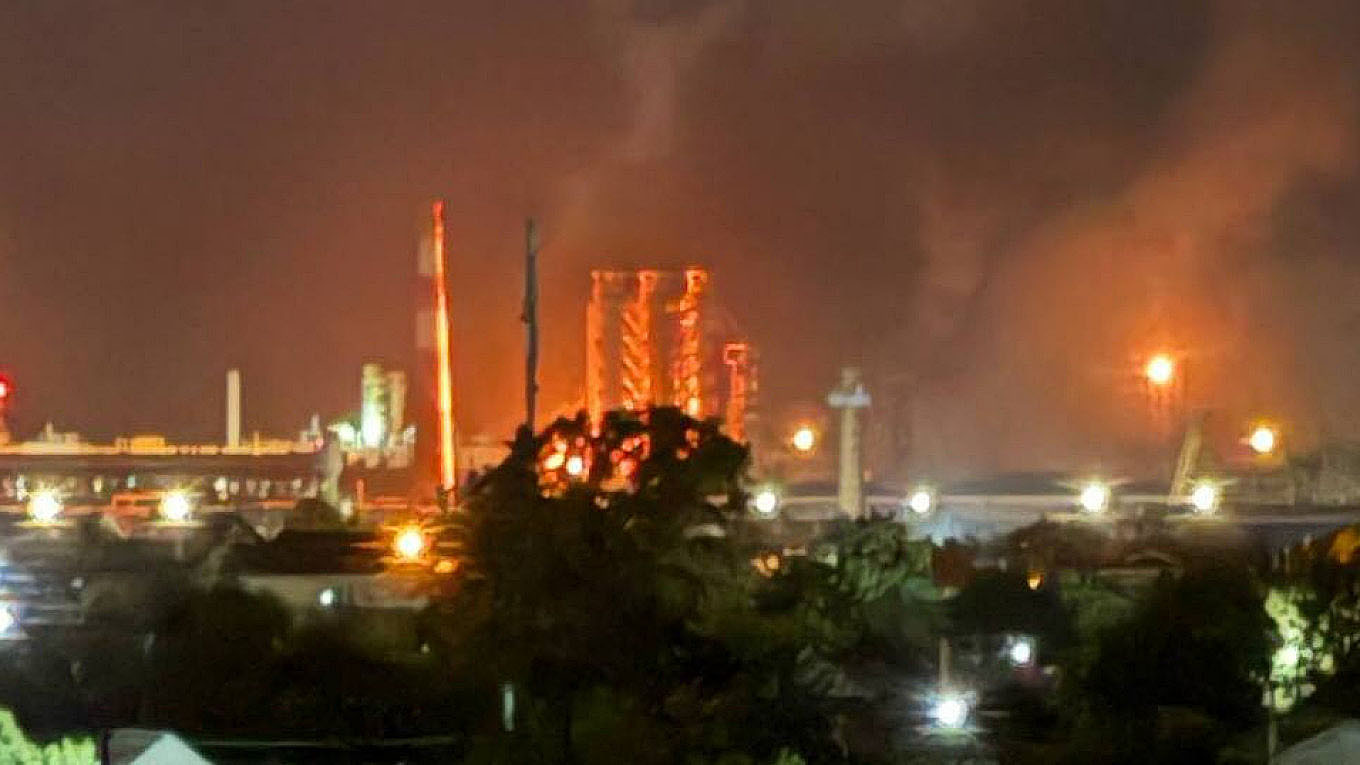
Ukrainian drones targeted the Afipsky oil refinery in Russia’s Krasnodar region for the second time within a month, according to regional officials on Thursday.

One of the drones crashed onto a unit at the refinery, igniting a fire that spanned 30 square meters before being swiftly brought under control. Fortunately, there were no reported injuries.

The Afipsky refinery, one of the largest facilities in southern Russia, has an annual crude processing capacity of 9.1 million tons and operates two main processing units.

The facility was first hit by drones on August 28, following an earlier attack on August 7 that led to the shutdown of one of its units. Additionally, on August 30, drones struck the nearby Krasnodar refinery, which is associated with Afipsky.

Since early August, Ukraine has increased its assaults on Russian oil infrastructure, effectively crippling at least five major refineries.

Calculations by Reuters indicate that these attacks have resulted in a 17% reduction in Russia’s refining capacity, equating to approximately 1.1 million barrels daily.

Industry insiders shared with the Kommersant business daily that gasoline production has decreased by about 10%.

Over 300 gas stations throughout Russia have shut down, with numerous regions implementing restrictions of 10-20 liters per customer. Since the beginning of the year, wholesale gasoline prices have surged by 40-50%.

Ukrainian President Volodymyr Zelensky stated that U.S. President Donald Trump had endorsed the attacks on Russian energy facilities, characterizing Washington’s approach as an “eye-for-an-eye” policy.

After discussing with Zelensky, Trump informed reporters that Russia was dealing with a fuel crisis and facing “significant issues” economically.

Related posts

Shlosberg Placed Under House Arrest Pending Trial Текст: A court in the northwestern city of Pskov has placed opposition politician Lev Shlosberg under house arrest pending trial on charges of “discrediting” the Russian military, independent media reported Wednesday. Shlosberg, a senior member of the liberal party Yabloko, wasarrested and chargedwith Russia’s wartime censorship offense on Tuesday. On Wednesday, the Pskov City CourtorderedShlosberg to be placed under house arrest until Aug. 8, according to independent outlets RusNews and Sotavision. The hearing was held behindclosed doorsat the plaintiffs’ request. Yablokosaidparty chairman Nikolai Rybakov was present to support Shlosberg. Authorities accuse Shlosberg, who has remained in Russia despite his opposition to the war, of calling for a ceasefire in Ukraine during a debate with historian Yury Pivovarov in January. A video of that debate was published on the Russian social media website Odnoklassniki. In January, law enforcement authorities pressed criminalchargesagainst Shlosberg for failing to comply with Russia’s “foreign agent” law. He could face up to two years in prison if convicted of those charges. Shlosberg, who used to head Yabloko’s Pskov region branch, regularly condemns Russia’s full-scale invasion of Ukraine, having called it a “tragedy” on social media. Some exiled opposition figures have criticized Shlosberg for not taking a harder line against the war. Russia’s Justice Ministrylabeledthe opposition politician a “foreign agent” in June 2023. Under the “foreign agent” law, individuals must include a lengthy disclaimer on all of their public statements, including social media posts.

Ex-Anti-Corruption Chief in Yekaterinburg Sentenced to 4 Years for Multi-Million Ruble Bribery Scheme

rimmaruslan98@gmail.com

State Duma Passes 2026-28 Budget and Tax Increase Bills Текст: State Duma lawmakers on ThursdaypassedRussia’s three-year federal budget and a package of tax increases, bills aimed at shoring up government revenues as spending on the war against Ukraine remains a top priority for the Kremlin. Under the budget plan, the government expects revenue of 40.3 trillion rubles ($491.7 billion) next year and spending of 44 trillion rubles ($548.3 billion), leaving a projected deficit of 3.8 trillion rubles ($47.3 billion). Defense and national security will account for roughly 38% of all spending in 2026, or 16.8 trillion rubles ($209.5 billion), which is slightly lower than in the previous two years but still far above pre-war levels. Lawmakers sought to highlight funding for domestic programs, including more than 10 trillion rubles ($124.6 billion) for family support measures and 50 billion rubles ($623 million) for a state-backed charity foundation that assists soldiers fighting in Ukraine and their families. Although overall spending will remain broadly stable, budget allocations reveal that the Kremlin’s priorities continue to lie in foreign policy and defense. Alongside the budget plan, the State Duma approved a series of tax changes aimed at closing the fiscal gap created by soaring military expenditures and falling oil and gas revenues under Western sanctions. Russia’s value-added tax (VAT) will increase to 22% from 20%, a move expected to raise consumer prices higher. Economists, including those at the Financial Ministry, havesaidthey anticipate a modest rise in inflation as the VAT hike takes effect starting next year. More small businesses will also be swept into the tax system. The annual revenue threshold for companies required to pay VAT will drop from 60 million rubles ($732,000) to 10 million rubles ($122,000). Some lawmakers havewarnedthat the change could strain small businesses and individual entrepreneurs, many of whom earn less than 200,000 rubles ($2,500) a month after taxes and salaries. Economists estimate the full package, which also includes a new levy on betting company profits, could bring in nearly 3 trillion rubles ($35 billion) in additional revenue. State Duma Speaker Vyacheslav Volodin said Thursday that lawmakers had approved the federal budget and tax hikes “under difficult circumstances,” citing more than 30,000 sanctions imposed on Russia and what he called “unfriendly actions” by the EU targeting Russian assets. The 2026-28 budget passed with 349 votes, while 56 lawmakers — mostly from the Communist Party — abstained. Only one deputy, Anton Krasnoshantov of the ruling United Russia party, was recorded as voting against the bill, though his “no” vote was allegedly the result of a technical error. The federal budget and tax bills now head to the Federation Council, where they are expected to receive swift approval before being sent to President Vladimir Putin’s desk for his signature.

rimmaruslan98@gmail.com

This website uses cookies to improve your experience. We'll assume you're ok with this, but you can opt-out if you wish. Accept Read More