Trump Plans Meeting with Putin in Budapest Amid Controversial Missile Debate | World | london-news-net.preview-domain.com

Trump Plans Meeting with Putin in Budapest Amid Controversial Missile Debate

Trump Plans Meeting with Putin in Budapest Amid Controversial Missile Debate

U.S. President Donald Trump announced plans to meet with Russian President Vladimir Putin in Hungary following a “very productive” conversation on Thursday. This remark came just a day before Trump was scheduled to host Ukraine’s leader at the White House, and raised questions about Kyiv’s request for Tomahawk missiles.

In his latest shift regarding Russia’s invasion in 2022, Trump indicated that he expected to meet Putin in Budapest within two weeks, marking their second meeting since his return to office.

The Kremlin expressed satisfaction with the “extremely candid and trusting” conversation and stated that preparations for the summit were underway.

Ukrainian President Volodymyr Zelensky claimed that the potential of Tomahawk missiles had compelled Moscow to engage in negotiations, despite yet another change in Trump’s stance on the conflict.

Trump stated on his social media platform, Truth Social, that he believed significant advancements were made during their phone call, and he and Putin would convene to discuss ways to bring an end to the “inglorious” conflict between Russia and Ukraine.

The 79-year-old Republican president later described the call as “very productive,” indicating that a meeting could happen “within two weeks or so, quite soon.”

Additionally, U.S. Secretary of State Marco Rubio is set to meet with Russian Foreign Minister Sergei Lavrov to finalize details regarding the summit, as noted by Trump.

During the call, Trump mentioned that Putin was displeased when he brought up the idea of supplying Ukraine with missiles capable of reaching 1,000 miles. However, Trump seemed uncertain about whether Ukraine would receive the desired U.S.-made weaponry, citing concerns about depleting domestic supplies.

“We need them too, so I’m not sure what we can do about that,” he remarked.

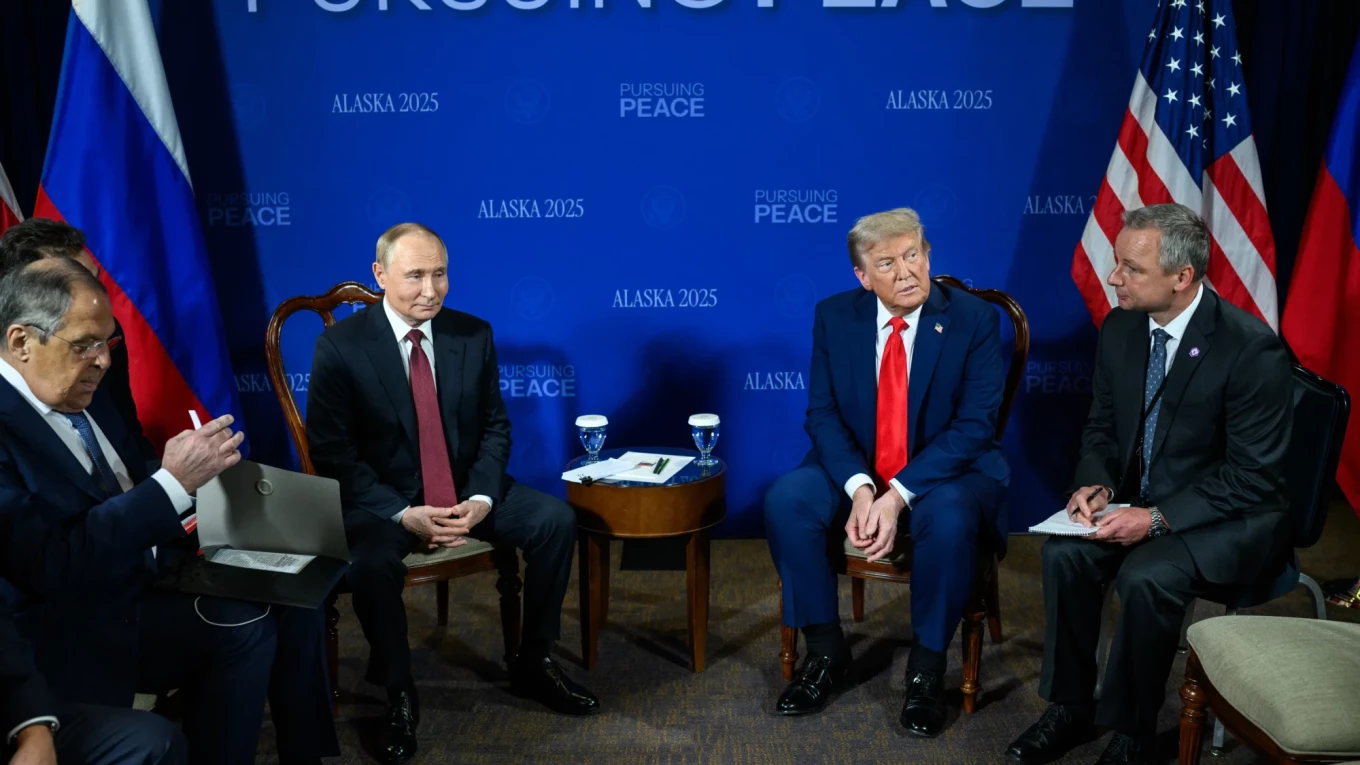
Trump’s relationship with Putin, whom he has praised repeatedly over the years, has had its ups and downs since he returned to the presidency in January. After an initial thawing of relations, he has expressed growing frustration, especially since his meeting in Alaska failed to yield a resolution to the conflict he had once vowed to resolve within a day.

In contrast, Zelensky’s standing with Trump has improved following a rocky first encounter in February, during which he was reprimanded in front of the press.

Zelensky expressed in Washington on Thursday that he hopes the recent momentum from the Middle East peace agreement brokered by Trump will aid in bringing an end to the war in Ukraine. He noted that Moscow appears eager to resume dialogue upon hearing about the Tomahawk missiles and stated he would also meet with U.S. defense companies about additional air defense system supplies.

The Kremlin praised the “highly substantive” call between Trump and Putin, which, according to Putin’s chief aide Yuri Ushakov, was initiated by Russia.

Ushakov also mentioned that Putin communicated to Trump that providing Ukraine with Tomahawks would not alter the situation on the battlefield and could hinder prospects for a peaceful resolution.

Budapest had been identified previously as a potential site for their last meeting before they opted for Alaska instead. Hungarian Prime Minister Viktor Orban, who has fostered amicable relations with both leaders, later stated that he had spoken with Trump. “Preparations for the USA-Russia peace summit are underway,” he posted on X.

Holding the summit in Budapest also avoids the International Criminal Court’s arrest warrant for Putin concerning alleged war crimes. Although Hungary announced its withdrawal from the ICC, it remains a member until June 2026.

Orban assured Israeli Prime Minister Benjamin Netanyahu during his visit to Hungary in April that he would not execute the warrant.

Meanwhile, the war in Ukraine continued, with Russia renewing its attacks on Kyiv’s energy infrastructure. As a result, Ukraine was compelled to implement nationwide rolling power outages for a second consecutive day during a cold snap when nighttime temperatures can drop to freezing levels.

Related posts

Telegrams Security Dilemma: The Dark Ties to Russian Intelligence Revealed

Federal Judge Questions Legality of Immigration Detention for Harvard Scientist

Black Sea Tanker That Sustained Blast Hit Again Текст: Turkeys Transport Ministry said one of two empty oil tankers hit by blasts in the Black Sea late Friday had been struck again early on Saturday, blaming an unmanned sea vehicle. The Virat, which was previously said to have been attacked by unmanned maritime vehicles approximately 35 nautical miles off the Black Sea coastline, was attacked again by unmanned maritime vehicles early this morning, the ministry said on X. It said the tanker sustained only minor damage on the starboard side and that none of the 20-strong crew were hurt. On Friday evening, Turkeys Transport Ministry said two empty oil tankers, the Virat and the Kairos, had reported explosions but sustained no casualties, saying they had been struck in Turkish waters but without saying what had caused the blasts. The ministrys post was the first official confirmation that the Virat was attacked by drones. Turkey said the Kairos was en route to the Black Sea port of Novorossiysk, where a major Russian oil terminal halted operations early on Saturday after being hit by a naval drone attack, the consortium that owns the terminal said. The terminal, part of which sustained significant damage, is a major conduit for Kazakh oil, the Caspian Pipeline Consortium (CPC) said, without saying who was responsible for the attack. A Ukrainian source later claimed responsibility for the attacks on two oil tankers. Modernized Sea Baby naval drones successfully targeted the vessels, a source in Ukraines SBU security service told AFP. The blast struck the Kairos around 15:00 GMT on Friday, with rescuers evacuating its 25 crew members after a fire broke out. At the time, it was about 100 kilometers east of the point where the Bosphorus Strait enters the Black Sea, Turkish officials said. The Virat was struck later. At the time, it was about 400 kilometers further east, according to the VesselFinder tracking site. Transport Minister Abdulkadir Uraloglu said both had suffered explosions, telling private NTV television late Friday the tankers might have been hit by a mine or struck by a rocket or a drone. An external impact means the vessel was hit by a mine, a rocket, or a similar projectile, or perhaps by a drone, or by an unmanned underwater vehicle. These are the first things that come to mind, he said. In a post on X, the Turkish Maritime Affairs Directorate said the Kairos was en route to Russias Novorossiysk when it reported an external impact causing a fire 28 nautical miles off the Turkish coast. It posted dramatic images of flames and thick black smoke pouring out of the vessel, with the blaze still raging some five hours later. BİLGİLENDİRME‼️Rusyaya seyir halindeyken Karadeniz açıklarında patlama ve yangın meydana gelen KAIROS isimli gemide devam eden yangına, NENE HATUN Acil Müdahale Gemimiz ve KURTARMA-12 Römorkörümüz ile@kiyiemniyet’e bağlı ekiplerimiz müdahale etmeye devam etmektedir.…pic.twitter.com/gx7iG5Rc5F The directorate later said the Virat had reported being hit approximately 35 nautical miles offshore, adding that all 20 crew were unharmed but there was heavy smoke detected in the engine room, although those on board had not requested evacuation. Both tankers — which are flying a Gambian flag, according to the VesselFinder website — are subject to Western sanctions for transporting oil from Russian ports in defiance of an embargo imposed after Russias 2022 invasion of Ukraine. Since Russia invaded Ukraine, both sides have planted sea mines to protect their coastlines. Many have since been located and destroyed in the Black Sea, but others have drifted, notably due to storms, endangering shipping. In response, NATO members Turkey, Bulgaria, and Romania — all of whom border the Black Sea — set up the Mine Countermeasures Naval Group (MCM Black Sea) in 2024 to oversee de-mining operations.

rimmaruslan98@gmail.com

This website uses cookies to improve your experience. We'll assume you're ok with this, but you can opt-out if you wish. Accept Read More