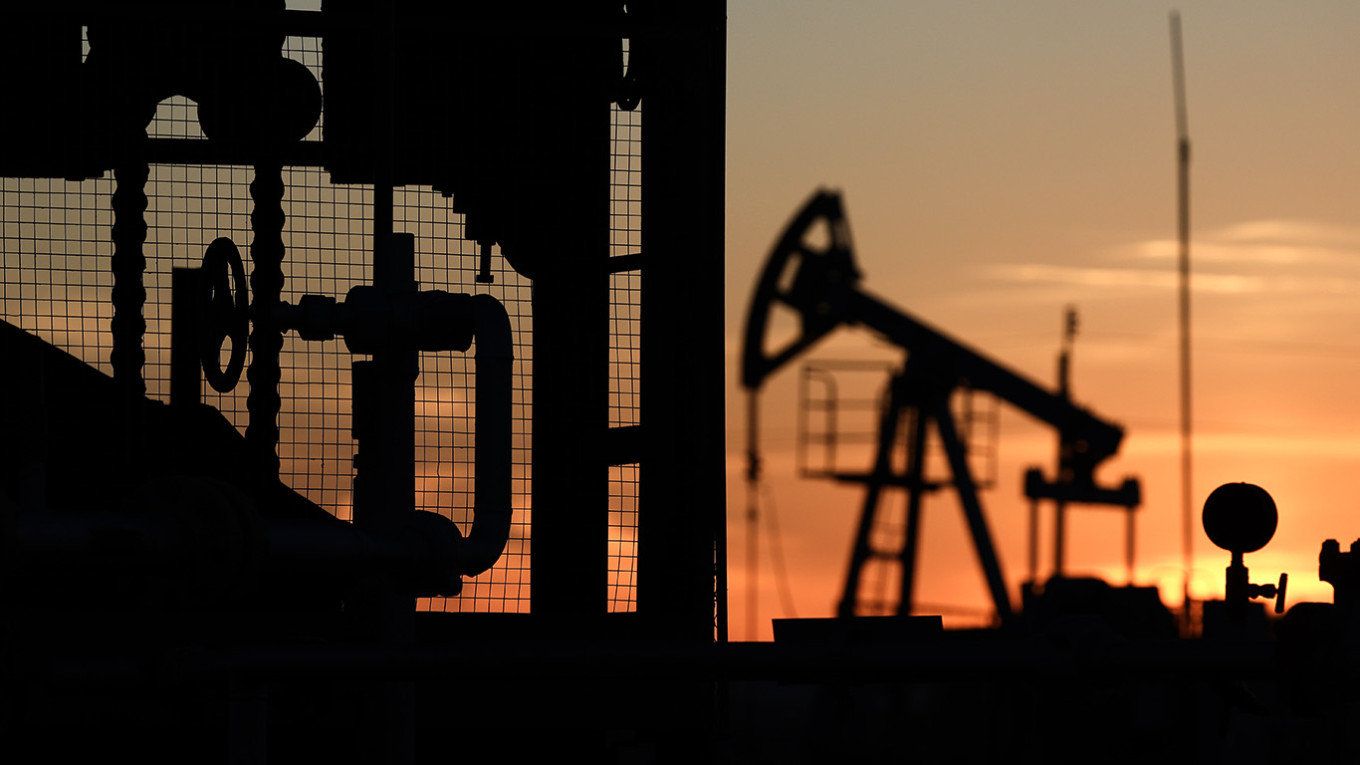
Oil prices continue to fluctuate due to rising tensions between Israel and Iran, which may have broader regional implications.
This uncertainty is advantageous for Russia, but the actual financial benefits depend on the duration and severity of the ongoing conflict.
Moscow stands to gain the most from a prolonged situation that creates energy supply apprehension without escalating into a full-scale war.
Here’s an analysis of the potential effects of the Israel-Iran discord on Russia’s economic prospects:
On Sunday, Iran’s parliament sanctioned a move to close the Strait of Hormuz, a crucial energy route utilized by Iran, Saudi Arabia, Iraq, Kuwait, Qatar, and the UAE, through which a third of the world’s oil and gas is transported.
As a result, Brent crude futures jumped to $81.40 per barrel on Monday, but following Donald Trump’s announcement of a ceasefire between Iran and Israel, prices fell to $67.30 per barrel.
This increase is a slight uptick from the $66.60 per barrel noted on June 11, before tensions escalated into active conflict.
Despite Trump’s declaration, the situation remains fragile, as a formal ceasefire between Iran and Israel has yet to be established. Reports indicated continued attacks between the two sides as recently as early Tuesday.
On Monday, Goldman Sachs projected that Brent crude could briefly spike to $110 per barrel if oil shipments through the Strait of Hormuz are halved for a month.
The bank expects an average price of $95 per barrel for the fourth quarter of 2025 if disruptions occur, significantly higher than its earlier prediction of an average of $78 per barrel for the year announced in March.
The main risk in a potential war between Iran and Israel is the threat to regional energy exports, especially through the Strait of Hormuz, where Iran might hinder shipping.
Approximately 14 million barrels of oil per day—around 20% of global oil production—pass through the strait, which includes Iran’s own exports.
Some nations have alternative shipping routes. For instance, Saudi Arabia can send some of its oil via the East-West pipeline to Red Sea ports, and Iraq can utilize pipelines in Kurdistan.
Nonetheless, a substantial volume of oil and LNG would be left stranded without access to the strait.
“Most of the traffic in the strait lacks alternative routes, though there are some pipeline options that bypass the Strait of Hormuz,” notes the U.S. Energy Information Administration (EIA).
Russia could gain from the ongoing crisis in two main ways.
Firstly, oil supply shortages might tighten the global market, leading to an increase in prices. This situation would enable Russian oil to trade at a premium, while Western nations may delay further sanctions on Russian energy until the situation stabilizes.
Secondly, Russia could directly benefit by providing alternatives to Middle Eastern oil and gas supplied to China.
According to the EIA, 84% of the crude oil, condensate, and liquefied natural gas that transits through the Strait of Hormuz in 2024 was destined for Asia, predominantly to China, India, Japan, and South Korea.
Data from Chinese customs indicated that in May 2025, Russia was the top exporter of crude oil and condensate to China, delivering $3.88 million worth of oil. Saudi Arabia followed with $2.84 million, and Iraq with $2.69 million.
The extent of Russia’s gains from the turmoil in the Middle East hinges on the conflict’s timing and intensity.
Analyst Alyona Nikolayeva states that Russia would profit most from a drawn-out conflict of manageable intensity. This scenario maintains uncertainty over energy supplies without delivering a substantial shock to the global economy, which could lower demand for oil and gas.
Nikolayeva mentioned that moderate disruptions to supply lines in the Middle East may drive the price of Russia’s flagship Urals blend to $75, significantly narrowing the gap between Urals and the global Brent benchmark, reducing the Urals discount to just $2.
In comparison, the Urals price was recorded at $52 per barrel in May, with a Brent discount estimated at $6.
Analyst Pavel Ryabov suggested that while a full closure of the Strait of Hormuz is improbable, the Iran-Israel conflict might persist for some time.
“I believe the markets are miscalculating; it’s the calm before the storm, not a genuine de-escalation yet,” Ryabov commented on the market’s response, including the oil price drop following the ceasefire announcement between the U.S. and Iran.
An increase in Russian energy prices would greatly benefit Moscow’s federal budget, especially during a time when its oil and gas revenues have been dwindling due to sanctions and concerns over a potential global economic slowdown, which would reduce demand for oil and gas.
In May, the Russian Finance Ministry reduced its 2025 energy revenue projections by 24%, anticipating a prolonged period of low oil prices.
Currently, Russia exports about 4.7 million barrels of crude oil daily. A $20 increase in the price of Russian oil could yield approximately $2.8 billion in additional monthly revenue.
If elevated prices persist for six months, Russia could realize an extra $16.8 billion in export income. While this may not be transformative, it could help the government mitigate its fiscal deficit by year’s end.
For perspective, last year, Russia’s deficit reached 3.2 trillion rubles, or about $41 billion.