The Russian government is set to decrease its spending on the development of new aircraft and helicopters by 22% due to persistent delays and obstacles in their production, as reported by the Kommersant business newspaper on Thursday.
Members of the lower chamber of the State Duma are expected to endorse these cuts in amendments to the federal budget for 2025 later this month, according to an official document cited by Kommersant.
If the proposed legislation is approved, the funding for the Aircraft and Helicopter Production federal initiative will be reduced by 22.4 billion rubles (approximately $281.5 million), bringing it down to 78.8 billion rubles ($990.3 million) for the current year.
In particular, the budget for the Russian Scientific and Technological Development state program will see a decrease of 12.8 billion rubles, or $160.8 million (originally allocated at 54.7 billion rubles, equivalent to $687 million), while the Aviation Industry Development program will lose 9.6 billion rubles, or $120.6 million (a reduction from 46.5 billion, or $584.3 million).
The largest single cut of 8.5 billion rubles ($106.8 million) will impact subsidies provided to leasing companies and airlines that are intended to assist with the purchase and operation of aircraft.
A source knowledgeable about budget discussions told Kommersant that this reduction is linked to delays and decreased production levels within the Comprehensive Program for Aviation Industry Development (KPGA).
“There’s no need for compensatory subsidies if there are no aircraft,” the source remarked.
The KPGA was initiated in June 2022 following the imposition of Western sanctions on Russia’s civil aviation sector after the full-scale invasion of Ukraine. The initial aim was to provide airlines with over 1,000 domestically produced aircraft by 2030.
However, only five aircraft — three Tu-214s and two Il-96-300s — have been delivered in the three years since its inception. Earlier this year, the government slashed its aircraft production goals by 50%.
State-owned defense conglomerate Rostec assured Kommersant that the budget reductions would not disrupt its plans for aircraft production.
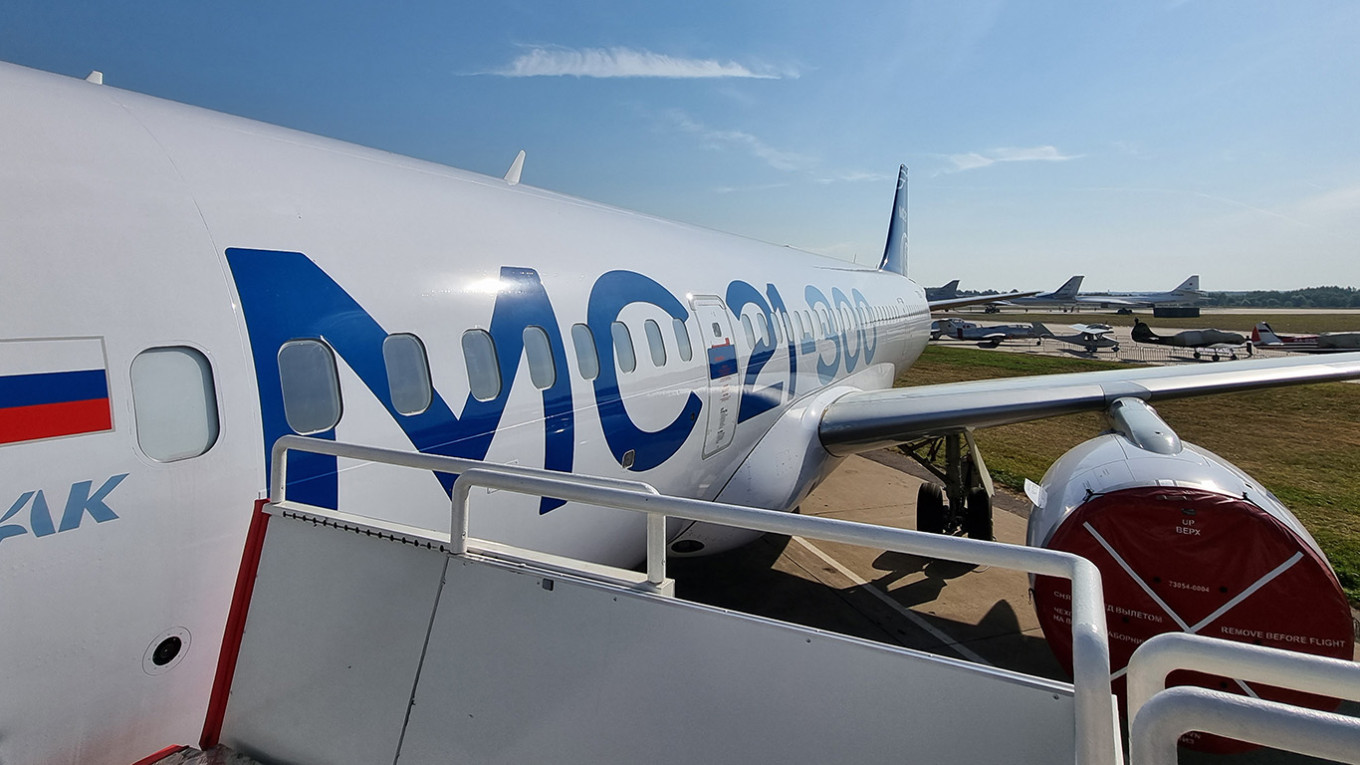
“We are currently engaged in testing new aircraft and gearing up for mass production, with the intention to start delivering the SJ-100 and MC-21 models to airlines next year,” a spokesperson for Rostec stated.
While the cutbacks in funding are unlikely to accelerate production, assessing the overall impact on the aviation sector is challenging without clarity on the financial reserves available to manufacturers, according to Fyodor Borisov, chief expert at the Institute of Transport Economics and Transport Policy at the Higher School of Economics.
Dmitry Khoruzhik, CEO of the aviation firm Aviasystems, similarly noted that the changes in funding would not influence the delivery schedules.
He pointed out that the primary challenges confronting the Russian aviation industry stem from supply chain disruptions caused by the defense sector’s high demand for parts and unfinished research-and-development initiatives related to import substitution.
“No amount of funding can expedite that process,” Khoruzhik concluded.
In March, the head of Rostec cautioned that Russia would have to replace hundreds of foreign-made civil aircraft within the coming years as its fleet of Western-built planes approaches the end of its operational lifespan.