Russian Airstrike Claims Lives of Humanitarian Deminers in Ukraines Chernihiv Region | World | london-news-net.preview-domain.com

Russian Airstrike Claims Lives of Humanitarian Deminers in Ukraines Chernihiv Region

Russian Airstrike Claims Lives of Humanitarian Deminers in Ukraines Chernihiv Region

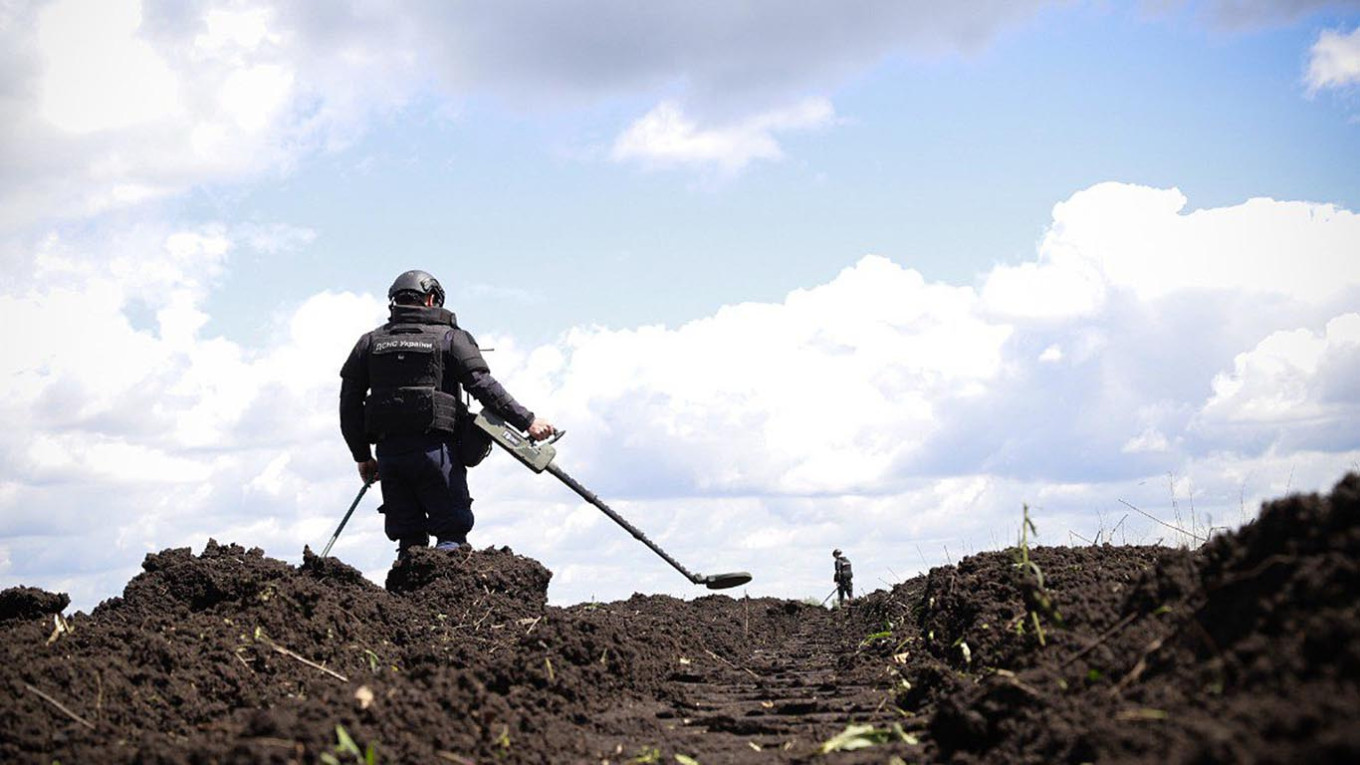
On Thursday, a Russian airstrike in northern Ukraine resulted in the deaths of two members of the Danish Refugee Council who were engaged in mine clearance in an area previously under Russian control, according to Vyacheslav Chaus, the regional governor of Chernihiv.

The attack occurred near the outskirts of Chernihiv, which is situated 125 kilometers (80 miles) north of Kyiv.

According to experts, Ukraine is currently the most densely mined country in the world, with mine clearance teams operating in the north, south, and east, where Ukraine has regained territories occupied by Russia at the onset of the large-scale invasion in 2022.

Chaus stated on social media, “The Russians intentionally targeted the personnel involved in the humanitarian demining efforts of the Danish Refugee Council; two individuals have been confirmed dead.”

He further expressed, “Initially, the Russians contaminated the area with explosives and mines. Now they are taking the lives of civilians who are bravely working to clear our land.”

Additionally, he reported that three other people sustained injuries in the strike.

At the beginning of the conflict, Russian forces encircled the city, having launched their invasion from Belarus, a country allied with Moscow, located just 50 kilometers (31 miles) away.

Related posts

Russian Ruble Dips After EU Unveils New Sanctions on Energy and Banks Текст: The Russian ruble tumbled sharply on Wednesday, erasing part of its recent gains as investors reacted to fresh concerns over Western sanctions and weakening oil export revenues. The dollar surged nearly 3% in a few hours on the Moscow Exchange, climbing from 78.2 rubles in early trading to 80.49 by 1:45 p.m. local time. The euro jumped above 91 rubles, while the Chinese yuan rose almost 2% to 11.04 rubles. By late afternoon, the ruble had regained some ground, with the dollar retreating to 79.65 and the euro to 91.39. The ruble has been one of the world’s best-performing currencies in 2025, gaining roughly 40% since January. But analysts say the sharp pullback may signal a turning point. Its decline on Wednesday “may be tied to discussions in the EU about a new package of sanctions targeting Russian financial institutions and energy exports,” said Natalia Milchakova, a senior analyst at Freedom Finance Global. A proposed 18th round of EU sanctionsintroducedby the European Commission on Tuesday includes plans to disconnect 22 more Russian banks from the SWIFT global payment system, blacklist dozens of tankers involved in circumventing oil trade restrictions and ban transactions with the Nord Stream gas pipelines. The measures would also lower the price cap on Russian crude exports from $60 to $45 per barrel. Under the cap mechanism, oil sold above the limit would be ineligible for Western insurance and transport services — a move aimed at squeezing revenue from Russian energy exports. Experts warn that these measures, if adopted by the United States and G7 allies, could deliver the most serious blow to Russian oil exports since the European embargo imposed in late 2022. Sanctions have already sidelined much of the Kremlin’s “shadow fleet,” and if the price cap is lowered, Greek shipping firms — which have been instrumental in transporting Russian oil — may exit the market altogether, the Moscow-based Institute for Energy and Finance said. As a result, a noticeable reduction in seaborne oil exports from Russia is likely … and the Russian budget may face an even greater reduction in oil revenues in the second half of this year, the IEF wrote. The ruble is also under seasonal pressure, as exporters appear to have slowed their conversion of foreign currency earnings ahead of the Russia Day holiday weekend, Reuters reported. At the same time, Yevgeny Kogan, a Russian investment banker, said demand for foreign currency may have risen ahead of the long weekend. Adding to the pressure is a decline in oil revenues, which remain the backbone of Russia’s export economy. The average price of Urals crude fell to $52 per barrel in May compared to $66 in January, according to the Economic Development Ministry. That figure represents the lowest level in more than two years. Some analysts believe the ruble’s current weakness may be a harbinger of a more prolonged decline. Kogan predicted the currency could continue to weaken in June and July. Sofya Donets, chief economist at T-Investments,saidpressures could intensify into August, potentially pushing the exchange rate beyond 90 rubles to the dollar. The government-linked Center for Macroeconomic Analysis and Short-Term Forecastingwarnedthat the ruble could experience an “overshoot” in the opposite direction, reversing its earlier gains with a potentially steep depreciation. “The more overvalued the ruble is now,” the group said, “the more vulnerable it is to a sharp correction.”

Citigroup Set to Offload Russian Operations, Anticipating $1.1 Billion Loss

rimmaruslan98@gmail.com

Kyiv Suffers Devastating Overnight Assault as Russia Escalates Attacks


This website uses cookies to improve your experience. We'll assume you're ok with this, but you can opt-out if you wish. Accept Read More