Russia Voices Support for Venezuelas New Interim Leader Following U.S. Military Intervention | World | london-news-net.preview-domain.com

Russia Voices Support for Venezuelas New Interim Leader Following U.S. Military Intervention

Russia Voices Support for Venezuelas New Interim Leader Following U.S. Military Intervention

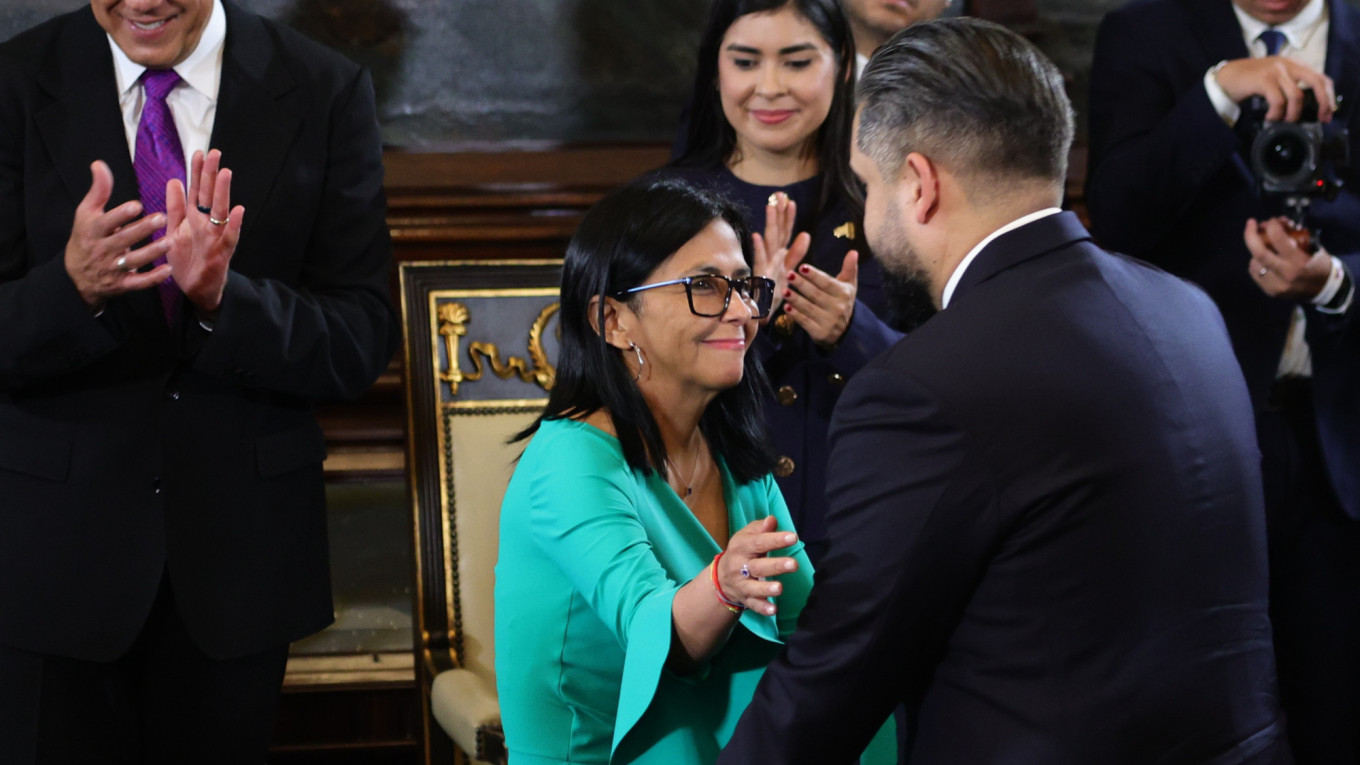
Russia has expressed its backing for Venezuela’s interim leader, Delcy Rodríguez, following a startling military operation by the United States that resulted in the capture of Nicolás Maduro in the capital, Caracas.

Rodríguez, a former Vice President, was inaugurated as acting president after U.S. commandos detained Maduro and his spouse, flying them to New York, where Maduro subsequently pleaded not guilty to charges of drug trafficking and other offenses in a court appearance.

The Russian Foreign Ministry stated that Rodríguez’s inauguration reflects the Bolivarian government’s commitment to maintain unity, uphold the constitutionally established order, and mitigate the chances of a constitutional crisis.

The ministry also indicated that her inauguration would foster conditions for Venezuela’s “peaceful and stable development” amid what it described as “outrageous neocolonial threats and external military aggression.”

Moscow called for de-escalation and urged the settlement of conflicts through constructive dialogue and adherence to international law, particularly the principles outlined in the UN Charter.

The statement emphasized, “Latin America and the Caribbean should remain regions of peace.”

Additionally, Russia declared its willingness to continue offering necessary support to “our ally” Venezuela.

While Moscow has demanded the release of Maduro and his wife, it has refrained from taking further actions to support its South American partner following the U.S. operation.

President Donald Trump has asserted that the U.S. is “in control” in Venezuela, suggesting that Rodríguez will hold her office only as long as she complies with U.S. expectations and alluding to the possibility of a subsequent action if Caracas’ leadership does not cooperate.

Rodríguez has indicated her readiness to engage with Washington, which is keen on accessing Venezuela’s vast oil reserves. However, she has also aimed to demonstrate solidarity with the hardliners in Maduro’s administration, who oversee the security forces and influential paramilitary groups.

Nobel Peace Prize laureate and opposition leader María Corina Machado criticized Rodríguez, claiming she is “rejected” by the Venezuelan populace and labeling her “one of the primary architects of torture, persecution, corruption, and drug trafficking.”

The ongoing crisis, which follows a quarter-century of leftist governance, now places Venezuela’s approximately 30 million citizens—and the nation’s enormous proven oil reserves—in a state of uncertainty.

This report includes contributions from AFP.

Related posts

Akhmat Kadyrov Elevated to Acting Deputy Prime Minister as Speculation Surrounds Fathers Health

rimmaruslan98@gmail.com

Kursk Deputy Governor Detained in Alleged Embezzlement Linked to Border Defense Funds

Uzbekistan Urges Russia to Respect Its Citizens Amid Migrant Crackdown Текст: Uzbekistans Foreign Ministry on Wednesday urged Russia to treat its citizens with respect as authorities in Moscow tighten migration laws and carry out mass inspections targeting foreign workers Over the past year, Russia has introduced tighter migration rules, including new laws to locate and expel migrants more easily. The changes have sparked protests from several Central Asian countries, including Uzbekistan. Roughly 4 million migrants from the five former Soviet republics of Central Asia — Uzbekistan, Kyrgyzstan, Tajikistan, Kazakhstan and Turkmenistan — currently live in Russia, according to government data. Many work in low-wage sectors and send home remittances critical to their domestic economies. Uzbekistans Foreign Ministry said it had received reports of unauthorized inspections and cases of disrespectful and rude treatment of its citizens in Russia. It called on Moscow to treat Uzbek citizens with respect and to prevent actions that humiliate their honor and dignity, according to a statement published by state media. Tashkent also submitted a formal protest note to Russia requesting clarification about the reports. Russias Foreign Ministry said it was studying the note and described Uzbekistan as a strategic partner, the state-run news agency TASS reported. In recent months, Kyrgyzstan and Tajikistan have issued similar protests, denouncing mass detentions of their citizens in Russia. The crackdown follows the deadly 2024 terrorist attack at Crocus City Hall, which Russian officials blame on gunmen from Central Asia. Since then, Moscow has stepped up its efforts to police and repatriate foreign nationals. The war in Ukraine has further complicated matters for Central Asian migrants, with Russian authorities accused of pressuring some to enlist in the military. Russias Investigative Committee said last year that 10,000 foreign nationals with Russian citizenship had been sent to the front lines. Ukraines military estimates that around 3,000 Central Asians are fighting for Russia. Local media report that several dozen have been killed or imprisoned upon returning home. Despite a decline in migration, remittances remain vital to Central Asian economies. According to the World Bank, they account for 45% of GDP in Tajikistan, 24% in Kyrgyzstan and 14% in Uzbekistan.


This website uses cookies to improve your experience. We'll assume you're ok with this, but you can opt-out if you wish. Accept Read More