Russia Mobilizes Reservists Across 15 Regions to Safeguard Oil Infrastructure from Drone Threats | World | london-news-net.preview-domain.com

Russia Mobilizes Reservists Across 15 Regions to Safeguard Oil Infrastructure from Drone Threats

Russia Mobilizes Reservists Across 15 Regions to Safeguard Oil Infrastructure from Drone Threats

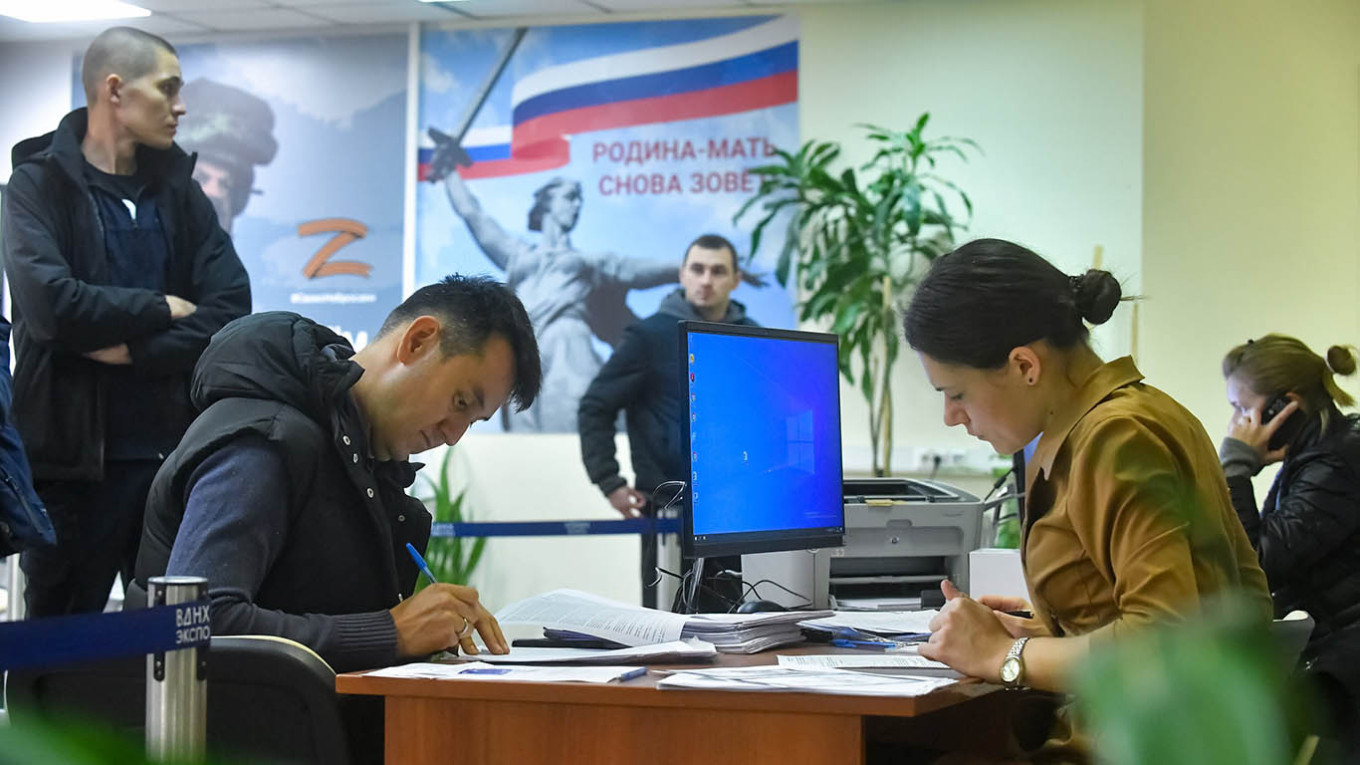
Authorities in a minimum of 15 regions across Russia are enlisting local residents for a newly established mobilization reserve tasked with safeguarding strategic infrastructure, such as oil refineries that have been targeted by Ukrainian drones, according to the exiled news outlet Vyorstka, which examined government recruitment announcements on VKontakte.

Calls for reservists have emerged on the social media pages of local officials, municipal authorities, and major enterprises in areas including Bryansk, Kaliningrad, Leningrad, Nizhny Novgorod, Rostov, Tambov, Tula, and Yaroslavl, as well as in Bashkortostan and the Perm and Krasnoyarsk regions, among others.

This recruitment initiative follows the recent passage of legislation permitting the deployment of reservists to secure facilities within Russian territory.

As reported by Vyorstka, the announcements clarify that these reservists will not be sent to fight in Ukraine; rather, they will remain within their home regions to protect energy infrastructure and monitor for drones.

In the Bryansk border region, volunteers are also expected to “counter enemy sabotage groups,” assist in evacuating civilians, and help maintain counterterrorism measures, as per a post from a local vocational institution.

Officials in Bryansk are offering monthly salaries ranging from 40,000 to 100,000 rubles ($440 to $1,100), depending on rank, as well as one-time bonuses of up to 300,000 rubles ($3,300).

In areas further from the front lines, compensation is significantly lower: volunteers in Tula and Bashkortostan are promised between 2,000 and 10,000 rubles per month, plus bonuses for downed drones; in Perm, the amount is between 4,000 and 7,000 rubles; and in Kaliningrad, it reaches up to 6,300 rubles.

Some regions are also offering financial support for reservists attending training camps.

In Yaroslavl, officials are providing 21,000 to 57,000 rubles per training session, while soldiers in Tula may earn as much as 111,000 rubles and officers up to 150,000 rubles.

In Ust-Luga, a port town near St. Petersburg, volunteers will serve in two-month rotations guarding facilities, followed by two months off, with monthly earnings between 15,000 and 30,000 rubles.

Various posts advertise free “balanced meals” during training, weekend leisure activities, and highlight access to free medical care and medications as added benefits.

In-person recruitment meetings have been organized by officials in some regions.

Employment center staff in Krasnoyarsk and Yaroslavl have informed job seekers about “the benefits of contract service” and participation in the mobilization reserve, according to Vyorstka.

A source within the military commissariat indicated to Vyorstka that the Kremlin is expected to provide directives specifying the number of reservists each region is required to recruit.

On Tuesday, President Vladimir Putin signed a law allowing the use of reservists to ensure security within Russia. This legislation, which was expedited through parliament in three readings, authorizes “special training deployments to protect critical and other life-support facilities.”

The General Staff has confirmed that reservists will not be deployed to combat in Ukraine.

Related posts

Lavrov Attributes Delayed Arms Deliveries to Armenia to Russias Struggles with the West

Russia Warns of Stalled Ukraine Peace Efforts, Accuses U.S. of Escalating Tensions

rimmaruslan98@gmail.com

Russian Ruble Dips After EU Unveils New Sanctions on Energy and Banks Текст: The Russian ruble tumbled sharply on Wednesday, erasing part of its recent gains as investors reacted to fresh concerns over Western sanctions and weakening oil export revenues. The dollar surged nearly 3% in a few hours on the Moscow Exchange, climbing from 78.2 rubles in early trading to 80.49 by 1:45 p.m. local time. The euro jumped above 91 rubles, while the Chinese yuan rose almost 2% to 11.04 rubles. By late afternoon, the ruble had regained some ground, with the dollar retreating to 79.65 and the euro to 91.39. The ruble has been one of the world’s best-performing currencies in 2025, gaining roughly 40% since January. But analysts say the sharp pullback may signal a turning point. Its decline on Wednesday “may be tied to discussions in the EU about a new package of sanctions targeting Russian financial institutions and energy exports,” said Natalia Milchakova, a senior analyst at Freedom Finance Global. A proposed 18th round of EU sanctionsintroducedby the European Commission on Tuesday includes plans to disconnect 22 more Russian banks from the SWIFT global payment system, blacklist dozens of tankers involved in circumventing oil trade restrictions and ban transactions with the Nord Stream gas pipelines. The measures would also lower the price cap on Russian crude exports from $60 to $45 per barrel. Under the cap mechanism, oil sold above the limit would be ineligible for Western insurance and transport services — a move aimed at squeezing revenue from Russian energy exports. Experts warn that these measures, if adopted by the United States and G7 allies, could deliver the most serious blow to Russian oil exports since the European embargo imposed in late 2022. Sanctions have already sidelined much of the Kremlin’s “shadow fleet,” and if the price cap is lowered, Greek shipping firms — which have been instrumental in transporting Russian oil — may exit the market altogether, the Moscow-based Institute for Energy and Finance said. As a result, a noticeable reduction in seaborne oil exports from Russia is likely … and the Russian budget may face an even greater reduction in oil revenues in the second half of this year, the IEF wrote. The ruble is also under seasonal pressure, as exporters appear to have slowed their conversion of foreign currency earnings ahead of the Russia Day holiday weekend, Reuters reported. At the same time, Yevgeny Kogan, a Russian investment banker, said demand for foreign currency may have risen ahead of the long weekend. Adding to the pressure is a decline in oil revenues, which remain the backbone of Russia’s export economy. The average price of Urals crude fell to $52 per barrel in May compared to $66 in January, according to the Economic Development Ministry. That figure represents the lowest level in more than two years. Some analysts believe the ruble’s current weakness may be a harbinger of a more prolonged decline. Kogan predicted the currency could continue to weaken in June and July. Sofya Donets, chief economist at T-Investments,saidpressures could intensify into August, potentially pushing the exchange rate beyond 90 rubles to the dollar. The government-linked Center for Macroeconomic Analysis and Short-Term Forecastingwarnedthat the ruble could experience an “overshoot” in the opposite direction, reversing its earlier gains with a potentially steep depreciation. “The more overvalued the ruble is now,” the group said, “the more vulnerable it is to a sharp correction.”


This website uses cookies to improve your experience. We'll assume you're ok with this, but you can opt-out if you wish. Accept Read More