Putin and Kim Join Forces: A New Era of Cooperation Following Beijings Military Spectacle | World | london-news-net.preview-domain.com

Putin and Kim Join Forces: A New Era of Cooperation Following Beijings Military Spectacle

Putin and Kim Join Forces: A New Era of Cooperation Following Beijings Military Spectacle

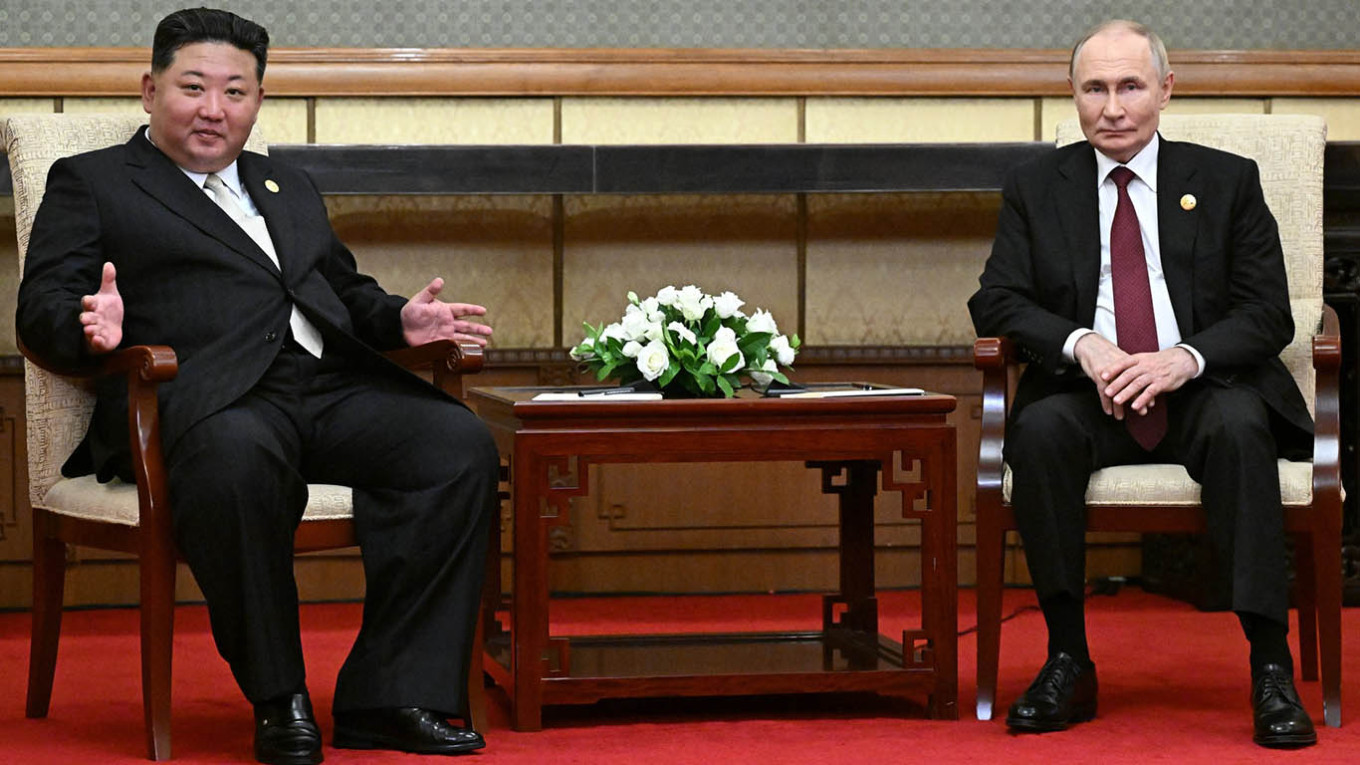
President Vladimir Putin met with North Korean leader Kim Jong Un on Wednesday after a significant military parade in Beijing, where the Russian leader expressed gratitude for North Korea’s assistance in expelling Ukrainian forces from the Kursk region.

The parade marked the 80th anniversary of Japan’s surrender in World War II and gathered over twenty heads of state, representing a diverse assembly of nations that have contested or challenged U.S. global supremacy. The event was presided over by Chinese President Xi Jinping and showcased fighter jets, tanks, missiles, and formations of marching soldiers.

Following the parade, Putin and Kim engaged in a bilateral discussion, their first face-to-face conversation since Putin’s unusual visit to North Korea last summer, during which both nations entered into a strategic partnership that encompasses a mutual defense agreement.

“In accordance with your initiative, as it is well known, your special forces contributed to liberating the Kursk region,” Putin remarked to Kim during televised comments. “This action aligned completely with our new agreement. I must highlight the bravery and valor displayed by your troops.”

“We will always honor the sacrifices made by your military and the families of your soldiers,” he added.

Addressing Putin as “comrade,” Kim expressed gratitude for the commendations aimed at North Korean soldiers, noting that the relationship between their countries has been “expanding in every aspect” since the signing of their strategic partnership.

“If there’s any way we can assist Russia, we will certainly do so. We view it as a brotherly obligation and will strive to support Russia,” Kim stated, according to a summary from the Kremlin.

“I believe we need to make significant progress to ensure that these efforts align with the demands of our time and contribute to enhancing the well-being of our nations,” the North Korean leader added.

At the conclusion of their nearly three-hour meeting, Putin extended an invitation to Kim to come to Moscow.

In April, Pyongyang acknowledged its troop deployment to Russia, confirming that some personnel had lost their lives in combat. Meanwhile, the United States has alleged that the Kremlin is providing North Korea with advanced space and satellite technology in exchange for military backing.

On Tuesday, South Korean intelligence officials reported that approximately 2,000 North Korean soldiers sent to assist Russia against Ukrainian forces are believed to have died. They indicated that Pyongyang plans to send an additional 6,000 soldiers and engineers, with around 1,000 combat engineers already present in Russia.

The military parade in Beijing and the recent annual summit of the Shanghai Cooperation Organization (SCO) in Tianjin have been interpreted by many observers as a show of resistance to U.S. President Donald Trump’s disruptive “America First” foreign policy.

On Truth Social, Trump accused China, Russia, and North Korea of “colluding” against the United States. Russian officials dismissed the claims, suggesting that the American president’s remarks were intended to be “ironic.”

Related posts

Airports Poised for Reopening as Russian Authorities Await Military Green Light

rimmaruslan98@gmail.com

Misleading Recruitment Tactics: Higher School of Economics Lures Students into Army with False Promises

rimmaruslan98@gmail.com

State Duma Passes 2026-28 Budget and Tax Increase Bills Текст: State Duma lawmakers on ThursdaypassedRussia’s three-year federal budget and a package of tax increases, bills aimed at shoring up government revenues as spending on the war against Ukraine remains a top priority for the Kremlin. Under the budget plan, the government expects revenue of 40.3 trillion rubles ($491.7 billion) next year and spending of 44 trillion rubles ($548.3 billion), leaving a projected deficit of 3.8 trillion rubles ($47.3 billion). Defense and national security will account for roughly 38% of all spending in 2026, or 16.8 trillion rubles ($209.5 billion), which is slightly lower than in the previous two years but still far above pre-war levels. Lawmakers sought to highlight funding for domestic programs, including more than 10 trillion rubles ($124.6 billion) for family support measures and 50 billion rubles ($623 million) for a state-backed charity foundation that assists soldiers fighting in Ukraine and their families. Although overall spending will remain broadly stable, budget allocations reveal that the Kremlin’s priorities continue to lie in foreign policy and defense. Alongside the budget plan, the State Duma approved a series of tax changes aimed at closing the fiscal gap created by soaring military expenditures and falling oil and gas revenues under Western sanctions. Russia’s value-added tax (VAT) will increase to 22% from 20%, a move expected to raise consumer prices higher. Economists, including those at the Financial Ministry, havesaidthey anticipate a modest rise in inflation as the VAT hike takes effect starting next year. More small businesses will also be swept into the tax system. The annual revenue threshold for companies required to pay VAT will drop from 60 million rubles ($732,000) to 10 million rubles ($122,000). Some lawmakers havewarnedthat the change could strain small businesses and individual entrepreneurs, many of whom earn less than 200,000 rubles ($2,500) a month after taxes and salaries. Economists estimate the full package, which also includes a new levy on betting company profits, could bring in nearly 3 trillion rubles ($35 billion) in additional revenue. State Duma Speaker Vyacheslav Volodin said Thursday that lawmakers had approved the federal budget and tax hikes “under difficult circumstances,” citing more than 30,000 sanctions imposed on Russia and what he called “unfriendly actions” by the EU targeting Russian assets. The 2026-28 budget passed with 349 votes, while 56 lawmakers — mostly from the Communist Party — abstained. Only one deputy, Anton Krasnoshantov of the ruling United Russia party, was recorded as voting against the bill, though his “no” vote was allegedly the result of a technical error. The federal budget and tax bills now head to the Federation Council, where they are expected to receive swift approval before being sent to President Vladimir Putin’s desk for his signature.

rimmaruslan98@gmail.com

This website uses cookies to improve your experience. We'll assume you're ok with this, but you can opt-out if you wish. Accept Read More