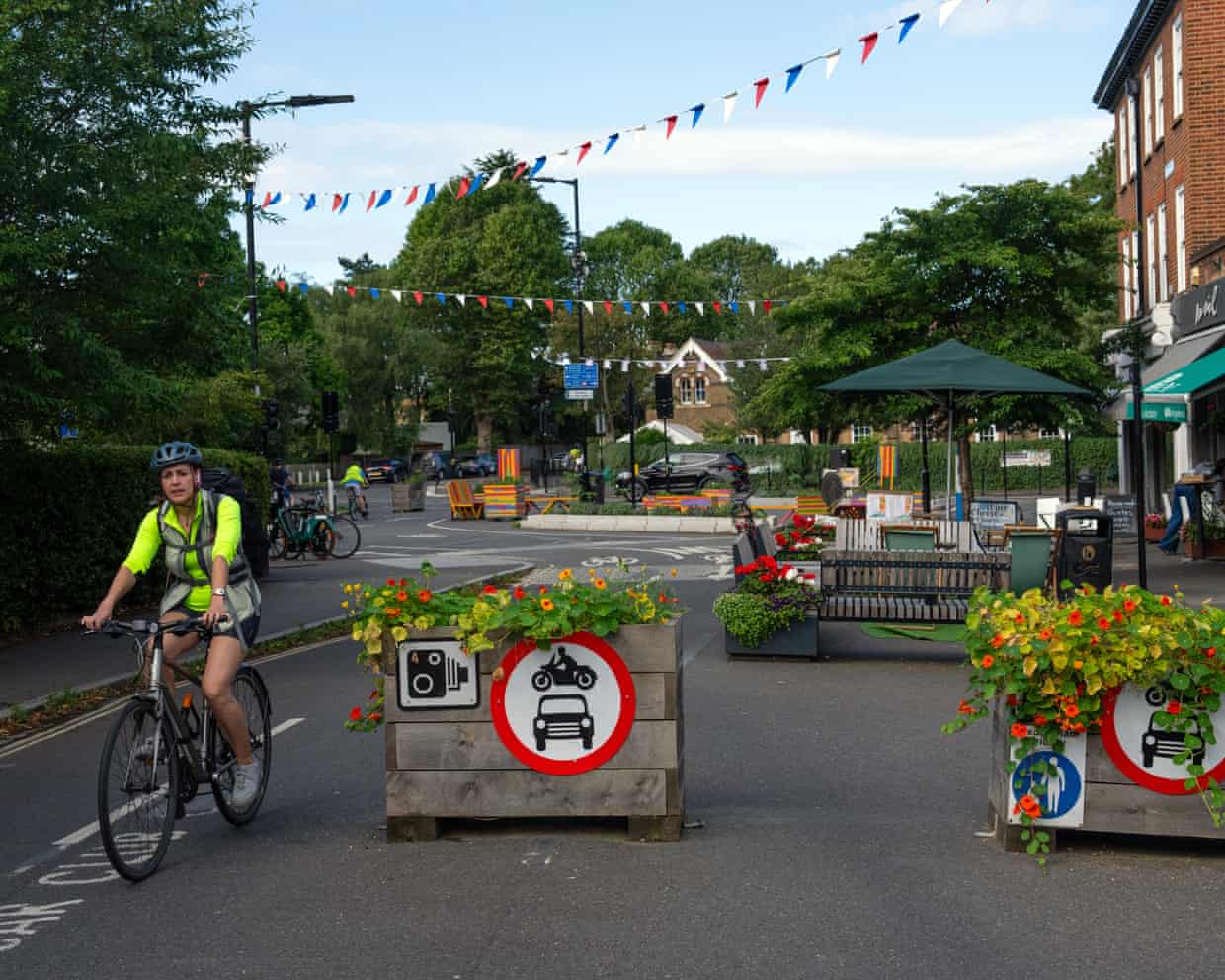
Hope remains alive for those who have long contested low-traffic-neighbourhood (LTN) anti-pollution initiatives following a recent high court decision that deemed Lambeth council in south London had acted unlawfully by disregarding local objections to its latest project. GB News reported that “Low traffic neighbourhoods could be eliminated as campaigners achieve a high court victory – ‘sends a clear signal’.” The Express echoed this sentiment, stating, “Low-traffic neighbourhoods could be cut.”
However, here’s the reality: they are unlikely to be abolished, and this case should not be used to dismantle LTNs, as that would be a regressive move for public health, the economy, and the environment. What should happen now? Councils need to remain steadfast and rely on the evidence indicating that LTNs are beneficial and deserve to be implemented thoughtfully.
Regardless of your stance, it is crucial to consider the broader range of evidence available. This evidence demonstrates that LTNs effectively reduce traffic, enhance air quality, and promote walking and cycling. Despite the heated debates, LTNs have proven to be both efficacious and increasingly popular, with their acceptance growing over time. Moreover, some local authorities have room for improvement in engaging with residents, particularly those facing significant mobility challenges.
A prevalent criticism against LTNs is that they exacerbate congestion and pollution by rerouting traffic. However, data tells a different story. Analyses of existing LTNs in London and beyond reveal a more intricate scenario: traffic may decrease, increase, or remain unchanged in the surrounding areas. A review by Rishi Sunak amidst the heightened tensions surrounding the so-called war on the motorist concluded that the impact on surrounding roads, regardless of whether it was beneficial or detrimental, was minimal.
In my observation, much of the backlash toward LTNs stems less from the concept of LTNs themselves and more from frustrations with unreliable public transportation, exorbitant fares, limited accessibility, and crowded roadways—issues that require solutions and would not be resolved by eliminating LTNs. Improvements such as priority bus lanes, expanded sidewalks, clean air zones, 20mph speed limits, bike lanes, and meaningful collaboration with residents can address these issues, help mitigate traffic and pollution increases, and provide individuals with more mobility options.
When a new LTN is introduced, it’s tempting to blame it for congestion, yet congestion is a long-standing issue. London has been the most congested city in Europe for years, and the root cause of this congestion is simply the excessive number of cars on the roads.
It is vital to reflect on the necessity of modernizing our transportation system and how LTNs can contribute to that goal. Air pollution is responsible for thousands of premature deaths each year in our capital and exacerbates various health issues, with driving being the primary culprit. The climate crisis necessitates at least a 20% reduction in traffic, a call supported by people across all political lines. Yet, fewer than 40% of Londoners engage in walking or cycling for at least 20 minutes daily.
Every day, approximately five individuals perish on UK roads, a fact that often goes unnoticed. More than 20,000 individuals suffer injuries on London’s roads annually, resulting in immense emotional and physical distress, and placing additional strain on the NHS and emergency services. According to the climate-focused charity I work for, Possible, the financial toll of these collisions is estimated at £1.2 billion per year in London. Additionally, with cars becoming larger and heavier, and SUVs dominating the market, the risk faced by pedestrians and cyclists is progressively increasing.
There is widespread agreement on the necessity of reducing traffic to make life easier for those who rely on vehicles. The available evidence suggests that LTNs are a cost-effective and prompt method to achieve that goal.
At the core of all discussions is a straightforward truth: the only way to decrease traffic—which is universally acknowledged as beneficial—is for some drivers to reduce their usage of vehicles. There is no other magical solution. The narrative of unfettered freedom for motorists, often portrayed in advertising with images of Land Rovers gliding through empty city streets, must be re-evaluated in favor of ensuring genuine freedom for children to enjoy cleaner air, for individuals to walk and cycle with less risk, and for everyone to navigate their journeys without encountering traffic congestion.
Low-traffic neighbourhoods are frequently depicted as barriers to mobility. Yet for many, they enhance the ease and enjoyment of getting around by creating space for community interactions, walking, and cycling. No approach or policy is without flaws; there will always be insights to gain. However, this should not serve as an excuse for inaction.
The current system is failing, and in a broader context, the body of evidence supporting the effectiveness and popularity of low-traffic neighbourhoods is continually becoming more robust. One court ruling won’t halt this progression.
Izzy Romilly is the sustainable transport campaign manager at the climate charity Possible.