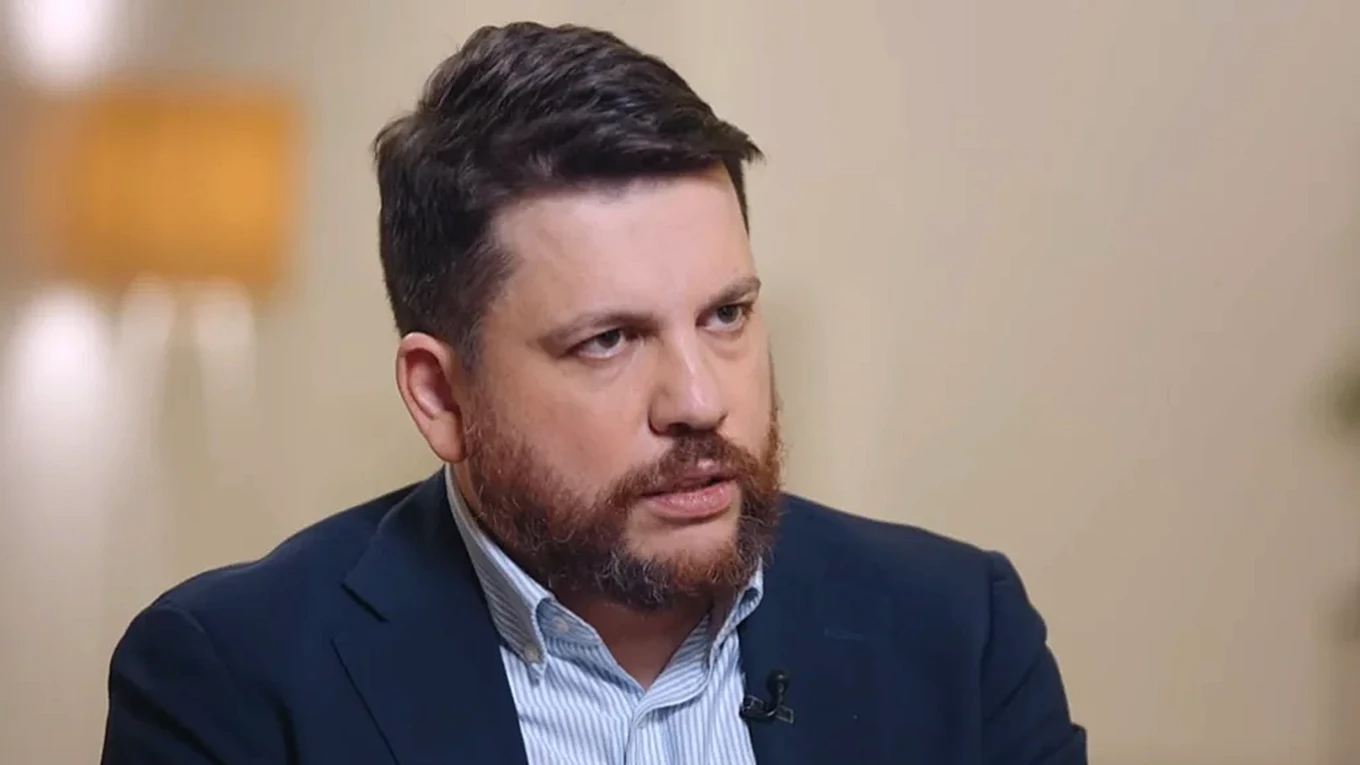
Lithuanian officials have no intention of deporting Leonid Volkov, a Russian anti-corruption activist and former aide to the late opposition leader Alexei Navalny, despite a controversy surrounding leaked messages in which he criticized Ukrainian officials and a far-right paramilitary leader.
Vladislav Kondratovič, the Minister of Internal Affairs of Lithuania, announced that an investigation into Volkov concluded he does not pose a risk to national security, and no evidence was found to suggest he supports Russia’s aggression in Ukraine.
“As a result, the Russian opposition figure, who holds a temporary residence permit, is free to remain in Lithuania,” Kondratovič stated at a press briefing, as reported by the Baltic news outlet Delfi.
Indrė Gasperė, the head of migration, confirmed that Volkov’s legal status is unchanged in Lithuania, where he has resided since 2019. However, she indicated that the investigation should act as a cautionary note for the anti-Kremlin activist.
Earlier this month, Volkov faced backlash after private messages were leaked, in which he labeled Denis Kapustin, the founder and leader of the Russian Volunteer Corps, as a neo-Nazi and described him as “a gift to Kremlin propaganda.” He also referred to Ukraine’s former intelligence chief, Kyrylo Budanov, as “a repugnant provincial political technologist.”
Volkov later expressed remorse for his “emotional and harsh” remarks in the leaked correspondence but maintained his critical stance towards Kapustin, who has connections to far-right extremist groups and established a clothing brand featuring Nazi symbols.
Ukrainian authorities have stated they are looking into Volkov’s remarks following accusations that he “justified” the Russian invasion of Ukraine, although no formal charges have been brought against him.
Volkov has not made any statements regarding the investigation by Ukrainian officials.
Kondratovič noted on Thursday that the Lithuanian inquiry examined both Volkov’s leaked comments and the responses from Ukrainian authorities.
“Such statements naturally provoke a public reaction, but our analysis extended beyond simply viewing it as a personal exchange between two people,” Kondratovič commented.