Kremlin Decries NATOs Proposal to Engage Russian Aircraft as Reckless Escalation | World | london-news-net.preview-domain.com

Kremlin Decries NATOs Proposal to Engage Russian Aircraft as Reckless Escalation

Kremlin Decries NATOs Proposal to Engage Russian Aircraft as Reckless Escalation

The Kremlin strongly criticized the idea of NATO allies shooting down Russian planes that enter their airspace, labeling such a suggestion as “reckless.” This response followed remarks made by U.S. President Donald Trump, who expressed that NATO members should take such action.

Several NATO nations have accused Russia of violating their airspace in Europe in recent weeks with fighter jets and drones, claiming these actions are part of a strategy to test the alliance’s resolve.

When questioned on Tuesday if NATO should engage Russian aircraft that breach its airspace, Trump affirmed, “Yes, I do.”

On Friday, Kremlin spokesperson Dmitry Peskov condemned these comments, referring to them as “irresponsible assertions about the necessity to down Russian aircraft, which are at the very least reckless and could lead to dangerous repercussions,” during an interview with state-run television.

Peskov refrained from directly mentioning Trump, instead implying that such calls originated within Europe.

Recent incidents of airspace breaches, particularly in Romania, Poland, and Estonia, have challenged NATO’s cohesion and revealed deficiencies in air defense protocols and capabilities along the eastern border of the U.S.-led alliance.

Moscow has consistently denied any wrongdoing regarding these airspace violations.

Peskov’s latest remarks were made following a Bloomberg report indicating that British, French, and German diplomats had warned their Russian counterparts that NATO would be ready to intercept Russian aircraft if violations continued.

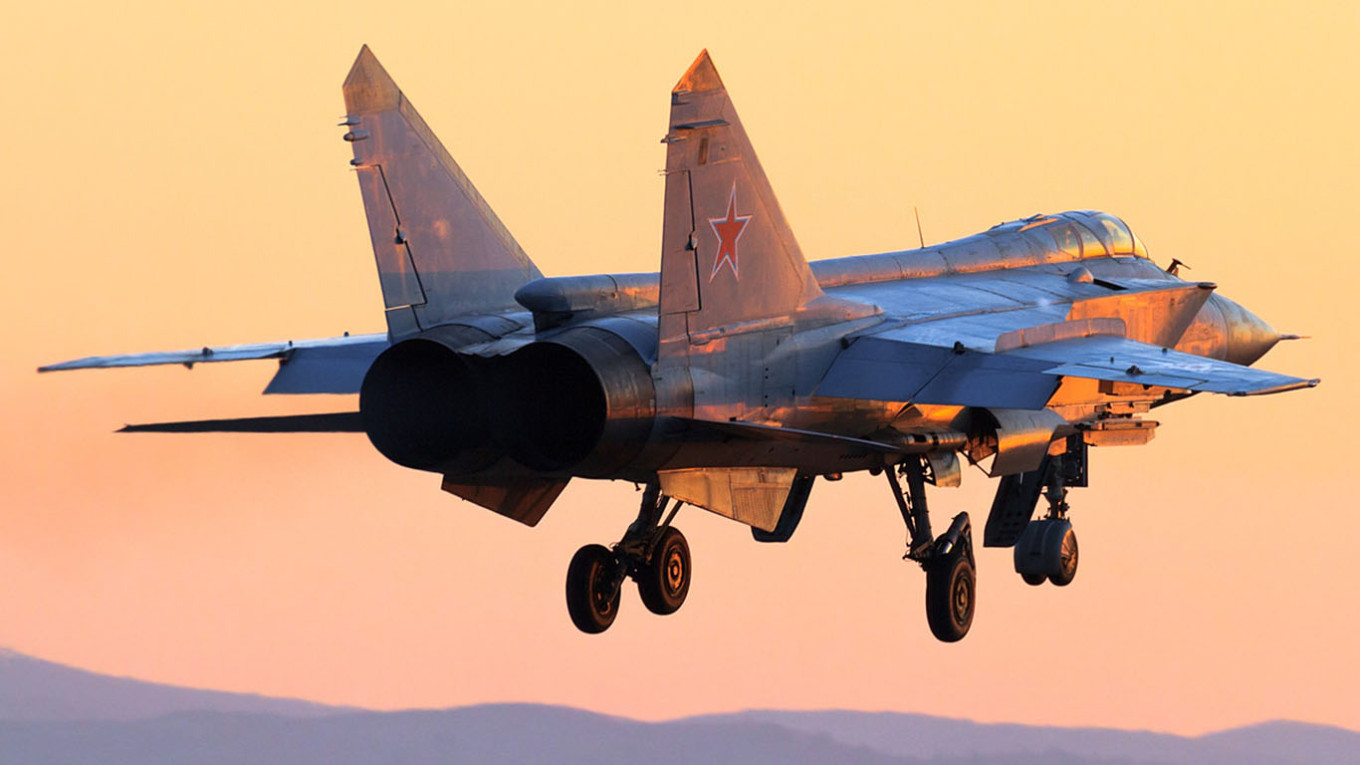
Bloomberg described a “tense meeting” where European representatives confronted Russian diplomats about an alleged airspace breach involving three MiG-31 fighters last week over Estonia.

After the discussions, the diplomats reportedly concluded that the violation was a “deliberate tactic ordered by Russian commanders.”

In response, Russian representatives stated that the flights were a reaction to Ukrainian military actions in Crimea and argued that NATO’s support for Ukraine had placed Europe in a direct confrontation with Russia.

The detailed notes recorded by the Russian delegation led European officials to speculate that they had been instructed to “provide a comprehensive report on NATO’s stance to higher authorities” in Moscow, according to Bloomberg.

In his Friday interview, Peskov asserted that Estonia had failed to present any proof of the MiG-31 incident and characterized Tallinn’s statements as “yet another serious escalation of tensions along our border.”

On Thursday, Russian Ambassador to France Alexei Meshkov warned French radio that NATO shooting down a Russian jet under the guise of an airspace violation “would mean war.”

NATO Secretary General Mark Rutte expressed his support for targeting Russian aircraft if they encroach on member states’ airspace.

A spokesperson for the British government communicated to Bloomberg that “the U.K. is prepared to vigorously defend our airspace against any incursions.”

German Chancellor Friedrich Merz remarked that he “endorses all necessary measures” and is coordinating actions with London, Paris, and Warsaw.

Reporting was contributed by AFP.

Related posts

Ukrainian Drone Attacks Disrupt Refinery Operations, Driving Russian Gasoline Prices to Historic Peaks

Ukrainian Drones Ignite Second Major Fire at Crimean Oil Depot in a Week

rimmaruslan98@gmail.com

Russian Ruble Dips After EU Unveils New Sanctions on Energy and Banks Текст: The Russian ruble tumbled sharply on Wednesday, erasing part of its recent gains as investors reacted to fresh concerns over Western sanctions and weakening oil export revenues. The dollar surged nearly 3% in a few hours on the Moscow Exchange, climbing from 78.2 rubles in early trading to 80.49 by 1:45 p.m. local time. The euro jumped above 91 rubles, while the Chinese yuan rose almost 2% to 11.04 rubles. By late afternoon, the ruble had regained some ground, with the dollar retreating to 79.65 and the euro to 91.39. The ruble has been one of the world’s best-performing currencies in 2025, gaining roughly 40% since January. But analysts say the sharp pullback may signal a turning point. Its decline on Wednesday “may be tied to discussions in the EU about a new package of sanctions targeting Russian financial institutions and energy exports,” said Natalia Milchakova, a senior analyst at Freedom Finance Global. A proposed 18th round of EU sanctionsintroducedby the European Commission on Tuesday includes plans to disconnect 22 more Russian banks from the SWIFT global payment system, blacklist dozens of tankers involved in circumventing oil trade restrictions and ban transactions with the Nord Stream gas pipelines. The measures would also lower the price cap on Russian crude exports from $60 to $45 per barrel. Under the cap mechanism, oil sold above the limit would be ineligible for Western insurance and transport services — a move aimed at squeezing revenue from Russian energy exports. Experts warn that these measures, if adopted by the United States and G7 allies, could deliver the most serious blow to Russian oil exports since the European embargo imposed in late 2022. Sanctions have already sidelined much of the Kremlin’s “shadow fleet,” and if the price cap is lowered, Greek shipping firms — which have been instrumental in transporting Russian oil — may exit the market altogether, the Moscow-based Institute for Energy and Finance said. As a result, a noticeable reduction in seaborne oil exports from Russia is likely … and the Russian budget may face an even greater reduction in oil revenues in the second half of this year, the IEF wrote. The ruble is also under seasonal pressure, as exporters appear to have slowed their conversion of foreign currency earnings ahead of the Russia Day holiday weekend, Reuters reported. At the same time, Yevgeny Kogan, a Russian investment banker, said demand for foreign currency may have risen ahead of the long weekend. Adding to the pressure is a decline in oil revenues, which remain the backbone of Russia’s export economy. The average price of Urals crude fell to $52 per barrel in May compared to $66 in January, according to the Economic Development Ministry. That figure represents the lowest level in more than two years. Some analysts believe the ruble’s current weakness may be a harbinger of a more prolonged decline. Kogan predicted the currency could continue to weaken in June and July. Sofya Donets, chief economist at T-Investments,saidpressures could intensify into August, potentially pushing the exchange rate beyond 90 rubles to the dollar. The government-linked Center for Macroeconomic Analysis and Short-Term Forecastingwarnedthat the ruble could experience an “overshoot” in the opposite direction, reversing its earlier gains with a potentially steep depreciation. “The more overvalued the ruble is now,” the group said, “the more vulnerable it is to a sharp correction.”


This website uses cookies to improve your experience. We'll assume you're ok with this, but you can opt-out if you wish. Accept Read More