Headline: Preservation Triumph: Iconic William Mitchell Mural Rescued from Demolition in South London | News | london-news-net.preview-domain.com

Headline: Preservation Triumph: Iconic William Mitchell Mural Rescued from Demolition in South London

Headline: Preservation Triumph: Iconic William Mitchell Mural Rescued from Demolition in South London

A unique piece of postwar art, which faced the possibility of demolition alongside the south London building it occupied, has been preserved.

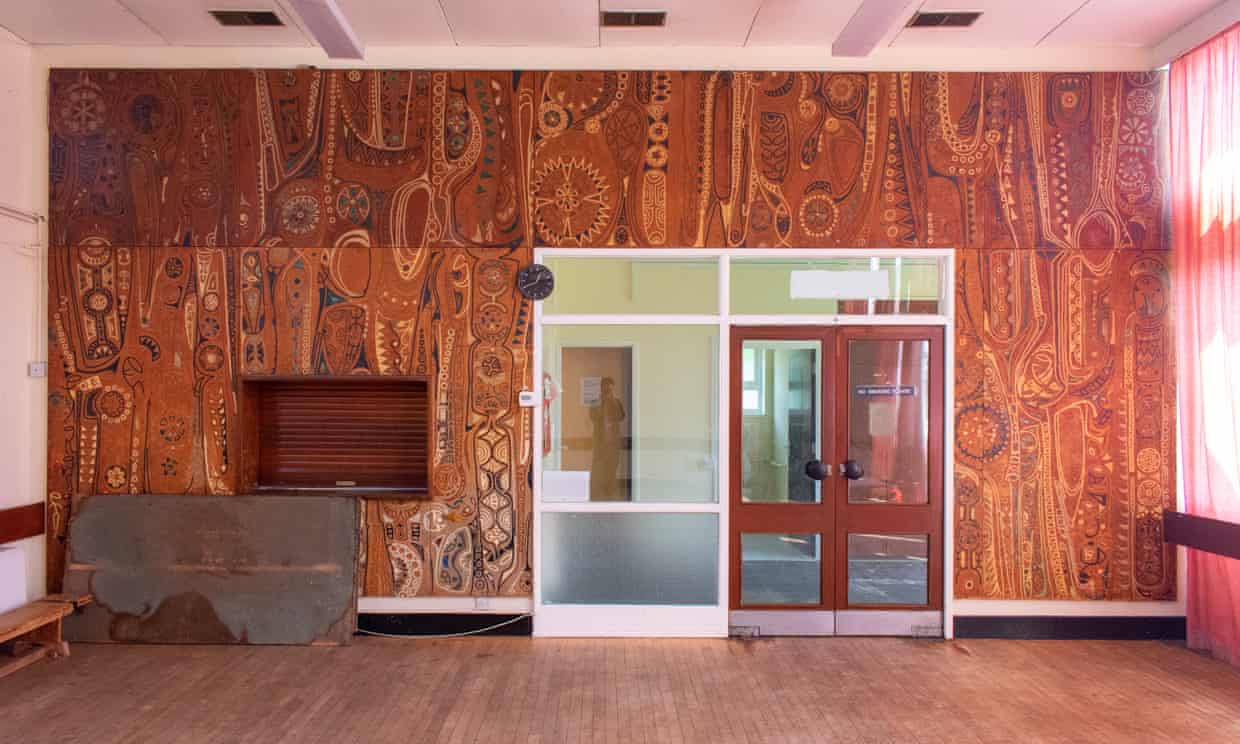
The artwork, a mural by William Mitchell, was originally created for a community center in Blackheath that is slated for demolition to accommodate social housing developments. The mural will be saved by the Heritage of London Trust (Holt).

Completed in 1958, this mural is considered one of the best-preserved examples of Mitchell’s early creations still in its original location. It consists of 13 custom panels that Mitchell expertly carved and filled with resin.

Holt plans to transfer the mural to a primary school within the Brooklands Park estate, where the community center is located.

Nicola Stacey, director of Holt, commented, “The school is within the same estate and dates from the same era, making it the perfect new home. We are eager for it to be highly visible, and being in a school means that children will experience it daily. It will be truly special.”

Brooklands Park is regarded as a prime model of aspirational postwar housing, featuring ample green spaces and thoughtful architectural design. The Twentieth Century Society, a heritage preservation group, has supported local resistance against the demolition of the village hall and made efforts in 2022 to have the mural officially listed by Historic England, a move that was ultimately unsuccessful.

Architect and artist Edmund Hall, known for creating banners, including those for his longtime collaborator Jeremy Deller, participated in the campaign to preserve the mural. He expressed satisfaction with its retention, while also lamenting the loss of its original location.

“While there is some local relief in knowing the mural is ‘saved,’ it still feels somewhat akin to demolishing the Sistine Chapel and salvaging the Last Judgment,” he stated.

Mitchell’s works have faced threats repeatedly in recent years, but due to the efforts of the Twentieth Century Society, 15 of his pieces have been added to the national register, solidifying his status as “one of the most recognized and respected muralists of the era,” according to the organization.

Additionally, he was responsible for the facade of Liverpool’s Metropolitan Cathedral, and April 30 will mark what would have been his 100th birthday.

Mitchell trained at the Royal College of Art and worked as a design consultant for the Greater London Council. During his career, he created approximately 100 art pieces across the capital, many designed to enhance the postwar housing estates.

Holt is also restoring two other Mitchell murals located in Lewisham housing blocks. Stacey highlighted that contemporary developers should draw inspiration from the postwar period when Mitchell was active, advocating for the integration of art into new projects, ideally commissioning local artists for these creations.

“The period during which Mitchell’s work flourished was filled with idealism and inspiration. Today’s developers constructing residential buildings should make art a central part of their projects, commissioning emerging talents rather than treating it as an afterthought.”

“The legacy of artists like Mitchell demonstrates that such works not only benefit the surrounding communities but also foster a sense of pride.”

Related posts

More flats have fire safety defects, brigade warns Текст: Hundreds of blocks of flats in London still have serious fire safety defects, according to new figures from the London Fire Brigade (LFB). More than 1,400 buildings have simultaneous evacuation plans should a fire break out in the block, indicating that they are unsafe for residents to stay put. Stay put – which was theinitial advice for Grenfell towerand which remains the fire policy in most high-rise buildings – relies on a building being properly constructed. Regulations should prevent fire spreading from one flat to another for at least 60 minutes. Edward Daffarn, of Grenfell United, said the latest figures showed that Londoners were still going to sleep in buildings that arent safe. Seventy-two people died in the Grenfell fire in north Kensington on 14 June 2017. Since then, the safety of high-rise homes across the capital has been brought into focus, with the LFB checking cladding, fire doors, windows and the compartmentation of flats. The LFB said the number of buildings with simultaneous evacuation guidance in place had risen following its most recent count to 1,448. There are 883 buildings more than 26ft (18m) tall on the evacuation list, and 565 buildings under 26ft (18m) on the list. Mr Daffarn escaped from the 16th floor of Grenfell. He said: Eight years ago, standing underneath the burning wreckage of Grenfell Tower, I was convinced it would be the catalyst for societal change; that something so awful, which resulted in the horrific loss of 72 lives, could not happen without things changing. And yet we sit here eight years later and people are still going to sleep in buildings that arent safe. We need to create a legacy for Grenfell that means that people that live in social housing, people that live in high-rise blocks, are treated with respect and live in safe buildings. Sharing his own opinion, and acknowledging the difficulty others feel in seeing the tower regularly, Mr Daffarn added: I think the anniversary is made all the more poignant by the fact that this is the last time that we will meet with the tower in situ. We havent got justice yet. It feels wrong to bepulling the tower downwhile so much remains unresolved. Mr Daffarn is hopeful a new documentary about the fire, due to air on Netflix next week, will spur government efforts to take action. He said: It needs to put pressure on the government to ensure that the companies involved are not able to access public funding, and Im hoping that this documentary will accelerate that process. The Cabinet Office confirmed in February seven companies were facing possible bans – cladding firm Arconic, insulation firm Kingspan, former Celotex owners Saint-Gobain, fire inspectors Exova, design and build contractor Rydon, architect Studio E and subcontractor Harley Facades. It is understood investigations were launched into all of them in March, looking into whether any engaged in professional misconduct for the purposes of the Procurement Act 2023, potentially leading them to be debarred from public contracts. No timeline has been given for how long it might be before the outcomes are known. Bereaved and survivors have long campaigned for criminal charges to be brought over the disaster. Police and prosecutors have previously said investigators would need until the end of 2025 to complete their inquiry, with final decisions on potential criminal charges by the end of 2026. The near 10-year wait for justice has beendescribed by families as unbearable. A spokesperson for the Ministry of Housing, Communities and Local Government said: [We] have been clear that the pace of remediation has been too slow for too long. Thats why we are taking decisive action through our Remediation Acceleration Plan to fix unsafe buildings by 2029 faster, while we continue to support residents and identify buildings at risk. Additional reporting by PA Media

Careful Dismantling of Grenfell Tower Begins: A Two-Year Journey Towards Healing and Remembrance

rimmaruslan98@gmail.com

Notting Hill Carnivals Future at Risk: Council Faces £82m Budget Shortfall, Funding Cuts Loom

rimmaruslan98@gmail.com

This website uses cookies to improve your experience. We'll assume you're ok with this, but you can opt-out if you wish. Accept Read More