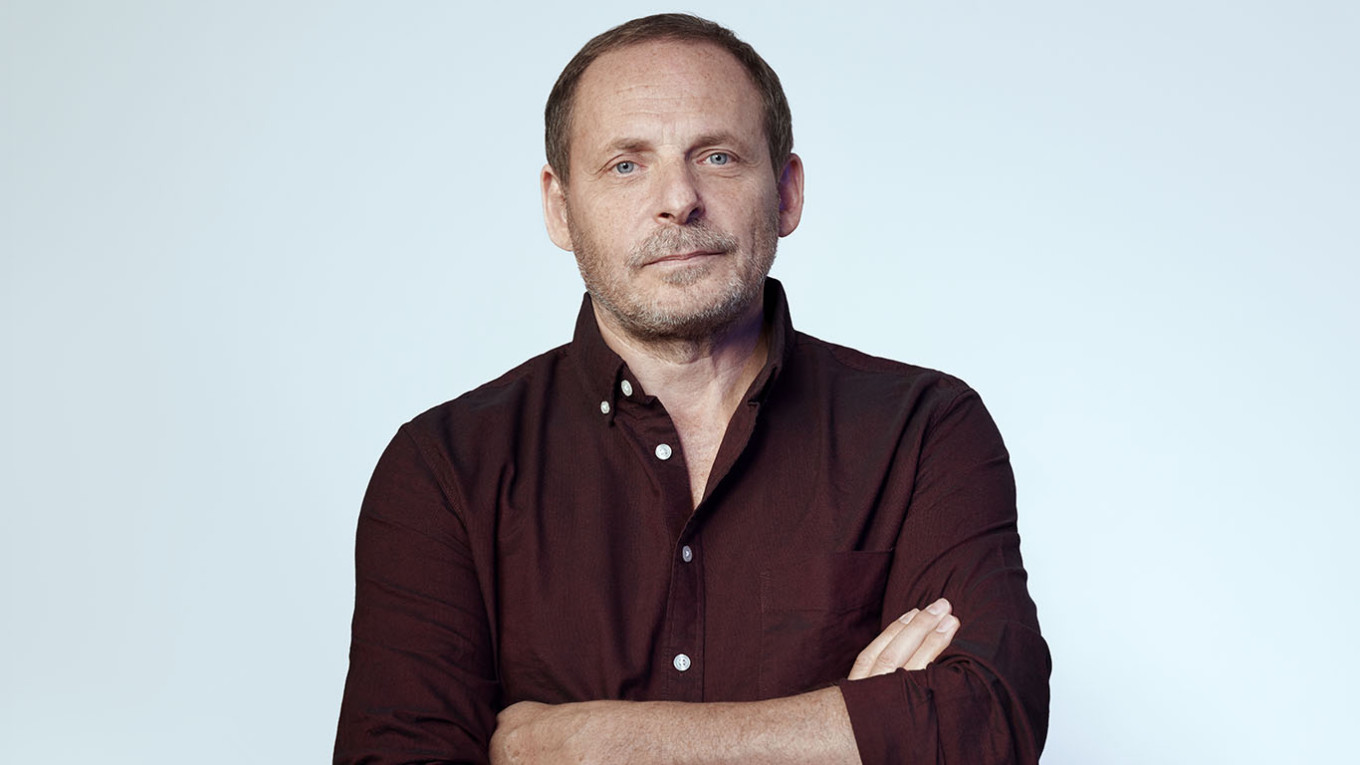
It seemed that Arkady Volozh’s prominence in the Russian tech industry was coming to an end.
In the summer of 2022, the CEO of Yandex, Russia’s largest technology firm, found himself facing sanctions from Europe. Brussels officials charged that Volozh was aiding Russia’s extensive invasion of Ukraine. As a result, he stepped down from his role.
Those familiar with the billionaire predicted that this setback would be fleeting. Over three years later, it appears they were correct.
Now, at 61, Volozh leads Nebius, a substantial Dutch tech enterprise that emerged from a deal to divide the remaining international assets of Yandex.
He has accomplished what many in the business elite could not: exiting the Russian market while transforming his previous venture into a new one. Last September, Nebius made headlines by securing nearly a $20 billion AI contract with Microsoft, followed by a similar $3 billion agreement with Meta the following month.
“I’ve never been more optimistic about the future,” Volozh expressed in an interview last year.
But who exactly is the architect behind this impressive turnaround, and what strategies did he employ to achieve it?
Neither Volozh nor Nebius agreed to interviews, prompting The Moscow Times to reach out to nearly a dozen former colleagues, Yandex and Nebius team members, and observers who have followed his career through the ups and downs of Russia’s tech landscape.
Their insights describe Volozh as a meticulous, soft-spoken delegator whose true talent lies in maximizing the potential of those surrounding him.
“He was an outstanding product visionary,” remarked Greg Abovsky, a former COO and CFO at Yandex. “Sometimes, he would harshly critique someone for designing a button a certain way… yet at other times, he would take immense pride in his team’s achievements.”
“He had a profound impact on people, positively and negatively,” added Abovsky.
Volozh was born in 1964 in Atyrau, a port city along Kazakhstan’s Caspian Sea coast during Soviet times. In the early ’80s, he relocated to Moscow to study at the Gubkin Russian State University of Oil and Gas, a respected institution for hard sciences where, per his LinkedIn profile, he pursued applied mathematics.
The collapse of the Soviet Union presented a prime opportunity for ambitious Russians like him to seek their fortunes. With the emergence of free markets, Volozh set out to make a name for himself.
During this time, he reconnected with an old schoolmate from Kazakhstan, Ilya Segalovich. Together, they launched a search program for the Russian internet.
Thus, Yandex, a mashup of “yet another indexer,” was established.
Reflecting on his motivations in 2005, Volozh shared with The Moscow Times that he aimed to develop products for future generations.
“We used to create services based on our own needs,” the billionaire revealed. “Now, we envision services that our parents and children would find useful.”
Colleagues from the early stages of his career recall Volozh’s charisma as he pursued that vision, even as the competitive tech landscape made it challenging to distinguish himself.
“He was very energetic and proactive,” noted Alexander Laryanovskiy, a tech entrepreneur from Soviet Turkmenistan who met Volozh in the late ’90s and later joined Yandex’s international expansion efforts.
Yandex, which grew beyond a mere search engine, exuded confidence in its aspirations to dominate the Russian market. In 2003, the company turned down a $130 million buyout offer from Google. When Yandex went public in 2011, it exceeded expectations, raising $1.3 billion and establishing itself as a household name.
“Yandex is basically the Russian equivalent of ‘Google,’” Anthony Moro, then the director of emerging markets at BNY Mellon, remarked.
Volozh’s relationship with his co-founder Segalovich became especially noticeable as the political landscape in Russia began to shift in the 2010s. While Segalovich took to the streets advocating for clean elections, Volozh opted for a more reserved political stance.
“Publicly, Volozh maintained a distance from these matters,” said Andrei Soldatov, an investigative journalist and author of “The Red Web,” which explores Russia’s internet control and surveillance strategies.
Following Segalovich’s death from stomach cancer in 2013 and with Yandex now the most lucrative media entity in Russia, Volozh faced the daunting challenge of navigating the company’s relationship with the Kremlin.
“I have no friction with the state… just as I don’t have friction with the weather,” Volozh stated in a 2017 interview with Wired.
However, critics have accused him of steering a company that frequently made concessions to the Kremlin.
Lev Gershenzon, the former head of Yandex News, recounted a striking instance in an interview with The Moscow Times.
In 2010, Gershenzon received a call from the office of Russia’s newly appointed chief tax officer. At the time, Mikhail Mishustin, who later would become known for succeeding Dmitry Medvedev as prime minister, needed positive press to support his political momentum, Gershenzon was informed.
An official from the tax office had taken issue with some unflattering search results related to Mishustin on Yandex News and requested their deletion.
“There were specific and concrete demands,” Gershenzon recalled.
The request worked its way up the chain of command. Ultimately, Yandex’s leadership decided to alter the search results concerning Mishustin.
While Volozh was not directly involved in these discussions, Gershenzon emphasized that this incident illustrated the type of compromises Yandex often made under his leadership.
“His stance was that in order to thrive in Russia, we needed to ensure that influential officials were at least satisfied with our actions,” Gershenzon reflected on the experience, which fueled his desire to leave Yandex.
That balancing act eventually became untenable as Yandex faced unprecedented turmoil following Russia’s invasion of Ukraine in February 2022.
In the initial months of the conflict, two executives and an equal number of board members resigned; Yandex News was sold to Kremlin-aligned tech giant VK, and the company’s shares on U.S. exchanges were frozen.
Users visiting Yandex News encountered a distorted narrative of the ongoing conflict, leading to internal chaos.
During the war’s early stages, the news aggregator largely featured coverage from pro-Kremlin sources, sparking allegations of widespread censorship.
A former Yandex manager, who requested anonymity, described a climate of uncertainty for lower-level employees. Approximately a third of his team’s leadership left, some believing that Yandex was propagating pro-war narratives, he said.
“With most of our employees working remotely, they lost access to their banks and began to leave the country,” the former employee recounted to The Moscow Times. “It was a stressful time for everyone.”
Volozh’s abrupt resignation in June was indicative of the irreparable impact of these wartime shifts on Yandex.
By sanctioning Volozh, the European Union characterized him as the head of an organization “responsible for promoting state media and narratives,” contributing tax revenue to the Kremlin, and tying him to “actions or policies” that undermine Ukrainian sovereignty.
Volozh labeled these accusations as “misguided.” Those who anticipated a reflective commentary on his departure from Yandex—perhaps even a denunciation of the war—were left waiting.
He eventually expressed his sentiments in a poignant farewell message released just before New Year’s festivities that year.
“Yandex is the work of my life,” he wrote, acknowledging that countless former employees also played a role in the company’s achievements. “Thank you to everyone who has built and continues to build the finest tech company in the country. I cherish you all and send hugs. I miss you dearly.”
Nevertheless, his message lacked an outright condemnation of the war, and critics interpreted his silence as tacit approval.
That autumn, a group of squatters occupied his Amsterdam home, displaying banners reading “Against War and Capitalism” from the windows. The following summer, journalists discovered he had begun referring to himself on his personal website as a “Kazakhstan-born Israeli tech entrepreneur.”
Whether due to the adverse publicity, a shift in his conscience, or other motivations, Volozh ultimately felt compelled to speak out.
“Russia’s invasion of Ukraine is barbaric, and I firmly oppose it,” he stated in a message provided to the independent Russian news outlet The Bell in August 2023.
“There were reasons for my silence during this protracted period,” he added. “While questions about the timing of my statement may arise, its essence is clear: I stand against the war.”
He claimed that his time had been occupied with assisting Russian engineers seeking to emigrate. Now, those individuals were poised to establish new ventures abroad, “continuing to foster technological innovation.”
The same could be said for Volozh, who was also contemplating new initiatives.
Yandex’s parent company was registered in the Netherlands back in 2007. As former board member Esther Dyson noted, one advantage of this decision was that it required the company to adhere to foreign regulations, which helped shield it from some of the Kremlin’s scrutiny and political quid-pro-quo often associated with doing business in Russia.
“We operated in Russia, making us subject to the Russian government, but with our status as a foreign entity, there were certain actions we as a company were unable to undertake,” Dyson explained to The Moscow Times.
Nebius owes its very foundation to this strategic choice.
Amid the controversies surrounding Volozh, a prolonged legal battle regarding the future of Yandex unfolded. Ultimately, a deal was struck that involved the sale of extensive assets of its Dutch parent company to a Russian consortium for 475 billion rubles (approximately $5.2 billion) in cash and shares.
“The entire divestiture process was incredibly intricate,” commented Dyson, who briefly served on Nebius’s board. “And unlike many firms, we found ourselves, I believe, in a relatively advantageous position.”
“Many companies emerged with almost nothing,” she added.
This arrangement ensured that whatever venture Volozh sought to establish with these foreign assets would be based in the Netherlands. These assets were significant and included a large data center in Finland.
In July of the previous year, he unveiled Yandex’s successor as Nebius, a firm devoted to providing infrastructure for AI. He likened such technology to the “railways of the industrial revolution,” asserting that Nebius would lead its development.
Currently, Nebius boasts a workforce of over 1,000 engineers working on various projects, most of whom transitioned from Yandex, as Volozh noted in an interview.
One employee, speaking on the condition of anonymity, remarked that being part of a company experiencing such rapid growth is “undoubtedly a fascinating experience.”
“I have a really good rapport with my company,” the Nebius employee stated. “I’m grateful to them for relocating me [out of Russia] and for everything else; I feel quite content working here.”
Travel about an hour north of Helsinki, Finland, and you will arrive in the small town of Mäntsälä.
This quaint location features a list of notable attractions, which might include a stunning 20th-century church and various traditional Finnish mansions.
And, naturally, the expansive white buildings just off the highway.
Shaped like a wave crest, they house the powerful servers and cooling systems that companies rely on to meet the enormous demands of AI computation. An expansion at this facility will soon enhance its capacity further. Above the entrance, where Yandex’s red and black logo once stood, a new emblem now reads “Nebius.”
The company is banking on the future of such facilities, with the Mäntsälä center being one of the primary assets retained during the Yandex split. Its international growth has seen the establishment of everything from GPU clusters to data centers in locations ranging from London to New Jersey.
With the increase in demand for AI, Nebius expects that businesses will be drawn to its industry expertise.
“This isn’t just any random organization,” Matt Weigand, a partner at the venture capital firm Accel, which invested in Nebius, told Bloomberg.
The gamble has already proved fruitful. This fall, Nebius secured one of its largest contracts to date. As part of a deal potentially valued at up to $20 billion, the company will provide cloud computing power to Microsoft.
Individuals who have followed Volozh’s journey told The Moscow Times that the success of his transition can largely be credited to his knack for assembling and managing the right team members.
“He has a talent for bringing together exceptionally intelligent people,” stated Soldatov, the Russian journalist. “He’s always exhibited that quality.”
Abovsky, the former COO and CFO, recalled Volozh’s saying about how to ruin a hamburger: “If you don’t flip it often enough, you’ll overcook it.” At Yandex, this meant frequently reallocating “people to different responsibilities so they could learn various aspects of the business.”
He added that Volozh positioned himself more as a peer than a typical boss, acting like a player-coach.
Despite the changes represented by Nebius, certain elements of Volozh’s life have returned to a sense of normalcy over the past year.
In March 2024, the European Union removed him from its sanctions list, and Forbes reports that his wealth has stabilized to approximately its pre-war levels.
Even Volozh’s critics express a begrudging admiration for his resurgence.
Gershenzon is among them. Despite his past criticisms regarding how Volozh navigated relations with the Kremlin, he concedes that the former Yandex leader is a talented entrepreneur whose potential thrives best outside of Russia.
“It’s fantastic that Arkady Volozh—a brilliant, charismatic leader—is not involved in the Russian war at this moment,” he remarked. “However, this fact underscores that there were no barriers prior to the war preventing the creation of such opportunities without making compromises.”