Decline in Russian Military Contracts: A 6% Drop in 2025 Recruitment | World | london-news-net.preview-domain.com

Decline in Russian Military Contracts: A 6% Drop in 2025 Recruitment

Decline in Russian Military Contracts: A 6% Drop in 2025 Recruitment

Approximately 422,000 individuals enlisted with the Russian military last year, which represents a 6% decrease from the previous year, according to the deputy chair of Russia’s Security Council on Friday.

The reasons behind this modest decline are not entirely clear, although reports indicate that some Russian regions reduced their military sign-on bonuses last year due to economic challenges.

“In brief, I’d like to summarize last year’s outcomes. The supreme commander-in-chief’s target was achieved: 422,704 individuals signed military contracts,” Dmitry Medvedev mentioned in a video shared on his social media.

He projected that the number for 2024 would be around 450,000.

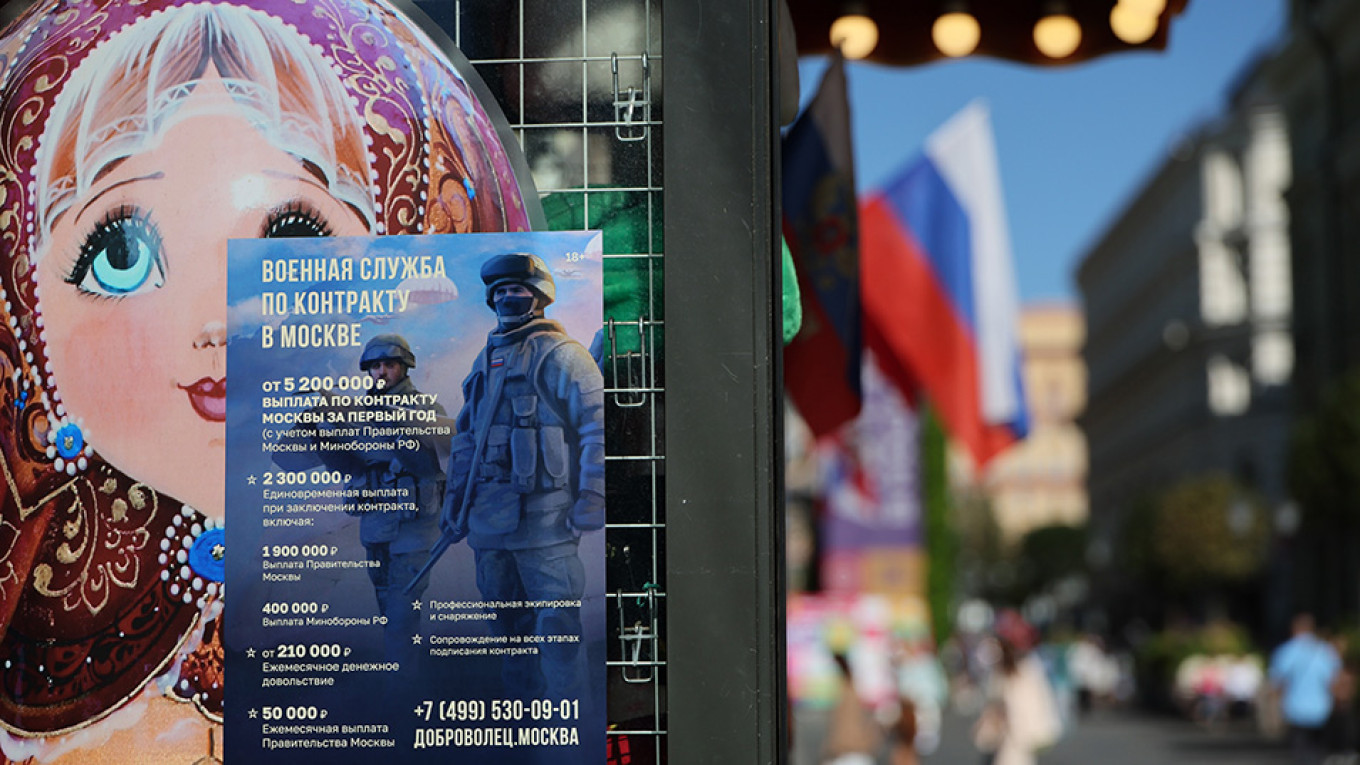
Since the onset of the war in Ukraine, Russia has implemented a series of aggressive recruitment campaigns to compensate for significant losses on the battlefield and to achieve President Vladimir Putin’s goal of enlarging the country’s active military forces.

Those who enlist can anticipate high salaries, a minimum signing bonus of $5,000, with many regions offering significantly higher amounts, as well as a variety of social benefits, including free housing assistance.

The Kremlin and regional leaders are eager to avert another mobilization, which would involve forcibly drafting men into military service.

The mobilization effort in 2022 faced criticism for disproportionately affecting ethnic minority groups and resulted in rare protests and a mass exodus of men of fighting age from Russia.

On the battlefield, Russia maintains a numerical advantage over Ukraine, as Kyiv has faced challenges in recruiting and drafting soldiers throughout the ongoing conflict.

Last year, Putin indicated that 700,000 Russian troops were positioned at the frontline.

This surge in recruitment is essential to offset the substantial loss of soldiers who have been killed or injured during the nearly four-year-long war.

Moscow does not disclose official casualty figures; however, by analyzing public statements made by relatives and local officials, the BBC, along with the independent outlet Mediazona, has confirmed that at least 160,000 Russian soldiers have died.

Related posts

Murder Case of Khachaturyan Sisters Reopened Amid Controversy Over Self-Defense Claims

rimmaruslan98@gmail.com

Black Sea Tanker That Sustained Blast Hit Again Текст: Turkeys Transport Ministry said one of two empty oil tankers hit by blasts in the Black Sea late Friday had been struck again early on Saturday, blaming an unmanned sea vehicle. The Virat, which was previously said to have been attacked by unmanned maritime vehicles approximately 35 nautical miles off the Black Sea coastline, was attacked again by unmanned maritime vehicles early this morning, the ministry said on X. It said the tanker sustained only minor damage on the starboard side and that none of the 20-strong crew were hurt. On Friday evening, Turkeys Transport Ministry said two empty oil tankers, the Virat and the Kairos, had reported explosions but sustained no casualties, saying they had been struck in Turkish waters but without saying what had caused the blasts. The ministrys post was the first official confirmation that the Virat was attacked by drones. Turkey said the Kairos was en route to the Black Sea port of Novorossiysk, where a major Russian oil terminal halted operations early on Saturday after being hit by a naval drone attack, the consortium that owns the terminal said. The terminal, part of which sustained significant damage, is a major conduit for Kazakh oil, the Caspian Pipeline Consortium (CPC) said, without saying who was responsible for the attack. A Ukrainian source later claimed responsibility for the attacks on two oil tankers. Modernized Sea Baby naval drones successfully targeted the vessels, a source in Ukraines SBU security service told AFP. The blast struck the Kairos around 15:00 GMT on Friday, with rescuers evacuating its 25 crew members after a fire broke out. At the time, it was about 100 kilometers east of the point where the Bosphorus Strait enters the Black Sea, Turkish officials said. The Virat was struck later. At the time, it was about 400 kilometers further east, according to the VesselFinder tracking site. Transport Minister Abdulkadir Uraloglu said both had suffered explosions, telling private NTV television late Friday the tankers might have been hit by a mine or struck by a rocket or a drone. An external impact means the vessel was hit by a mine, a rocket, or a similar projectile, or perhaps by a drone, or by an unmanned underwater vehicle. These are the first things that come to mind, he said. In a post on X, the Turkish Maritime Affairs Directorate said the Kairos was en route to Russias Novorossiysk when it reported an external impact causing a fire 28 nautical miles off the Turkish coast. It posted dramatic images of flames and thick black smoke pouring out of the vessel, with the blaze still raging some five hours later. BİLGİLENDİRME‼️Rusyaya seyir halindeyken Karadeniz açıklarında patlama ve yangın meydana gelen KAIROS isimli gemide devam eden yangına, NENE HATUN Acil Müdahale Gemimiz ve KURTARMA-12 Römorkörümüz ile@kiyiemniyet’e bağlı ekiplerimiz müdahale etmeye devam etmektedir.…pic.twitter.com/gx7iG5Rc5F The directorate later said the Virat had reported being hit approximately 35 nautical miles offshore, adding that all 20 crew were unharmed but there was heavy smoke detected in the engine room, although those on board had not requested evacuation. Both tankers — which are flying a Gambian flag, according to the VesselFinder website — are subject to Western sanctions for transporting oil from Russian ports in defiance of an embargo imposed after Russias 2022 invasion of Ukraine. Since Russia invaded Ukraine, both sides have planted sea mines to protect their coastlines. Many have since been located and destroyed in the Black Sea, but others have drifted, notably due to storms, endangering shipping. In response, NATO members Turkey, Bulgaria, and Romania — all of whom border the Black Sea — set up the Mine Countermeasures Naval Group (MCM Black Sea) in 2024 to oversee de-mining operations.

rimmaruslan98@gmail.com

Intervision: Russias Attempt to Create a New Cultural Stage Falls Short

rimmaruslan98@gmail.com

This website uses cookies to improve your experience. We'll assume you're ok with this, but you can opt-out if you wish. Accept Read More