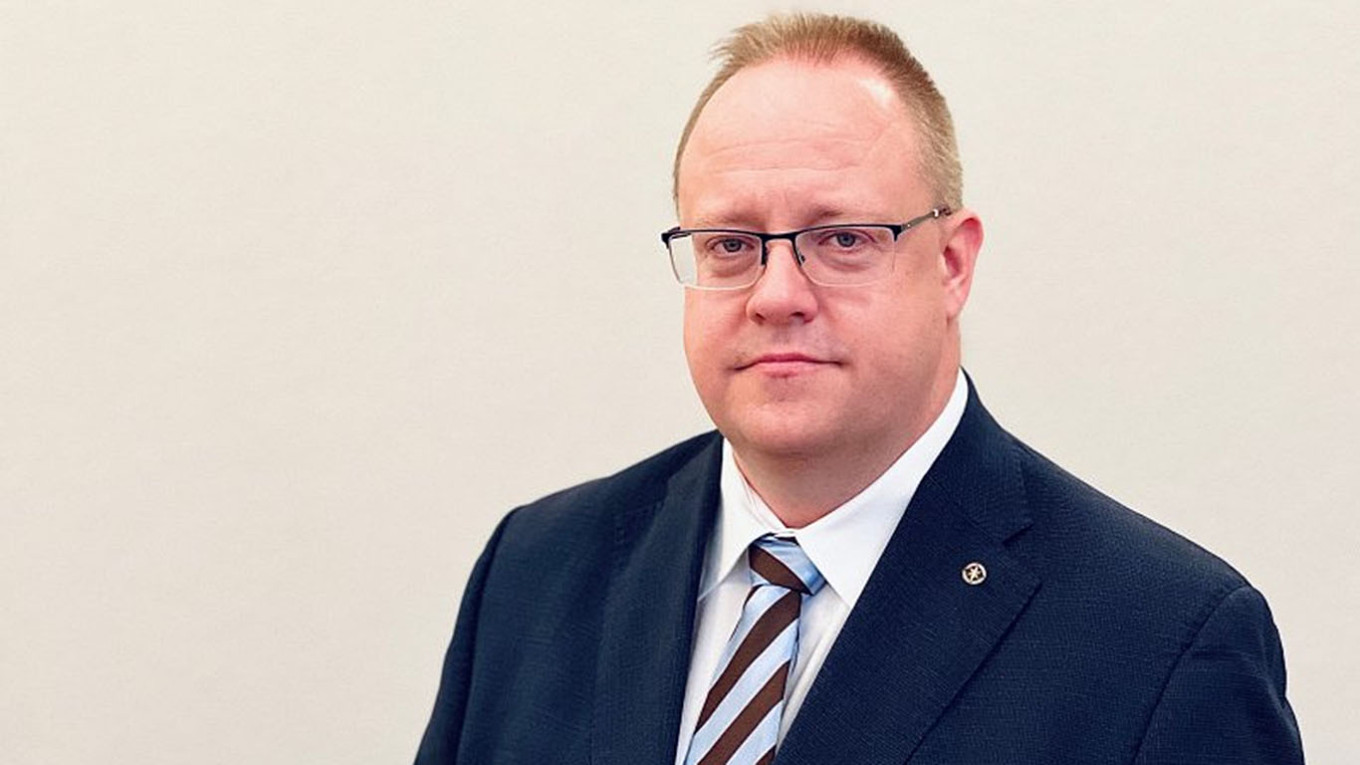
The head of Estonia’s foreign intelligence service stated on Monday that there is no evidence suggesting that President Vladimir Putin intends to launch an assault on the Baltic states or NATO, despite increasing alerts from European leaders about the potential for direct conflict between the West and Russia in the coming years.
Kaupo Rosin, the Director General of the Estonian Foreign Intelligence Service, remarked, “As a result of our responses, Russia has changed its conduct following various regional incidents. It remains evident that Russia respects NATO and is currently seeking to avoid any overt confrontations.”
Estonia, which was once part of the Soviet Union and has had a historically tense relationship with Moscow, has taken a leading role in addressing Russian security threats and has shown substantial support for Ukraine since the full-scale invasion led by Putin in February 2022.
Rosin noted that NATO’s united reactions to Russian violations of airspace and suspected sabotage actions—including damage to undersea cables in the Baltic Sea—have compelled Moscow to exercise greater caution, leading to a significant decrease in such incidents recently.
“This does not eliminate the possibility of future occurrences since military activity remains elevated and the conflict in Ukraine is still active,” the intelligence chief explained. “While such events can still occur theoretically, there is currently no evidence that Russia is intentionally seeking to escalate tensions.”
Rosin’s comments sharply contrast with alarming predictions from European officials suggesting that Putin may be gearing up for a direct military engagement with the West should Russia emerge victorious in its ongoing war against Ukraine.
Earlier this month, NATO Secretary General Mark Rutte warned that the alliance must prepare for a potential Russian offensive within the next five years, indicating that a future NATO-Russia conflict could mirror the scale of the battles witnessed during World War II.
“The forces of oppression are advancing once more,” Rutte declared in a speech in Berlin. “We are likely to be Russia’s next target.”
Other officials have proposed even shorter timelines for potential conflict. German Defense Minister Boris Pistorius hinted that hostilities could erupt within a few years, while the head of the UK’s MI6 intelligence service stated last week that the West is currently navigating a “space between peace and war” with Russia.
Putin has dismissed these warnings as alarmist and claimed that Russia has no intention of engaging in direct military confrontations with NATO; however, he has indicated that Russia is ready “right now” to engage in war with Europe if necessary.
Some analysts have also raised doubts about whether Russia is prepared or able to confront NATO at this moment, arguing that dire warnings might be aimed at justifying increased defense budgets, especially with U.S. President Donald Trump urging NATO members to enhance military funding.
In the ERR interview, Rosin criticized the frequent use of the phrase “hybrid attacks” to characterize alleged Russian activities in Europe, which include sabotage, cyberattacks, and drone incidents around airports.
“We should use precise terminology. If it’s sabotage, then it’s sabotage. If it’s a cyberattack, it’s a cyberattack,” the intelligence chief asserted. “The term ‘hybrid’ tends to dilute the reality and creates a misleadingly innocent interpretation of the situation.”
Even as he downplayed the threat of an imminent military confrontation, Rosin emphasized that Russia continues to aim at hindering Europe’s rearmament efforts. He contended that the Kremlin attempts to convince Western audiences that Russia does not pose a threat, with Putin even proposing to formalize a policy of non-aggression towards Europe in Russian law.
“Conversely, Russia sees merit in engaging with specific political factions or segments of the population to disseminate the notion that an arms race is futile, diverting resources from crucial areas such as social welfare, ultimately harming Europe itself,” he stated.
Rosin cautioned that while Russia may not currently be plotting an attack, the circumstances can change. He stressed that ongoing deterrence, which includes continued support for Ukraine, is vital.
“To accomplish this, we need to invest in our defense—meaning Estonia, the European Union, and NATO. Maintaining the current situation requires substantial effort,” he concluded.