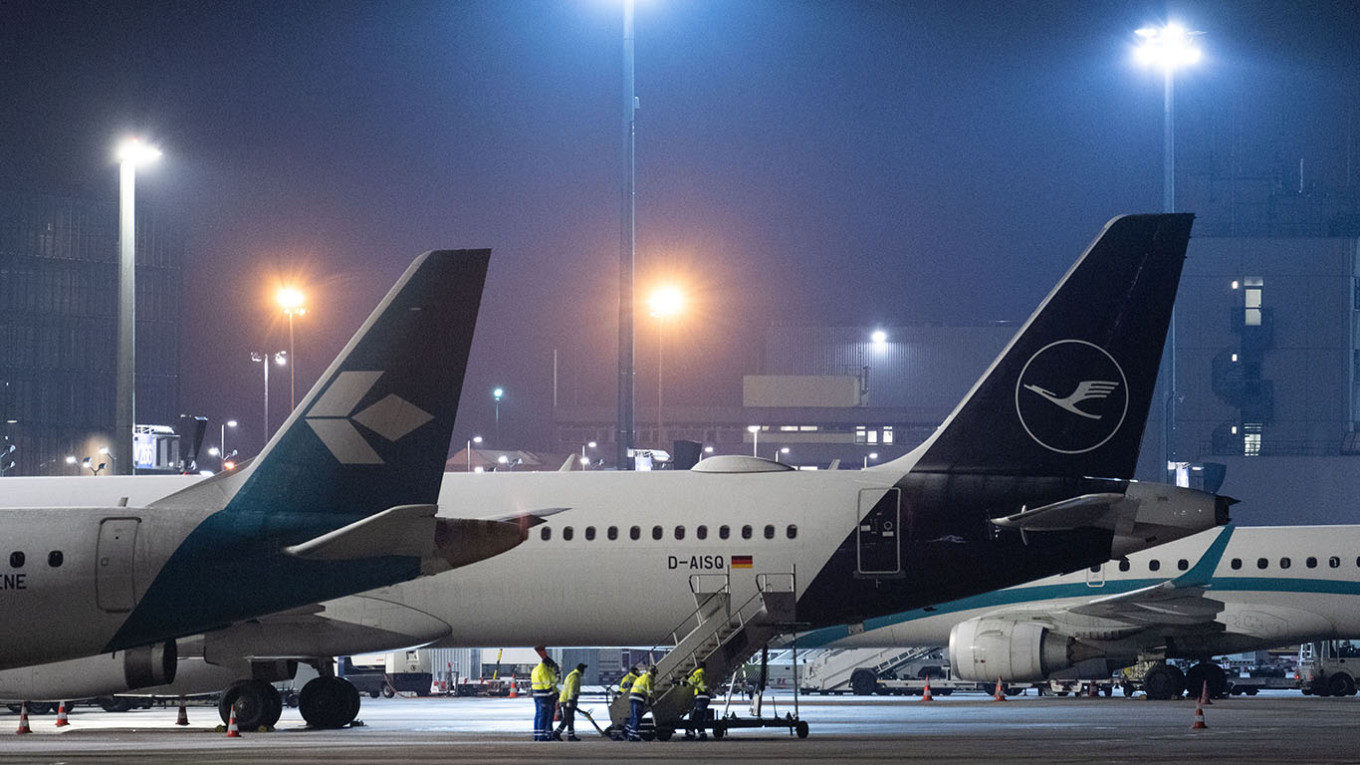
On Friday, Germany accused Russia of conducting a cyberattack aimed at its air traffic control and disseminating misinformation ahead of the general election set for February. Russia dismissed these allegations as “absurd” and “groundless.”
A spokesperson from the German Foreign Ministry stated that intelligence agencies had evidence linking hacker groups associated with Russia’s military intelligence service, GRU, to the attack and disinformation campaigns.
“Through an extensive analysis by German intelligence, we have clearly identified the perpetrators and established Moscow’s accountability,” the spokesman remarked during a regular press briefing.
“We can now definitively attribute the cyberattack on German Air Safety that occurred in August 2024 to the hacker group APT28, known as Fancy Bear,” he added.
“The evidence we have confirms that the Russian military intelligence service, the GRU, is responsible for this incident,” the spokesperson further noted.
He also indicated that Russia had attempted to influence the parliamentary elections in February, which resulted in a victory for Chancellor Friedrich Merz’s conservatives, with the far-right AfD achieving its highest-ever position in second place.
“Additionally, we can now confirm that Russia, through its Storm 1516 operation, aimed to sway and destabilize the recent federal election,” he stated during a press conference.
The spokesperson mentioned that a Moscow think tank supported by the GRU, along with other organizations, disseminated artificially created content and deepfake images, aiming to divide society and “erode trust in democratic institutions.”
The Russian Embassy in Berlin, in a statement sent to AFP, staunchly denied any involvement of Russia in the alleged activities.
“The claims regarding the participation of Russian state entities in these incidents and in hacker group activities are completely unfounded, and totally absurd,” the statement asserted.
Sources from security agencies reported that much of the information spread by the Storm 1516 campaign contained falsehoods targeting Merz and other noted figures, including former Foreign Minister Annalena Baerbock and former Vice Chancellor Robert Habeck, both prominent members of the Greens party.
The German Fact Check service from AFP debunked two allegations made in the campaign that aimed to undermine trust in the electoral process: specifically, claims that the AfD was omitted from ballots in Leipzig and that votes for the party in Hamburg were destroyed before counting.
The Foreign Ministry representative stated that Germany possessed “robust evidence” of Russia’s involvement in these operations, but emphasized that he could not disclose further details due to the nature of German intelligence work.
Sinan Selen, head of the BfV domestic intelligence agency, commented that “the Storm 1516 campaign vividly illustrates how our democratic system is under attack.”
“This disinformation network includes pro-Russian influencers with vast outreach, conspiracy theories, and elements from extremist right-wing groups,” Selen explained.
The German Foreign Ministry spokesperson warned that Berlin would implement “a number of countermeasures to hold Russia accountable for its hybrid activities, in close cooperation with our European partners.”
Germany plans to advocate for “new individual sanctions against hybrid actors at the European level,” he mentioned, without specifying who those actors were.
He also stated that starting in January, EU countries would “monitor cross-border travel by Russian diplomats within the Schengen Area to enhance information sharing and reduce intelligence risks.”
Governments throughout Europe remain vigilant regarding purported Russian espionage, drone monitoring, sabotage efforts, along with cyberattacks and disinformation initiatives.
Since Russia commenced its full-scale invasion in 2022, Germany has been Ukraine’s second-largest provider of assistance and has accused Moscow of being involved in drone flights near various European airports in recent months.