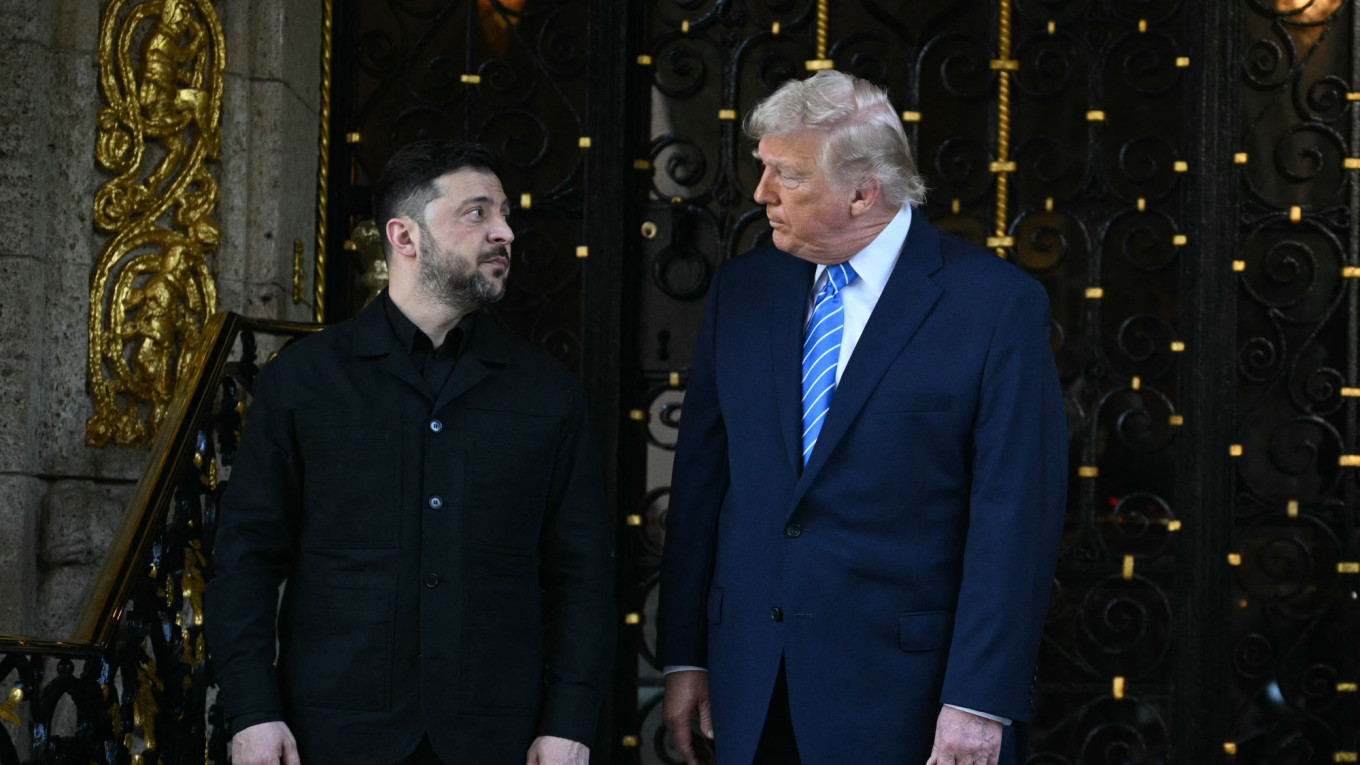
U.S. President Donald Trump stated on Sunday that a resolution to end Russia’s invasion of Ukraine seems closer than ever, although he reported no significant progress regarding territorial disputes following recent discussions with the leaders of the two countries.
Trump, who had pledged to negotiate a peace agreement on his first day in office nearly a year ago, indicated that a clearer picture of the war’s potential resolution, which has resulted in the deaths of tens of thousands since February 2022, would emerge within a few weeks.
In a diplomatic initiative ahead of the New Year, Trump invited Ukrainian President Volodymyr Zelensky to Florida, where they lunched with senior aides the day after Russia intensified its attacks on residential areas in Kyiv.
Similar to their October meeting, Russian President Vladimir Putin had also spoken to Trump shortly before, with Trump asserting that Moscow was “serious” about seeking peace despite the ongoing assaults.
“I genuinely believe we’re, Mr. President, probably closer than—much closer than—ever before with both sides,” Trump remarked, with Zelensky present at his Mar-a-Lago estate’s tea room.
“Everyone wants this to come to an end,” Trump added.
Following their discussions, Trump and Zelensky jointly contacted key European leaders who are particularly concerned about any decisions that might encourage Russia.
Zelensky mentioned the possibility of returning for further discussions in Washington with the European leaders in January.
Throughout the visit, Zelensky remained carefully courteous, likely recalling his previous troubling meeting at the White House on February 28, during which Trump and Vice President J.D. Vance publicly criticized him for a lack of gratitude.
Despite his expressed optimism, Trump provided few specifics about the progress he claimed, instead revisiting familiar complaints about his predecessor, Joe Biden, who allocated billions for Ukraine’s defense, while also discussing his own friendly relationship with Putin.
Trump acknowledged ongoing disputes over territory between Kyiv and Moscow. The current proposal, which has been adjusted following weeks of intense negotiations between the U.S. and Ukraine, suggests halting the conflict along the existing front lines in the eastern Donbas region and establishing a demilitarized zone, while Russia has consistently sought territorial concessions.
“It’s still not settled, but we’re getting a lot closer. It’s a complicated issue, but one I believe can be resolved,” Trump noted.
He also expressed willingness to address the Ukrainian parliament to advocate for the plan—an idea that Zelensky eagerly embraced, despite its unlikeliness.
Zelensky has expressed a willingness to consider the revised U.S. proposal, marking Kyiv’s most overt acknowledgment thus far of potential territorial concessions, though any agreement would require approval from Ukrainian voters in a referendum.
In contrast, Russia has shown little sign of being willing to compromise, maintaining confidence in the steady gains it has made over four years against strong Ukrainian defenses.
In a readout of the call between Putin and Trump, the Kremlin urged Kyiv to make a “courageous decision” and withdraw its troops from Donbas, suggesting that European leaders were hindering progress toward peace.
“Russia and the United States share the same stance that the Ukrainian and European proposal for a temporary ceasefire… would merely extend the conflict and reignite hostilities,” stated Yury Ushakov, the Kremlin’s diplomatic adviser.
Trump’s advisors had previously suggested the possibility of providing Ukraine with NATO-like security guarantees, implying that member states would take military action if Russia strikes again.
Zelensky remarked that the peace framework proposed by Trump was “90% agreed upon” and that the “U.S.-Ukraine security guarantees: 100% agreed.”
He added that both sides were still finalizing a “prosperity plan” for Ukraine and determining the order of various actions to implement.
Russia had firmly opposed any former Soviet republic’s entry into NATO.
In its most recent offensive utilizing drones and missiles, Russia disrupted power and heating services to hundreds of thousands during the bitter cold.
“If the authorities in Kyiv are unwilling to resolve this matter peacefully, we will address all issues through military means,” Putin stated on Saturday.