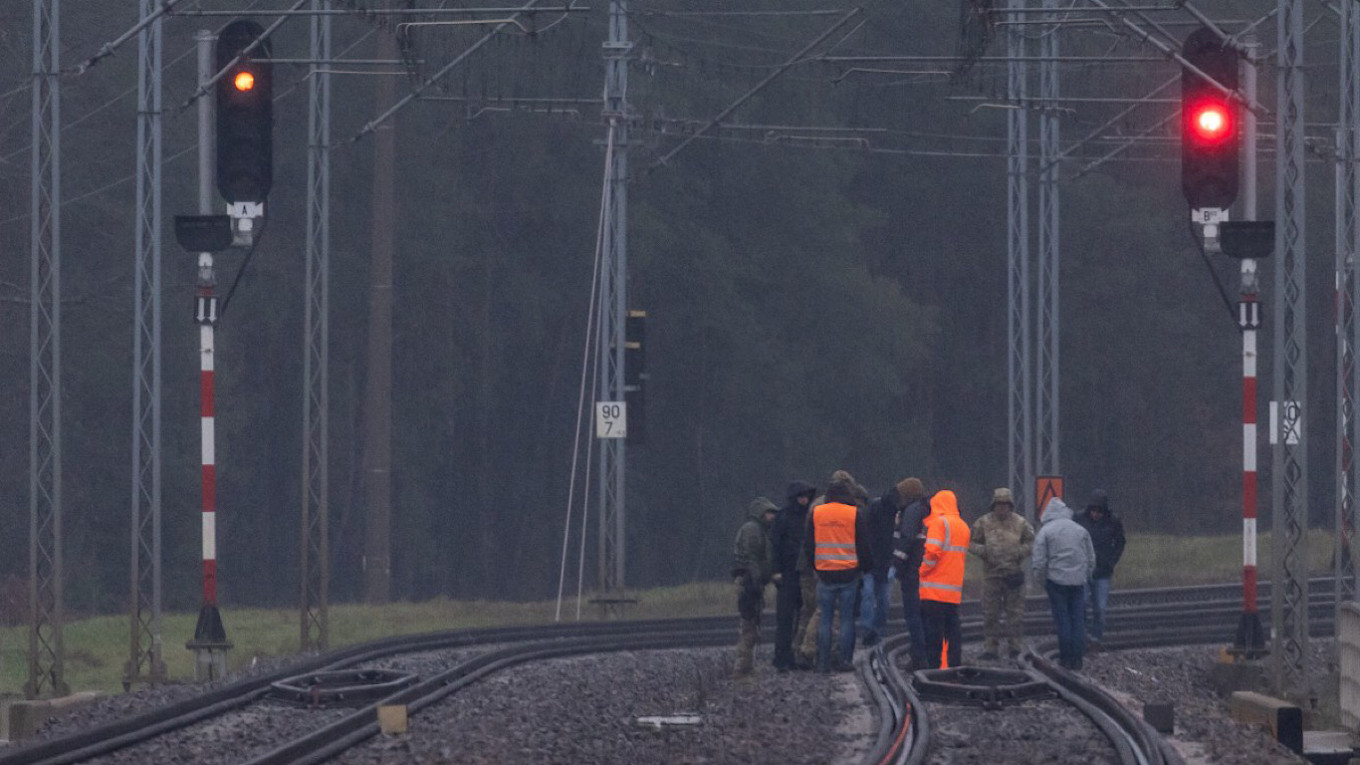
Two Ukrainians who are believed to be acting on behalf of Russian intelligence have been implicated in separate incidents of railway sabotage in Poland, Prime Minister Donald Tusk informed parliament on Tuesday.
According to Tusk, based on information provided by prosecutors and investigators, the two individuals “have been collaborating with Russian agencies for an extended period.” He mentioned that while authorities are aware of the suspects’ identities, they will withhold their names during the ongoing investigation.
The sabotage incidents, which took place over the weekend, compromised a railway line that is instrumental for transporting goods to Ukraine. Tusk referred to these events as “possibly the most significant national security threat Poland has faced since the onset of the full-scale conflict in Ukraine.”
In the initial occurrence, a steel device was affixed to the railway tracks in what Tusk described as “most likely an attempt to derail a train.” The second incident involved the explosion of a military-grade explosive as a freight train passed by, although no casualties were reported from this event.
One of the suspects is a Ukrainian national who had been sentenced in May by a court in Lviv for “sabotage,” while the other is a resident of the Russian-occupied Donbas region. Both individuals entered Poland from Belarus this fall and are suspected to have returned to Belarus shortly after the events occurred.
Tusk noted that a total of 23 arrests have been made in relation to sabotage activities in Poland. As a member of NATO and the European Union, Poland has emerged as a crucial transit point for military and humanitarian aid directed towards Ukraine.
In the wake of these revelations, European leaders, including European Commission President Ursula von der Leyen, NATO Secretary General Mark Rutte, and Ukrainian Foreign Minister Andriy Sybiga, expressed their support for Poland. Sybiga suggested that the sabotage might have been executed “to gauge reactions.”
Tusk further stated that the attacks were likely intended to provoke “social and political ramifications,” especially by inciting anti-Ukrainian sentiments, which he deemed “particularly perilous in nations like Poland.”
Following Tusk’s statements, the Kremlin accused Poland of promoting “Russophobia.”
Kremlin spokesperson Dmitri Peskov sarcastically remarked on state television, “It would be odd if Russia were not immediately blamed,” adding that “Russophobia is thriving there,” while refraining from directly denying any involvement.
Tusk indicated that the names of the alleged saboteurs might be released to the public later on Tuesday.