On Thursday, Russia sharply criticized the proposal to send European peacekeepers to Ukraine, labeling it “dangerous” and referring to Kyiv and its supporters as an “axis of war,” which dampened any expectations that this initiative could lead to an end to the nearly four-year-long conflict.
Former President Donald Trump has been advocating for a resolution between the conflicting parties, engaging in shuttle diplomacy between Ukrainian President Volodymyr Zelensky and Russian President Vladimir Putin to help facilitate an agreement.
An earlier 28-point proposal, which largely aligned with Moscow’s conditions, faced backlash from both Kyiv and European nations. Now, Russia has condemned the efforts to enhance Ukraine’s security, should a deal that remains elusive be finalized.
Ukrainian allies had stated at a summit in Paris earlier this week that they had reached consensus on important security guarantees for Kyiv, including the deployment of a peacekeeping force.
However, following the summit, Moscow stated that the proposals were far from anything the Kremlin could accept to conclude its military operations.
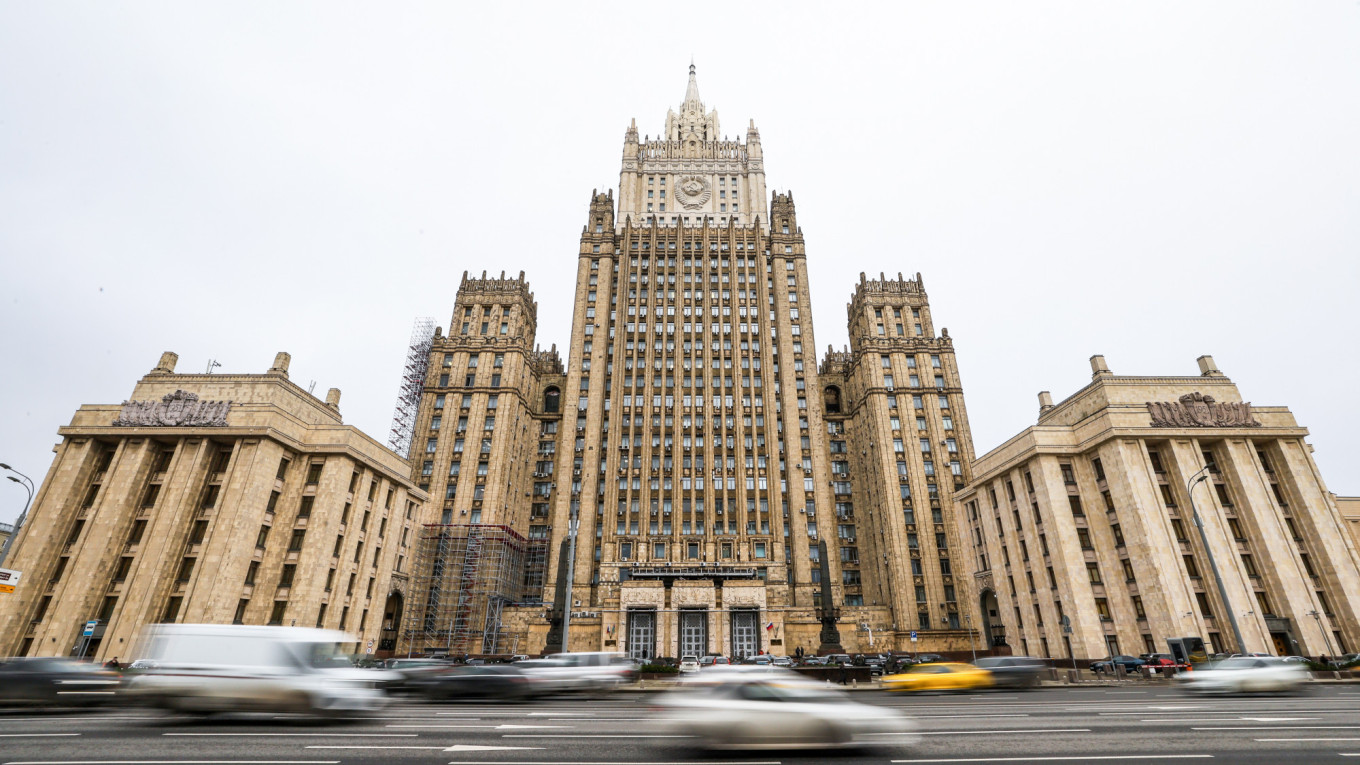
Maria Zakharova, spokeswoman for Russia’s Foreign Ministry, asserted in a statement that the new militaristic statements from what she termed the “Coalition of the Willing” and the Kyiv regime formed a true “axis of war.”
She further labeled the plans put forth by Ukraine’s allies as “dangerous” and “destructive.”
These comments coincide with a wave of Russian strikes that have left countless Ukrainians in darkness and without heat amid freezing temperatures. Zelensky pointed out that such attacks demonstrate Russia’s ongoing warfare intentions.
European leaders and U.S. representatives announced earlier this week that post-conflict guarantees for Ukraine would entail a U.S.-led monitoring mechanism along with a European multinational force to be deployed when hostilities cease.
Nonetheless, Moscow has consistently cautioned against any NATO member sending peacekeeping forces to Ukraine. Zakharova reiterated that “all such units and facilities will be viewed as legitimate military targets by the Russian Armed Forces,” echoing a warning previously issued by Putin.
On the same day, Zelensky indicated that a bilateral agreement between Kyiv and Washington concerning U.S. security assurances was “essentially ready for finalization at the highest level with the U.S. President” following discussions in Paris.
Kyiv maintains that legally binding guarantees from its allies promising to come to its assistance are crucial to dissuade Russia from launching renewed attacks if a ceasefire is established.
However, specifics regarding these guarantees, the European force, and operational details have not been disclosed. Zelensky mentioned earlier this week that he had yet to receive a clear response regarding the potential actions if Russia were to attack again after a deal.
He also noted that the most challenging issues regarding territorial control in the eastern Donbas region and the status of the Russian-occupied Zaporizhzhia nuclear power plant remain unresolved.
Meanwhile, Ukraine is working to restore heating and water to hundreds of thousands of citizens following a recent wave of attacks targeting energy infrastructure in the Dnipropetrovsk and Zaporizhzhia regions.
“This is indeed a national emergency,” stated Borys Filatov, the mayor of Dnipro, on Telegram. He reported that power was “gradually returning to hospitals” after outages forced them to rely on generators. Additionally, the city authorities extended school breaks for children.
According to Ukrainian energy company DTEK, around 600,000 households in the Dnipropetrovsk region are still without power.
In a social media post, Zelensky remarked that the attacks “clearly indicate that Moscow is not reconsidering its priorities.”
Alongside the relentless bombardment of Dnipropetrovsk, Russia has also continued its ground offensive in the region, claiming to have taken control of another village, although it is not part of the five Ukrainian regions that Moscow claims to have annexed.