Putin Declares Western Peacekeepers in Ukraine Will Be Legitimate Targets | World | london-news-net.preview-domain.com

Putin Declares Western Peacekeepers in Ukraine Will Be Legitimate Targets

Putin Declares Western Peacekeepers in Ukraine Will Be Legitimate Targets

President Vladimir Putin issued a warning on Friday, stating that any Western military personnel sent to Ukraine would be considered a “legitimate” target for Russian forces. This was a bold reply to a coalition’s intention to introduce international peacekeepers following a potential resolution to the ongoing conflict.

On Thursday, a coalition of over 26 nations, spearheaded by France and the UK, declared their readiness to deploy a “reassurance force” to Ukraine to oversee and uphold any future peace agreement. Ukraine has emphasized the necessity of security guarantees supported by foreign troops to deter any renewed Russian offensives.

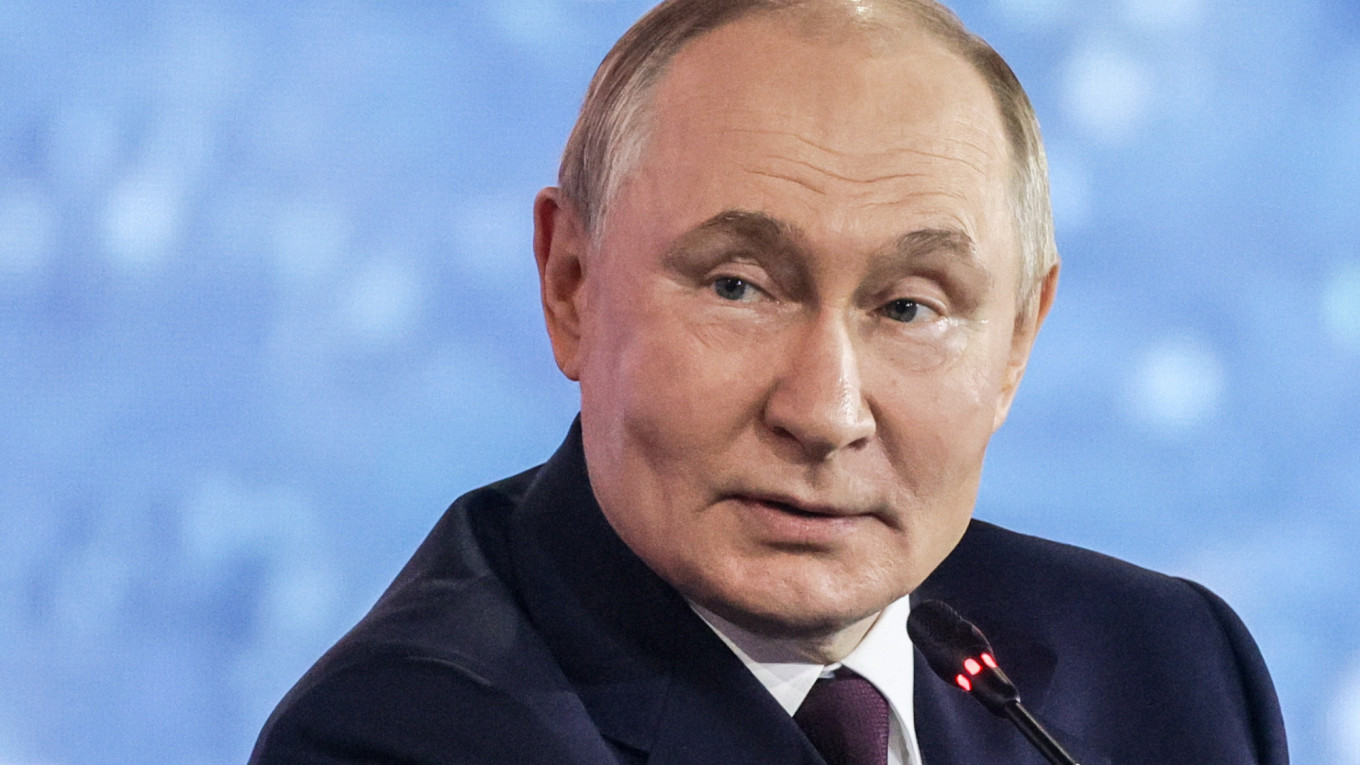
“If troops are deployed there, especially now during the hostilities, we assume they will be legitimate targets,” Putin articulated during the Eastern Economic Forum in Vladivostok.

He asserted that such a military presence would obstruct, rather than facilitate, sustainable peace. Putin reiterated his belief that Ukraine’s increasing military alliances with Western nations are core reasons behind the conflict, reflecting his list of grievances that led to his decision to launch a full-scale invasion.

French President Emmanuel Macron, alongside Ukraine’s President Volodymyr Zelensky on Thursday, announced that 26 nations have formally pledged to the initiative, although specifics regarding troop numbers and contributions remain vague. He emphasized that the force’s role would not involve direct combat but would aim to “prevent any further significant aggression.”

Zelensky welcomed this commitment as “the first significant, concrete step” towards ensuring Ukraine’s future after the war.

However, it’s improbable that Russia will support the Western “reassurance force,” which raises doubts about the viability of the plan from the beginning. Moscow has consistently maintained that it will not engage in discussions about security guarantees without its involvement, claiming it must be part of those conversations—a stance that analysts compare to allowing a fox to guard the henhouse.

On Friday, Putin dismissed the idea of Western peacekeepers entirely, asserting that any resolution should be adequate to preserve peace between Russia and Ukraine.

“If agreements are made that foster peace, particularly lasting peace, then I fail to see the necessity for their presence in Ukraine. Because if agreements are reached, I assure you that Russia will adhere to them completely,” he stated.

Ukraine and its Western allies, however, are not persuaded. They reference a lengthy history of Russian transgressions starting with the 1994 Budapest Memorandum. According to that post-Soviet agreement, Ukraine relinquished its nuclear arsenal in return for promises from Russia, the United States, and the UK to respect its sovereignty and borders and to refrain from using force against it.

As diplomatic activity has surged in recent months, culminating in a Russia-U.S. summit in Alaska in August, Western leaders have accused Putin of buying time while his troops advance in eastern Ukraine. At a press conference in China earlier this week, he boasted that Russian forces were “making progress in all directions,” although analysts explain that these victories have resulted in significant loss of life.

Perhaps most significantly, Putin indicated that if diplomatic efforts fail, Russia is prepared to continue fighting to fulfill its objectives through military means.

Reporting contributed by AFP.

Related posts

Trial Begins for Leftist Activist Sergei Udaltsov on Justifying Terrorism Charges

Russia to Launch Yuan-Denominated Government Bonds in December

rimmaruslan98@gmail.com

‘Plush Troops’: The Pro-War Children’s Toys Taking Over Russia’s Online Marketplaces Текст: “In this strategy game, you lead a battalion aiming to liberate Ukraine from Nazi rule,” reads the description of Russia’s first board game about the war in Ukraine. The game,called“Special Operation on the Outskirts,” sells for about 1,600 rubles ($20) on Russian online marketplaces. Inspired by Monopoly and designed for two to six players, the game challenges participants to occupy as many Ukrainian cities as possible. Instead of Monopoly money, players use a fictional currency featuring the faces of President Vladimir Putin, Foreign Minister Sergei Lavrov and former General Sergei Surovikin. In the fourth year of the full-scale invasion, toys and merchandise featuring the pro-war Z symbol have become increasingly common on Russian marketplaces and social media. Listings include everything from car dashboard decorations to toy soldiers for children. “The plot grabs you from the first minutes. It’s great that part of the proceeds go to support participants of the special military operation. The perfect gift for patriots!”writesYekaterina, a recent buyer. Other reviewers share that they gave the game to their sons on Defenders of the Fatherland Day. Another board game, “Couch Expert,” promises to educate players about the invasion. Players have 30 seconds to answer questions about the progress of the “special operation.” Questions range from the late ultranationalist politician Vladimir Zhirinovsky’s position on the war to the roles of figures like Elon Musk and propagandist Olga Skabeyeva in shaping сoverage of the invasion. “I ordered 11 of them for school as gifts for the boys. But I got lucky — the boxes came wrapped in film, so it’s not embarrassing to give them. Thanks,”writesa woman named Natalia in a review. These toys span all price ranges, from an acrylic Z-minionto aroly-polytoy bearing the pro-war slogan “You can’t knock us down.” The latter sells for about 500 rubles ($6). “The idea to create a patriotic roly-poly toy came five years ago, when the Russian team was banned from competing under the national flag at the Olympics in Korea,”saysDmitry Zavidov, director of the Kotovsky Roly-Polies company. On VKontakte, Yulia from Moscowsells“knitted fighters” shaped like a tiger, mouse or dog. Each animal, stitched with a Z or V,costs1,500 rubles ($18). For an extra 250 rubles, Yulia offers to embroider a soldier’s callsign on the toy’s flak vest. “Any other inscription of your choice is also possible (price depends on the size),”readsthe product description. On some marketplaces, similar toys arepricedat around 1,100 rubles ($14). Another item on the market is a stuffedraccoonmarked with the Z symbol, a reference to the raccoon that Russian troops infamously stole from a zoo during their retreat from the southern Ukrainian city of Kherson. Sellers alsoofferstuffed bears in military uniforms with Z and V insignia. In some cases, the toys arehandmadeby widows of Russian soldiers. For younger children, “patriotic”coloring bookssell for about 300 rubles ($3.73). “My child is four. He liked it,” says one mother in a review. Some parents post videos of their children coloring tanks and other Russian military equipment. For about the same price, sellers alsooffera set of toy soldiers called the “Special Operation Recon Soldiers Set.” “Toy figures of the Russian Armed Forces will delight children with their quality and design. They’re perfect for role-playing games and help develop creativity and imagination,” the manufacturer claims. War-related games and toys may hold particular appeal for children,explainspsychologist Michael Brandl, a member of the German toy evaluation group Spiel Gut. One reason for their appeal, he says, is that they offer positive reinforcement of the media and propaganda messaging that children encounter daily. “From these sources, children form an image of a person they then try to imitate and act out in roleplay. Weapons and how to use them become part of the child’s perceived reality and a key attribute of the supposed image of the ‘ideal’ man,” Brandlwrote. A child psychologist from Russia, whose name has been withheld for safety reasons, voiced a similar view. “This is a protracted war, so the state and Vladimir Putin need boys, even from kindergarten, to already be preparing for the future battlefield,” the psychologist told The Moscow Times. “First, the state turns poor women into mothers who buy these toy soldiers. Then this Z-patriotism is nurtured with a mother’s milk. They’ll buy it without even noticing the Z, especially if it’s on sale.” Marketplaces also offer stuffed cat car decorations in camouflage colors that cost about 500 rubles ($6.20). In addition to a toy with the Russian tricolor and the letter Z, the manufacturer alsooffersa version bearing the Wagner mercenary group’s skull emblem. “You sent me a female cat, apparently — no male features and no Z. I specifically needed a male cat with a Z on it! I refused the order at pickup,”complainsa buyer named Elena. Other buyers note that the toy’s tail fell off quickly. Even toy robots are marked with the Z symbol. A set of these toys costing 784 rubles ($9.70) includes a robot with a Russian flag and weapons. For an extra 200 rubles, itcomeswith a glow-in-the-dark Z. “Satisfied with the purchase. Russia will win! Russia always wins!”saysMaria, who bought the Z-robot for her son, in her review.


This website uses cookies to improve your experience. We'll assume you're ok with this, but you can opt-out if you wish. Accept Read More