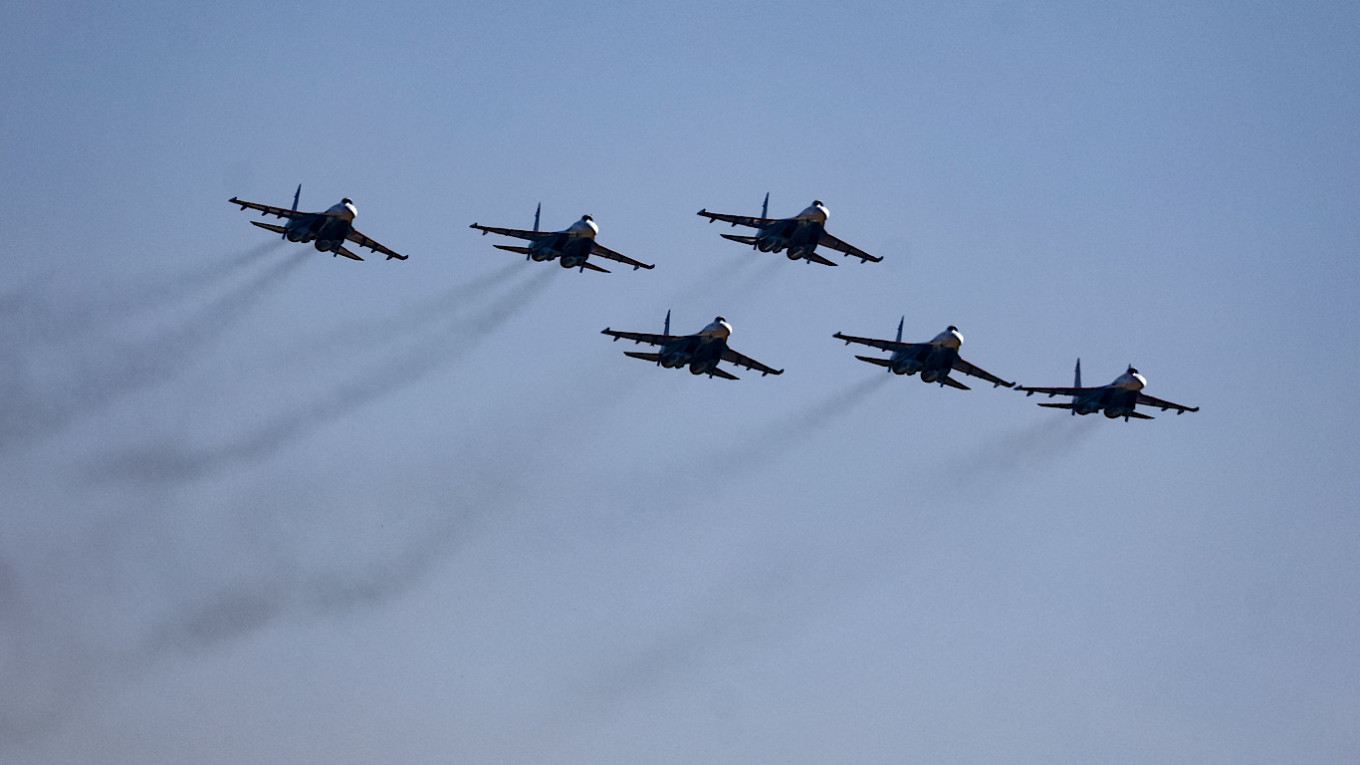
On Wednesday, Poland and NATO deployed fighter jets to intercept several alleged Russian drones that had entered Polish airspace during an overnight offensive on western Ukraine, marking the first known instance of the Western military alliance engaging in an armed response since the onset of Russia’s extensive invasion.
During an emergency government session later that day, Prime Minister Donald Tusk disclosed that 19 “objects” had breached Polish airspace, with three Russian drones believed to pose a threat to civilian safety being shot down. However, the specifics surrounding the incident remain unclear, including the types of Russian drones involved in the airspace violation.
Tusk further mentioned that Poland triggered Article 4 of the NATO treaty, a rarely utilized provision that initiates discussions among member states and can lead to collective decisions or actions on behalf of NATO.
“The destruction of these drones, which presented a security risk, alters the political landscape. Consequently, the consultations among allies took the form of a formal request to activate Article 4 of the NATO Treaty,” the Prime Minister stated, as reported by Reuters.
The last time Article 4 was invoked by multiple NATO members was a few days after Russia’s invasion of Ukraine in February 2022. Prior to Wednesday, the article had only been activated seven times since the alliance’s establishment in 1949.
Later, Russia’s Defense Ministry confirmed that it had conducted extensive airstrikes across Ukraine overnight, impacting the western city of Lviv, approximately 80 kilometers (50 miles) from the Polish border. However, they asserted that there was no intention to target Poland and denied that their drones had crossed into Polish airspace.
“Nonetheless, we remain open to consultations with the Polish Defense Ministry regarding this situation,” the Russian military stated.
The Russian Defense Ministry claimed that the drones used in the overnight operations had a range of up to 700 kilometers (435 miles) and thus could not have reached Poland. However, Poland’s eastern border lies less than 600 kilometers from western Russia, placing it within target range.
No injuries or fatalities were reported as a result of the drone intrusion in Poland. Local media shared images of firefighters and police in the village of Wyryki, in the eastern region, examining a home with its roof damaged from a drone crash.
During the incident, Poland temporarily restricted portions of its airspace, halting flights from Warsaw’s main Chopin Airport.
“This act of aggression represented a legitimate threat to our citizens’ safety,” a statement from the Polish military’s operational command described, labeling the airspace violation as “unprecedented.” Meanwhile, Dutch Prime Minister Dick Schoof noted that fighter jets from the Netherlands had provided support during the operation to shoot down the drones.
Belarus, an ally of Russia, reported that its air defense forces tracked and eliminated several drones that had “lost their way due to electronic warfare measures” during the overnight exchanges of aerial assaults between Russia and Ukraine.
In a video message, Belarusian Chief of the General Staff Pavel Muraveiko stated that Minsk shared radar information with Poland and Lithuania, enabling a swift response from Poland by deploying its aircraft. According to Muraveiko, Poland subsequently informed Belarus about the approaching drones.
Ukrainian Foreign Minister Andriy Sybiga remarked that the incident demonstrated how the absence of a strong international reaction to previous Russian aggressions had emboldened President Vladimir Putin.
“The longer he goes without facing any robust response, the more aggressive his actions become,” Sybiga stated. “A weak reaction now will only encourage Russia further, resulting in missiles and drones reaching even deeper into Europe.”
European leaders condemned the airspace violations as a serious provocation and a potential “deliberate attack,” while some NATO officials suggested that the incident may not have been intentional.
“These overflights do not indicate the beginning of a larger confrontation,” a NATO diplomat told AFP, speaking on the condition of anonymity. “It seems to be an attempt to either test NATO or approach targets in Ukraine from a different direction.”
Poland has experienced similar incidents since the beginning of Russia’s full-scale invasion. Last month, a Russian drone detonated in a field in eastern Poland, which Warsaw at the time labeled a “provocation.” In 2023, a Russian missile briefly entered Polish airspace before striking targets in Ukraine.
On Truth Social, U.S. President Donald Trump responded briefly to the shootdown, stating: “What’s with Russia violating Poland’s airspace with drones? Here we go!”
AFP contributed to this report.