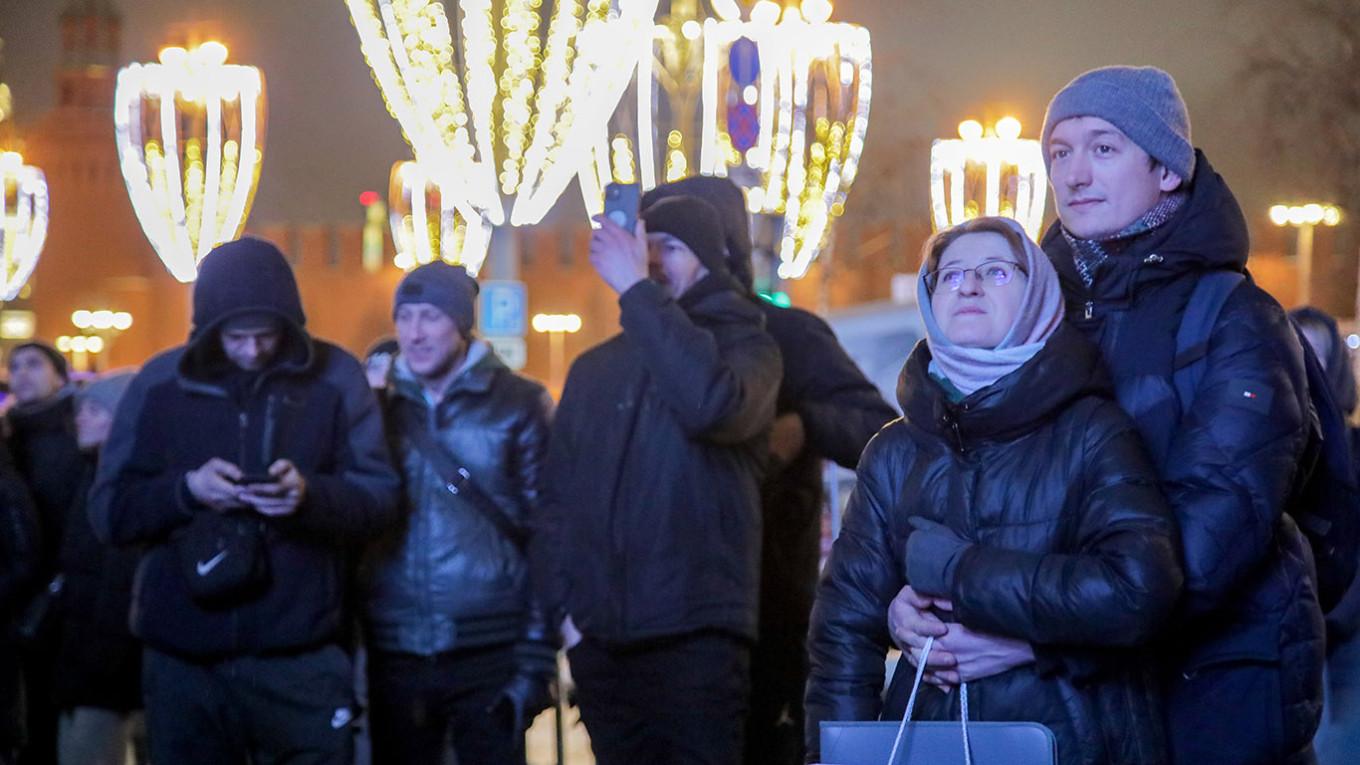
As 2025 comes to an end, many Russians are looking forward to the new year with hope that it might signal the conclusion of the Kremlin’s conflict in Ukraine, which has resulted in the deaths of tens of thousands and displaced millions amid nearly four years of warfare.
Despite failed peace initiatives mediated by the U.S. this year, Russians interviewed by The Moscow Times expressed cautious optimism for peace as they celebrate New Year’s—an important holiday in their culture.
“I can only wish for my fellow citizens that the war comes to an end,” remarked Andrei, 30.
A significant portion of the Russian population—approximately 65%—believes that it is time to initiate peace discussions, according to a poll conducted by the Levada Center in November, which remains the country’s last major independent polling organization.
“One can only hope for a genuine miracle for Russia, as that might be the only thing that could lead to peace or at least a ceasefire. Anything that can halt this constant state of tension and limitation,” shared a Moscow resident, who preferred to remain anonymous, highlighting the strains of living under wartime conditions.
For Ukraine, 2025 has proven to be one of the most lethal years of the conflict, with Russia escalating its assaults. Civilian casualties from January to November were 24% higher compared to the same period in 2024, according to United Nations reports.
While Russian troops have made some territorial gains, including seizing the Ukrainian city of Pokrovsk, the front lines have remained largely static, and significant casualties have occurred on both sides.
According to an independent count by Mediazona and BBC Russian, over 156,000 Russian military personnel have been confirmed dead since the beginning of the war, though the actual figure is considered to be much higher.
Negotiations for peace have repeatedly stalled, and the fighting shows no signs of abating, with both factions standing firm on their primary demands.
“A Russian serviceman expressed to The Moscow Times a sincere hope that 2026 might bring some clarity to the situation regarding when the war might conclude.
“There’s little expectation for enduring peace, but we are anticipating significant disruptions in Ukrainian society and, hopefully, a shift in the [Ukrainian] government,” he noted, reflecting the Kremlin’s narrative that views President Volodymyr Zelensky as an illegitimate leader due to the suspension of elections during martial law.
“It would be preferable to see fewer fatalities,” he added.
Since launching a large-scale invasion of Ukraine in 2022, Moscow has attempted to shield ordinary Russians from the consequences of war.
However, after nearly four years, the conflict has permeated almost every facet of daily life, manifesting in increased censorship, intensified military conscription, and growing repression, coupled with the economic strain imposed by Western sanctions.
Amid rising financial pressure from the war, about 87% of Russians plan to observe New Year’s festivities this year, though many intend to cut back on their spending.
“I’ve never gone through anything like this before, but everyone—regardless of their income—seems to be complaining about escalating prices and increased taxes,” shared a woman from Moscow.
She also noted that everyday life is increasingly affected by disruptions to messaging platforms like Telegram, WhatsApp, and FaceTime, which Russia began restricting in 2025, along with previously blocked social media sites like Facebook and Instagram.
The online constraints don’t stop there. Under a new law passed this year, Russians can now face fines for intentionally searching for “extremist” content online.
This legislation applies to any search for materials listed on the Justice Ministry’s register of extremist items, which consists of hundreds of pages. Numerous critics of the Kremlin, including the late Alexei Navalny’s network, independent journalists, and political analysts, have been classified as “extremist.”
During the first half of 2025, security services initiated criminal cases against at least 173 individuals for political reasons, as reported by the OVD-Info rights organization.
While OVD-Info indicated a decline in the number of “politically motivated criminal cases after a sharp rise in 2022,” this trend might also be attributed to “increased self-censorship” sparked by harsh sentences for anti-war activists in Russia and public figures who fled abroad to evade incarceration.
Various estimates suggest that at least 650,000 Russians left the country following the outbreak of war to escape political persecution or mobilization.
A teenage Russian expressed to The Moscow Times that her wish for the new year is to “allow all ‘foreign agents’ to return home.”
The situation remains grim for LGBTQ+ individuals as well, according to the LGBTQ+ rights organization Vykhod (Coming Out).
At least 20 individuals faced criminal charges in 2024-2025 for their suspected involvement in the so-called “international LGBT public movement,” which the Russian government banned in 2023, as reported by Human Rights Watch.
“For 2026, I hope we can eliminate laws that restrict choice, such as the pressure to limit access to abortions and accusations of ‘homosexual propaganda’,” a 24-year-old member of the Russian LGBTQ+ community shared with The Moscow Times.
“I also hope the war ends as soon as possible, that we restore relations with other nations, and that we work on rebuilding the economy,” he added.
Some Russians expressed a sense of nostalgia for their lives before the war.
“I wish for all of us to take a step back, pause, and engage in genuine reflection” as 2026 approaches, said a small business owner from the Orenburg region. “To mentally return to the 2018 World Cup, when the beauty and openness of our country captivated the world, showcasing its hospitality and authenticity. Or to remember times when a direct flight from Sheremetyevo [Airport] could take you to nearly any European capital.”
“To the people of Russia, I wish love and hope—love as expansive as can be imagined, warm and unifying. And hope—the kind that’s most innocent and childlike, potent enough to keep us believing that something brighter and fairer lies ahead,” she added.
A husband and wife team of entrepreneurs from the Krasnodar region echoed similar sentiments for the upcoming year.
“As the year approaches its end, we wish all of humanity love and forgiveness,” they stated. “If each person reflects on whether they have wronged someone and makes even a small effort to be kinder and more considerate, maybe that is the essence of happiness—being kinder to one another and nurturing love for ourselves.”