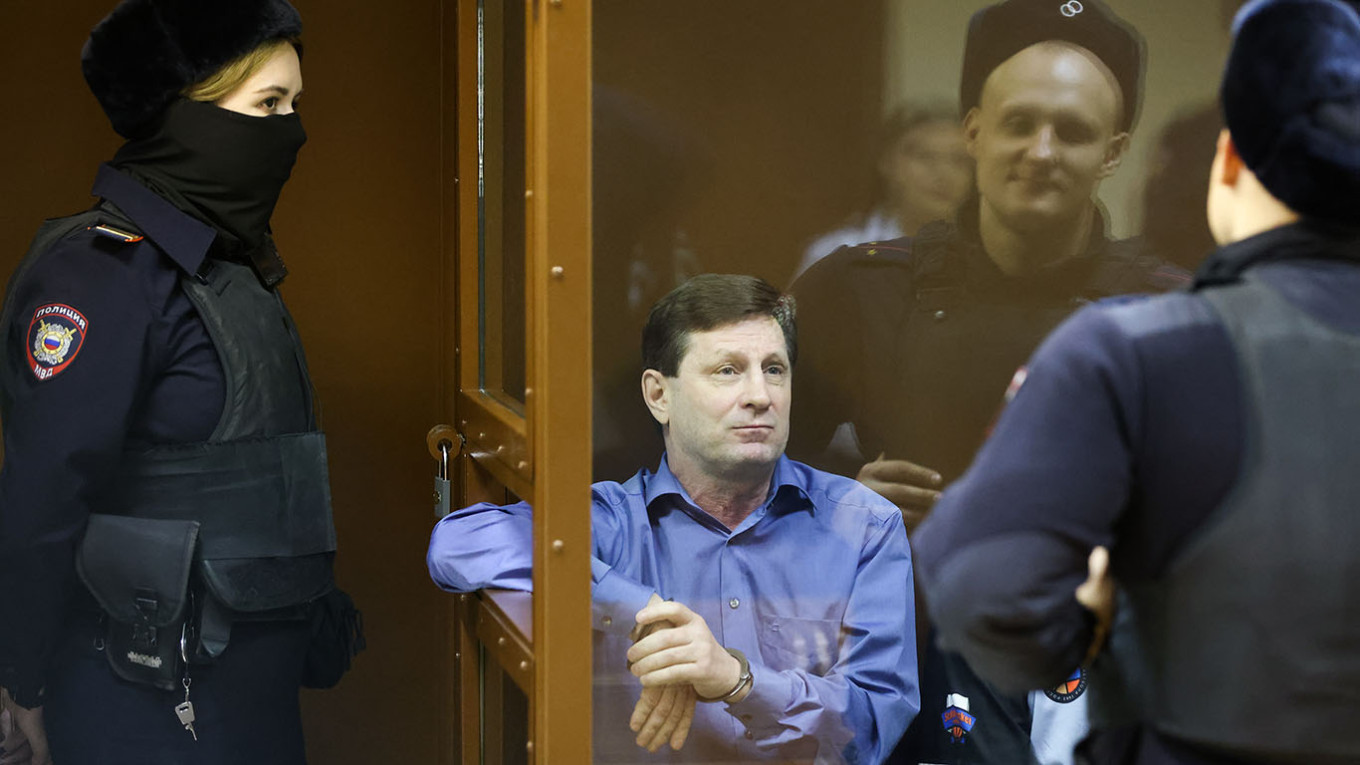
A judge in Moscow has imposed an additional 23-year prison sentence on Sergei Furgal, the former governor of the Khabarovsk region, on top of the 22 years he is already serving for double murder charges, as reported by his supporter group on Wednesday.
Furgal gained national attention in 2018 when he won the gubernatorial election in the Far East by defeating the incumbent backed by the Kremlin. His arrest in 2020 triggered extensive protests, and many perceive the murder allegations against him as politically motivated.
Despite significant public dissent, a Moscow regional court sentenced Furgal in 2022 to 22 years in a high-security prison on accusations of orchestrating contract murders.
On Wednesday, a judge from the Babushkinsky District Court in Moscow found Furgal guilty of additional charges, which included forming an organized crime group, abuse of authority, large-scale fraud, money laundering, and engaging in illicit business activities.
The case involves four bank loans totaling 2.67 billion rubles (approximately $34.5 million) linked to businesses associated with Furgal. His support group claimed that one of the loans had been fully paid off and that payments on the remaining loans were being made punctually, including one made just days before his arrest.
Furgal has consistently denied all allegations against him.
The judge effectively merged the sentences, resulting in a total of 25 years in a high-security facility for Furgal, according to his supporters.
Eight other individuals involved in the case received prison terms ranging from a suspended sentence of four years to a full 20 years.
In 2020, President Vladimir Putin removed Furgal from his position, citing a “loss of confidence,” and appointed Mikhail Degtyarev, a member of the same nationalist Liberal Democratic Party but more aligned with the Kremlin, as his replacement. Degtyarev currently serves as the Minister of Sports.
Additionally, a Khabarovsk court banned the use of the Russian phrase “I’m/We’re Furgal,” commonly used by the ex-governor’s supporters, designating it as part of an “extremist movement.”