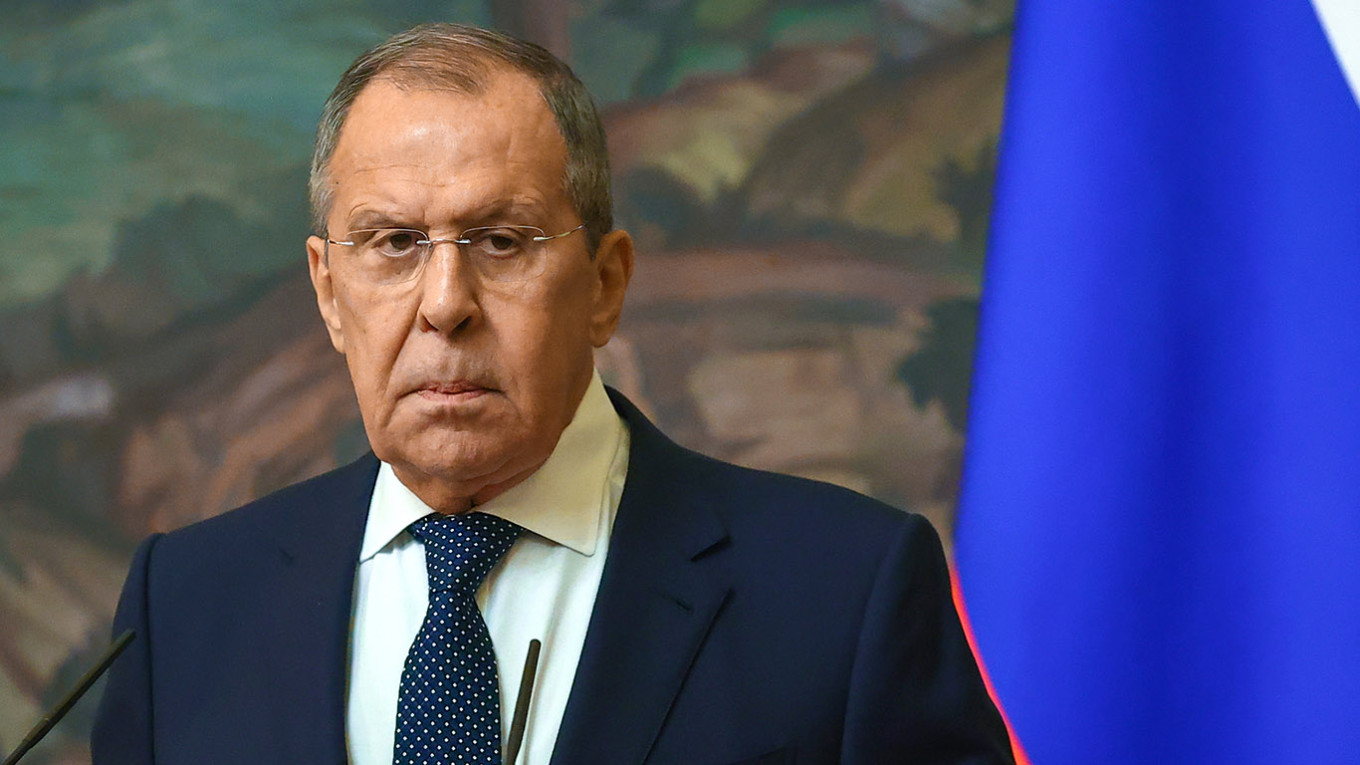
The Kremlin has had to refute claims that Foreign Minister Sergei Lavrov has “lost favor” with President Vladimir Putin following speculation that Lavrov’s diplomatic efforts contributed to the cancellation of scheduled peace discussions between Moscow and Washington regarding Ukraine.
“There is no truth to these claims,” Kremlin spokesperson Dmitry Peskov stated to reporters on Friday.
“Lavrov is certainly still serving as foreign minister,” Peskov clarified when inquired about Lavrov’s status.
Concerns about Putin’s dissatisfaction with Lavrov surfaced after U.S. President Donald Trump unexpectedly canceled his planned summit with the Russian leader in Budapest last month.
The Financial Times reported that the meeting was called off after what it characterized as “a tense conversation” between Lavrov and U.S. Secretary of State Marco Rubio, noting that “officials were taken aback by Lavrov’s stubbornness.”
According to a source familiar with the situation, “Lavrov appears clearly fatigued and seems to believe he has more important matters to address than to meet with or involve himself with the United States, regardless of President Putin’s desires.”
After the summit’s cancellation, Lavrov was notably the sole permanent member absent from the Security Council’s meeting on Tuesday, during which Putin directed officials to prepare proposals for resuming nuclear tests.
The business newspaper Kommersant, referencing unnamed sources, reported that Lavrov’s absence from the Security Council meeting was planned.
Additionally, Lavrov will not lead Russia’s delegation at the upcoming G20 summit; this role will now be taken on by Maxim Oreshkin, deputy chief of the presidential administration.
Furthermore, the Russian delegation to the ASEAN summit, which Lavrov has headed in recent years, was last month represented by Deputy Prime Minister Alexei Overchuk.
The Telegram channel Nezygar, which has 400,000 followers, cited unidentified sources reporting that Putin had a “serious conversation” with Lavrov following his call with Rubio.
“During the dialogue with Rubio, Lavrov was unprepared and engaged in an extremely tense manner, avoiding meaningful discussion with the Secretary of State. It seems likely that Lavrov interpreted the Kremlin’s directives too rigidly,” said sources within Nezygar.
A source acquainted with the Foreign Ministry told Nezygar that the Financial Times article was orchestrated and “very distressing” for Lavrov, leading him to reduce his public engagements.
“The article contains numerous inaccuracies and sweeping accusations against the minister. However, it is accurate that Lavrov is indeed weary and likely has garnered more adversaries within the Kremlin,” the source indicated.
“It appears he has clearly fallen out of Putin’s favor and seems to be perceived as a weak link,” the sources from Nezygar reported.
Former Russian diplomat Boris Bondarev dismissed the notion that Lavrov’s standing within the Kremlin had diminished, stating that “this is a narrative the media tends to latch onto and amplify.”
“While such a narrative can exist, Lavrov did not say anything that should have alarmed the Americans,” he noted, emphasizing that Lavrov has been the foreign minister for 21 years and has consistently collaborated well with Putin.
“Claims that Lavrov was rude to Rubio, displayed reluctance to negotiate, or was responsible for the summit’s cancellation are utterly ridiculous,” Bondarev asserted in an interview.
Nonetheless, he emphasized that Putin might have placed the blame on Lavrov for the cancellation of the summit to evade responsibility for the unsuccessful discussions with the United States.
Lavrov, who is 75 years old, has served as Russia’s foreign minister since 2004 and is also a permanent member of the country’s Security Council. He has been subjected to personal sanctions from the U.S., the EU, Canada, Australia, and other nations since Russia’s incursion into Ukraine in 2022.