By 2025, Russia’s engagement in Ukraine had evolved into a protracted war of attrition, with neither party making a significant strategic advancement.
The front lines shifted more this year compared to 2023 and 2024; however, Russia’s progress remained sluggish, limited, and highly costly in terms of both resources and human casualties.
In an apparent bid to strengthen its position in U.S.-mediated peace negotiations and to depict its triumph as inevitable, Moscow has increasingly showcased its wartime advancements this year.
“Ukrainian forces will have to vacate the territories they currently hold, and only then will the fighting cease. If they refuse, we will accomplish this through military action,” President Vladimir Putin stated in late November.
However, beneath the official messages, the situation on the ground is more complex.
“Russia’s advances have been unimpressive thus far, marked by significant losses that have not met declared objectives,” military analyst Michael Kofman told The Washington Post regarding Russia’s performance on the battlefield in 2025.
The nature of the war has shifted from a typical military campaign conducted by a conventional army to a conflict sustained by small infiltration teams, volunteer-funded resources, and widespread use of inexpensive technology.
Putin has asserted that Russian forces seized nearly 5,000 square kilometers of Ukrainian territory during 2025.
This past spring, Moscow managed to push Ukrainian troops out of their foothold in the Kursk region and momentarily made inroads into Ukraine’s Sumy region; however, this advance soon stagnated, resulting in minimal shifts along the front line thereafter.
In the Donetsk region of eastern Ukraine, Russian troops came close to completing the capture of Pokrovsk and Myrnohrad following nearly two years of combat.
By year-end, they also claimed to have taken control of Huliaipole in the Zaporizhzhia region and Siversk in the Donetsk region, where Ukrainian defenses, which had held firm for over three years, collapsed within weeks due to manpower shortages.
Elsewhere along the front, progress was inconsistent, with Russian forces making significant advances in some areas while seeing little movement in others.
Despite these gains, Russia has yet to secure a decisive victory.
“The Russian military has maintained strategic initiative since 2023. In 2022, Russia was unable to achieve a swift win, marking a pivotal change in the war. Since then, the conflict has devolved into an attritional struggle, with nearly all front-line changes being tactical rather than strategic,” said BBC News military analyst Pavel Aksenov to The Moscow Times.
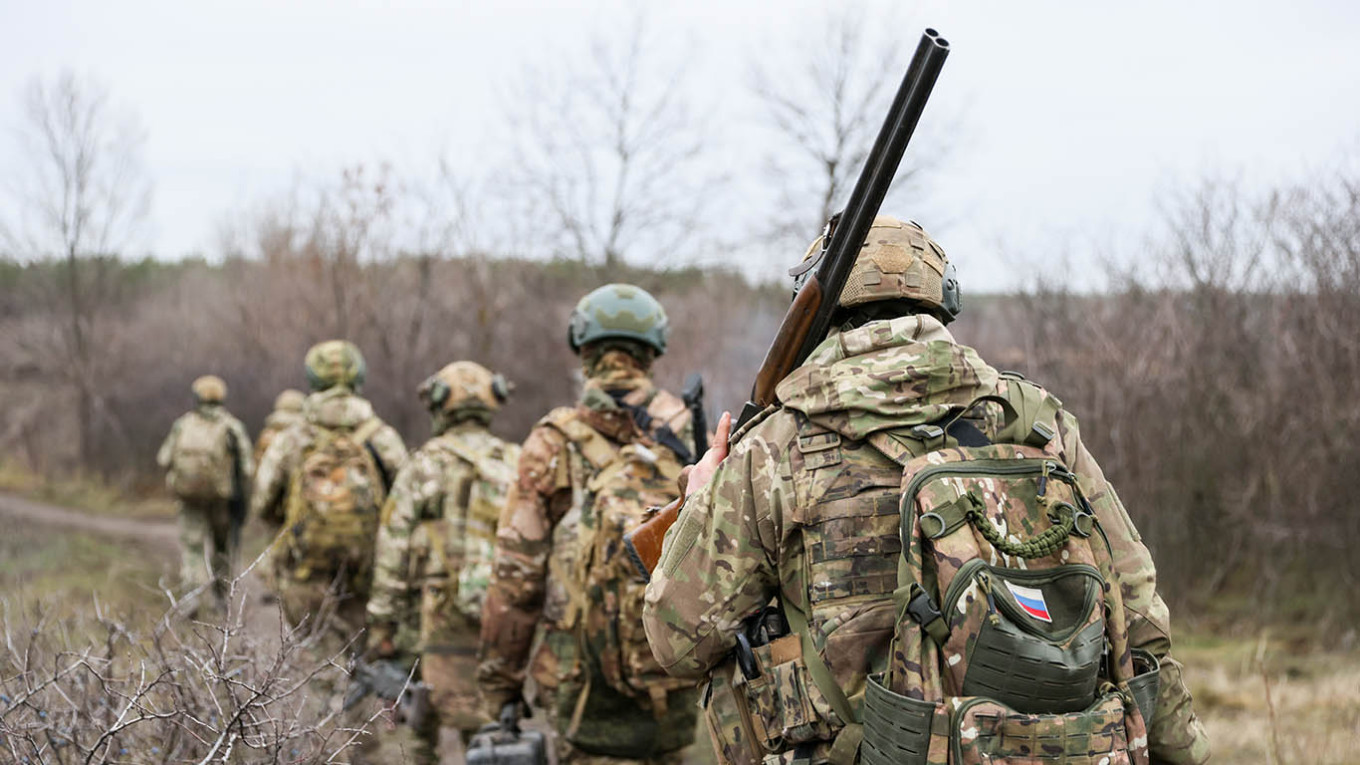
In 2025, capitalizing on Ukraine’s diminishing manpower, Russian forces began increasingly utilizing small assault groups rather than large armored units. These teams exploit vulnerabilities, infiltrate Ukrainian defenses, and gradually establish strength in critical locations, leading to incremental territorial gains over time.
Analysts note that this tactic has been successful around Pokrovsk and Myrnohrad and has been replicated in several other sectors.
This represents a wider shift away from traditional large-scale offensives, which have become prohibitively expensive in a battle space crowded with surveillance and striking drones.
The “grey zone” between Russian and Ukrainian-controlled areas has expanded in certain regions to several kilometers.
Drones dominate the aerial landscape as small infantry units operate on the ground in dispersed formations, relying on concealment while under the constant risk of assault.
According to Atlantic Council analysts, the drone warfare began to shift in Russia’s favor towards the end of 2024, with this trend accelerating in 2025.
Russian commanders have emphasized scalability and reliability, deploying fiber-optic drones guided by physical cables which are largely immune to electronic interference.
These systems played a crucial role in Russia’s early 2025 operations to drive Ukrainian forces out of the Kursk region, where fiber-optic drones targeted ammunition trucks and disrupted supply chains.
Moscow subsequently applied similar strategies on the southern and eastern fronts, ambushing Ukrainian vehicle columns well behind the front lines.
By the end of 2025, Russia had established centralized drone units that train operators via a mentorship system and conduct targeted strikes against Ukrainian positions and supply routes.
Neutralizing Ukrainian drone teams has become a primary objective to grant Russian operators increased flexibility nearer to the front.
Still, Aksenov contended that drones alone do not account for Russia’s battlefield effectiveness.
“You can’t claim that drones have become a magical solution that entirely transformed the landscape of the war. They are indeed significant, but not the sole factor. For instance, guided aerial munitions also play a key role for Russia, alongside artillery and precision missiles,” he stated.
Russia has extensively utilized guided aerial munitions, including heavy bombs weighing up to three tons, to eliminate Ukrainian defensive positions.
While the Kremlin continues to reinforce its troops with new contract soldiers and has fully mobilized the defense industry—often relying on components sourced from countries like China and Iran—analysts assert that the Defense Ministry has struggled to create a dependable and centralized supply chain.
Volunteer groups, pro-war bloggers, and private entities are raising funds from both soldiers and civilians to purchase drones, communication gear, body armor, vehicles, and even basic necessities like tires.
Modified civilian vehicles, many of which only last a few days on the battlefield before being destroyed, are employed for logistical support and troop transportation.
This informal wartime economy has enabled operations to continue but remains disorganized and inconsistent. While some units are well-equipped with drones and gear, others function with very little support.
Aksenov remarked that these challenges reflect a fundamental discrepancy between Russia’s pre-war planning and the current realities of a drawn-out conflict.
A protracted war of attrition requires a different economic and industrial framework, one that Russia has struggled to develop, he noted. Nonetheless, Russian forces persist in advancing because they have discovered effective tactics and adapted to a combat environment characterized by drones and artillery.
Another enduring issue facing Russia’s military is its tendency to exaggerate front-line reports.
Russian field commanders often report cities seized before hostilities have completely ceased, a practice referred to by pro-war bloggers as “capture on credit.” Consequently, troops are then tasked with costly assaults to validate these claims.
In August, commanders first reported that Russian troops had captured Kupiansk in Ukraine’s Kharkiv region, even as battles for the city were ongoing. Ukrainian forces retook the vital eastern railway node in September.
The Russian military reiterated its claim of having captured Kupiansk on November 20, yet by December, it had still not secured the city, despite senior officials reportedly receiving accolades for its capture. Ukrainian sources indicated that counterattacks later reclaimed parts of the town.
While both sides issue false claims regarding battlefield achievements, Aksenov noted that Russian commanders tend to exaggerate their successes more frequently.
Once a town is officially declared captured, units still engaged in fighting in the area might receive diminished support, which makes them especially susceptible to fresh assaults.
In summary, analysts believe that Russia has adjusted more successfully to an environment dominated by drones and artillery throughout 2025, moving towards small-unit operations bolstered by unmanned systems.
At the same time, Ukraine’s defensive capabilities continue to decline due to shortages in manpower and equipment, granting Russia localized opportunities to push the front line forward.
However, without a decisive breakthrough, these dynamics are unlikely to shift, Aksenov suggested.
“I doubt Russia can pivot to executing decisive offensives. Even if they manage to breach the Ukrainian front, a breakthrough requires a significant troop presence,” he noted.
“Russia lacks a sufficiently strong force at any segment of the front. Ukraine achieved such deep advances in the Kursk region, and we all witnessed how that concluded,” he concluded.