Stranded Drivers Endure Frigid Conditions on Baikal Highway After Severe Snowfall | World | london-news-net.preview-domain.com

Stranded Drivers Endure Frigid Conditions on Baikal Highway After Severe Snowfall

Stranded Drivers Endure Frigid Conditions on Baikal Highway After Severe Snowfall

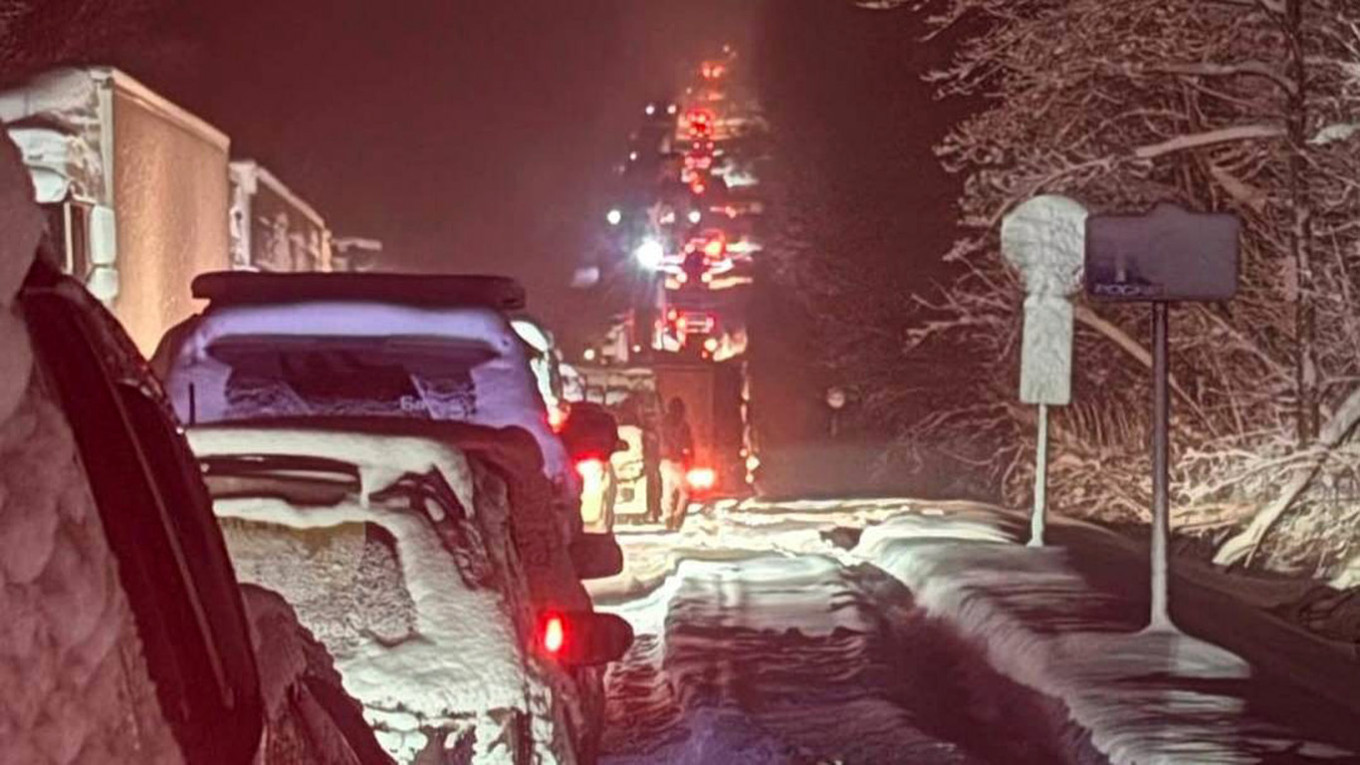
Motorists were trapped for several hours in a traffic jam on the snow-covered Baikal Highway in southern Siberia, regional authorities reported on Monday.

The congestion was a result of three days of harsh weather, featuring temperatures around minus 30 degrees Celsius (minus 22 degrees Fahrenheit), heavy snowfall, and strong winds, according to the federal road agency Rosavtodor.

Traffic conditions worsened after several truck drivers breached traffic regulations, leading to accidents that exacerbated the blockage on the highway, a spokesperson for Rosavtodor told local news outlets.

At its worst, the traffic jam extended approximately 100 kilometers (62 miles) along the southwestern edge of Lake Baikal, with reports indicating that some families, including children, were running out of food, water, and fuel.

Irkutsk region Governor Igor Kobzev announced that emergency services had set up a mobile warming and food station, along with six permanent heating locations and three fuel supply points along the route.

Less than an hour after Rosavtodor cautioned about ongoing dangerous road conditions, Kobzev mentioned that the traffic jam had been cleared by around 4 p.m. local time.

The Baikal Highway, a part of the Trans-Siberian route, connects the Irkutsk region with the Republic of Buryatia and the Zabaikalsky region.

Officials from Rosavtodor warned that temperatures below minus 30 degrees Celsius are expected to persist through Tuesday.

Related posts

Russia Blacklists Human Rights Watch as ‘Undesirable’ Текст: Russia’s Justice Ministry on FridaydesignatedHuman Rights Watch as an “undesirable” organization. The designation bans the U.S.-headquartered nonprofit from operating in Russia. Under Russian law, individuals found to be affiliated with “undesirable” organizations face up to four years in prison, while organization leaders risk up to six years. In an interview, the influential body said it was not surprised by the designation and vowed to continue its work remotely. We are actually going to work even harder to expose the staggering crackdown by the Kremlin on Russian civil society and to report on Russian crimes in Ukraine, Tanya Lokshina, senior associate director of the groups Europe and Central Asia division, told AFP. HRW was among a number of international organizations and foreign NGOs whose local offices Russian authoritiesshut downin the first months of the full-scale invasion of Ukraine over alleged legal violations. Russia’s Prosecutor General’s Office, which usually announces “undesirable” designations, has not issued any statement on HRW’s blacklisting. Founded in 1978 and with a presence in more than 90 countries, HRW has documented human rights violations in Russia for around 30 years. It hasaccusedthe Russian military of committing war crimes in Ukraine. Russia introduced its “undesirable” law in 2015, using it to crack down on independent media, opposition groups and foreign organizations. Hundreds of organizations are currently blacklisted, including The Moscow Times. AFP contributed reporting.

rimmaruslan98@gmail.com

Negotiating Peace: Ukraine and Russia Prepare for Further Talks Amid Ongoing Conflict

rimmaruslan98@gmail.com

Kamchatka Shaken Again: Eight Aftershocks Hit Following Major Earthquake

rimmaruslan98@gmail.com

This website uses cookies to improve your experience. We'll assume you're ok with this, but you can opt-out if you wish. Accept Read More