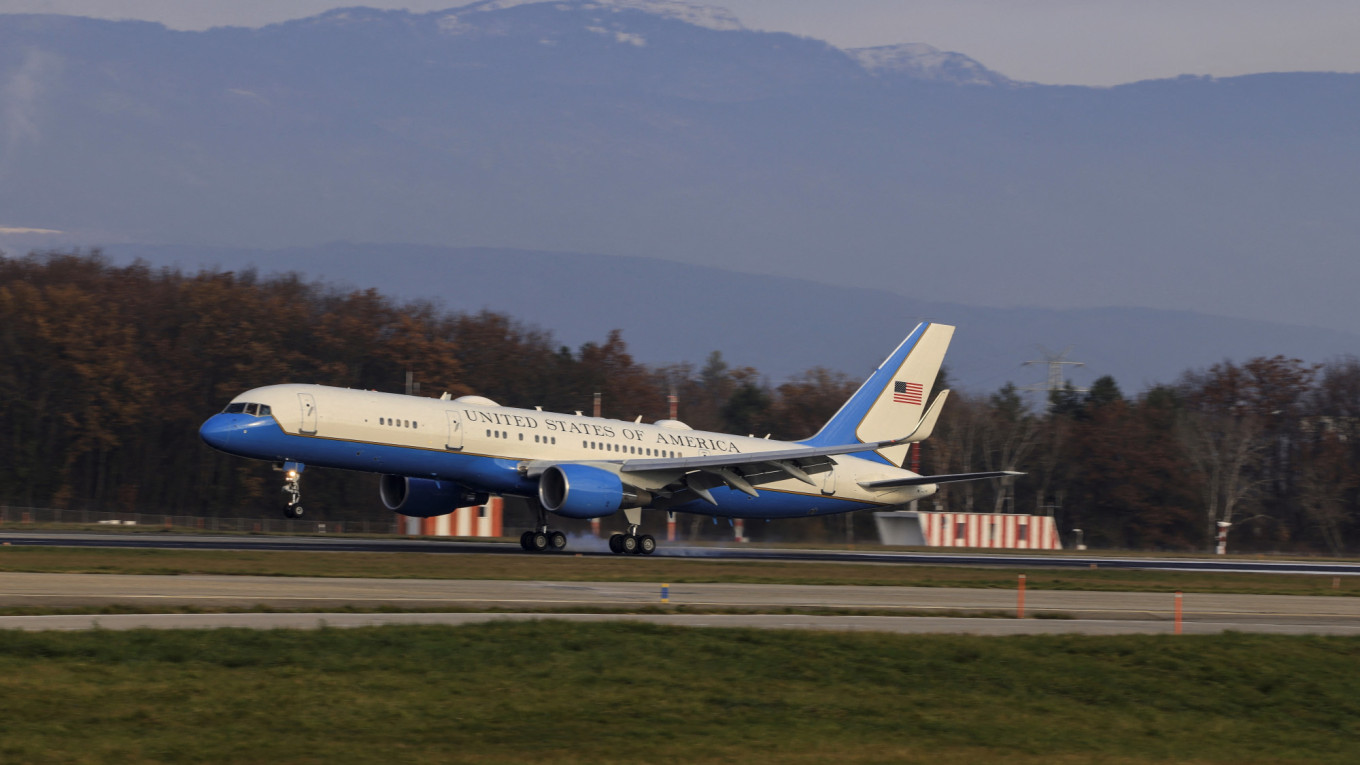
U.S. Secretary of State Marco Rubio arrived in Geneva on Sunday morning to engage in talks regarding a U.S. proposal aimed at ending the conflict in Ukraine. This development comes as Washington indicated a willingness to negotiate on the contentious plan.
Former President Donald Trump has given Ukraine a deadline of November 27 to assess the proposal, which seeks to conclude the nearly four-year war. However, Kyiv is advocating for modifications to a draft that accommodates some of Russia’s stringent conditions.
Before the Ukrainian team met with U.S. representatives on Sunday afternoon, President Volodymyr Zelensky declared that “diplomacy has been revitalized,” expressing optimism that the discussions could yield positive results. He emphasized that “the bloodshed must come to an end” and that “a favorable outcome is essential for us all.”
In Geneva, Andriy Yermak, Ukraine’s chief negotiator, mentioned that his delegation had previously met with senior officials from Britain, France, and Germany before their discussions with Rubio.
Additionally, officials from Ukraine, Europe, and Canada were assembling in the Swiss city, though the specifics of the meeting format were still uncertain.
The U.S. plan to resolve the war has faced resistance from Kyiv, its allies, and members of the U.S. Congress ahead of the Sunday discussions. The 28-point proposal would necessitate that Ukraine relinquish control of certain territories, downsize its military, and forgo NATO membership. Trump stated on Saturday that this was not a final offer and that he aimed to halt the conflict “one way or another.”
Keith Kellogg, Trump’s special envoy for Ukraine, described the plan on Fox News as “still a work in progress.”
Countries allied with Ukraine, which were not involved in the proposal’s drafting, asserted that it needed “additional refinement” as they worked to create a counteroffer at the G20 summit in South Africa to bolster Kyiv’s stance.
“We hope to finalize the details of the peace agreement today,” a U.S. official told AFP on Sunday, speaking on the condition of anonymity.
Joining the U.S. side in the discussions were diplomatic envoy Steve Witkoff and U.S. Army Secretary Daniel Driscoll, while Andriy Yermak led the Ukrainian delegation, representing President Zelensky.
Zelensky stated, “Consultations will be held with partners regarding necessary steps to conclude the war,” highlighting that his representatives know how to safeguard Ukraine’s national interests and prevent further Russian aggression, referencing previous invasions of Crimea in 2014 and a full-scale attack in 2022.
British Prime Minister Keir Starmer remarked that senior officials would convene in Geneva “to progress discussions,” underlining the necessity for robust “security assurances” for Ukraine in any potential agreement.
Starmer confirmed that his national security adviser, Jonathan Powell, would attend the Geneva talks, and Italian diplomatic sources indicated that national security advisor Fabrizio Saggio would also be present.
French President Emmanuel Macron, speaking at a G20 press conference, noted that several aspects of the plan required broader discussion, particularly regarding Ukraine’s NATO relationships and the status of frozen Russian assets in the EU.
He added that the collective of 30 countries supportive of Kyiv, known as the “coalition of the willing,” would conduct a video call on Tuesday following the Geneva discussions.
Western leaders at the G20 summit considered the U.S. proposal “a starting point that necessitates further refinement.” They collectively expressed: “We are unified in the principle that borders should not be altered by military force. We are also apprehensive about the proposed restrictions on Ukraine’s armed forces, which could leave the nation vulnerable to future aggressions.”
Macron reiterated that the proposal included topics requiring broader negotiation, affecting European allies, particularly concerning Ukraine’s relationship with NATO and the management of frozen Russian assets within the EU.
The Kremlin has expressed support for Trump’s plan, yet there is no indication that Russian officials will participate in the Sunday negotiations, according to U.S. sources.
President Vladimir Putin remarked that the proposal could “serve as a groundwork” for a lasting peace agreement, but he warned of further territorial claims should Ukraine withdraw from the talks.
Prior to the discussions, Washington reaffirmed that the Trump plan constitutes official U.S. policy, dismissing assertions from a group of senators who claimed Rubio referred to the proposal as a Russian “wish list.”
Rubio stated on social media late Saturday that “the peace proposal was created by the U.S.” He characterized it as a comprehensive framework for current negotiations, noting that it incorporates insights from both the Russian side and ongoing feedback from Ukraine.
Zelensky, in an address to the nation on Friday, expressed that Ukraine is facing one of its most significant challenges in history and mentioned his intention to propose “alternatives” to Trump’s plan. He noted, “The pressure on Ukraine is immense, presenting a daunting choice: to compromise dignity or risk losing a pivotal ally,” alluding to a potential rift with Washington.
