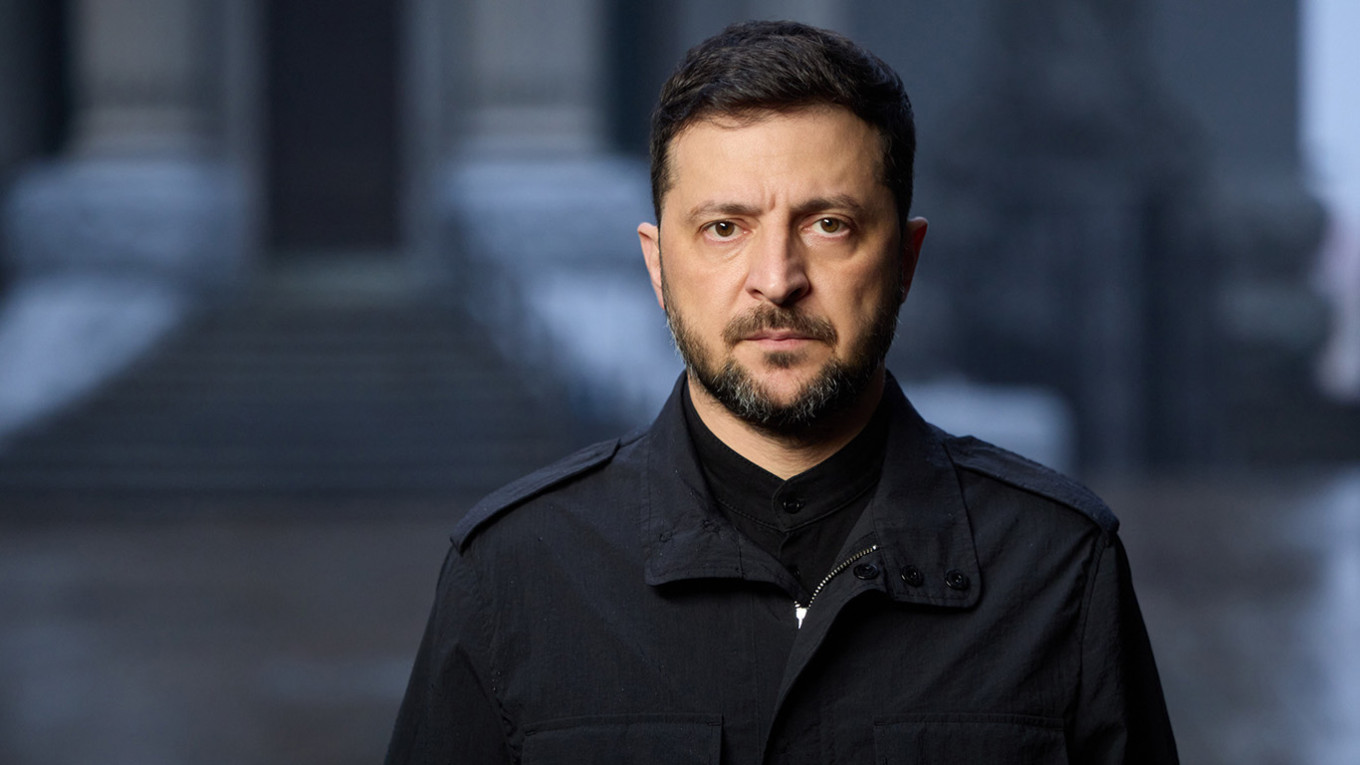
Ukrainian President Volodymyr Zelensky asserted on Friday that he would not “betray” his nation while he publicly opposed a U.S. proposal aimed at concluding the war on terms perceived to heavily favor Russia, even at the potential cost of straining relations with Washington.
In his speech, Zelensky committed to offering “arguments” and “alternatives” to the 28-point plan created by the Trump administration, which took Kyiv and its European allies by surprise after details emerged earlier this week.
The leaked draft plan, which was reviewed by AFP, reportedly asks Ukraine to relinquish territory, significantly reduce its military forces, commit to never joining NATO, and hold prompt elections. In return, Russia would retain control over the lands its troops have occupied, receive relief from sanctions, and be welcomed back into the G8.
Zelensky highlighted that Ukraine is facing one of its “most challenging moments” in history, being confronted with a decision between “the loss of dignity” and “the danger of losing a crucial ally.” He reminisced about February 2022, stating: “We did not betray Ukraine back then, and we will not do so now.”
His office announced that he spoke with U.S. Vice President JD Vance on Friday and plans to directly connect with President Donald Trump in the days ahead.
Additionally, he had an urgent call with the leaders of Britain, France, and Germany, who feel sidelined by the U.S.-led negotiations and have expressed concerns over any agreement that would involve conceding Ukrainian land.
The Trump administration denied collaborating with Russian officials on the proposal, despite reports from various news sources, and the Kremlin indicated on Friday that it had not yet received the revised ceasefire plan.
The White House defended the framework as a “good plan” that would benefit both parties.
However, some European allies of Ukraine have expressed dissent. German Chancellor Friedrich Merz insisted that Ukraine’s military must retain the ability to defend itself, while Berlin emphasized that future negotiations should be based on the current front line, rather than the one outlined in the U.S. draft.
Kremlin spokesman Dmitry Peskov informed reporters at a daily briefing that Zelensky should “negotiate now” to avoid losing more territory, warning that his “freedom to make decisions is diminishing in proportion to the land lost” to Russian forces.