Ukraine has received a fresh peace initiative from the United States, requiring the country to surrender territories under Russian control and significantly reduce its military strength by over half. These conditions closely align with Moscow’s long-standing requests, as revealed by a senior Ukrainian official privy to the details of the proposal in a statement to AFP on Wednesday.
The proposed plan stipulates that Ukraine must acknowledge Russia’s authority over annexed Crimea and other occupied areas, reduce its armed forces to 400,000 troops, and forfeit all long-range weaponry, according to the official, who requested anonymity.
A key point of uncertainty, the official noted, is whether this reflects former President Trump’s agenda or that of his advisors. There is also ambiguity regarding any concessions Russia may need to make in return.
An unnamed official from the White House later informed NBC News that President Trump had approved the draft peace proposal earlier that week.
Before assuming office in January, Trump pledged to swiftly negotiate an end to the conflict in Ukraine, which heightened concerns in European capitals that a hastily arranged agreement could solidify Russia’s territorial advances. However, Trump acknowledged this summer that peace discussions with Moscow were taking longer than he initially anticipated.
Details of the 28-point proposal surfaced just hours after the Kremlin indicated that its position on a potential peace deal had remained unchanged since the meeting between President Putin and Trump in Alaska during a high-profile summit in August.
During a press briefing on Wednesday, Kremlin spokesperson Dmitry Peskov neither confirmed nor denied a previous Axios report that suggested Washington and Moscow were covertly working on a new agreement to resolve the conflict.
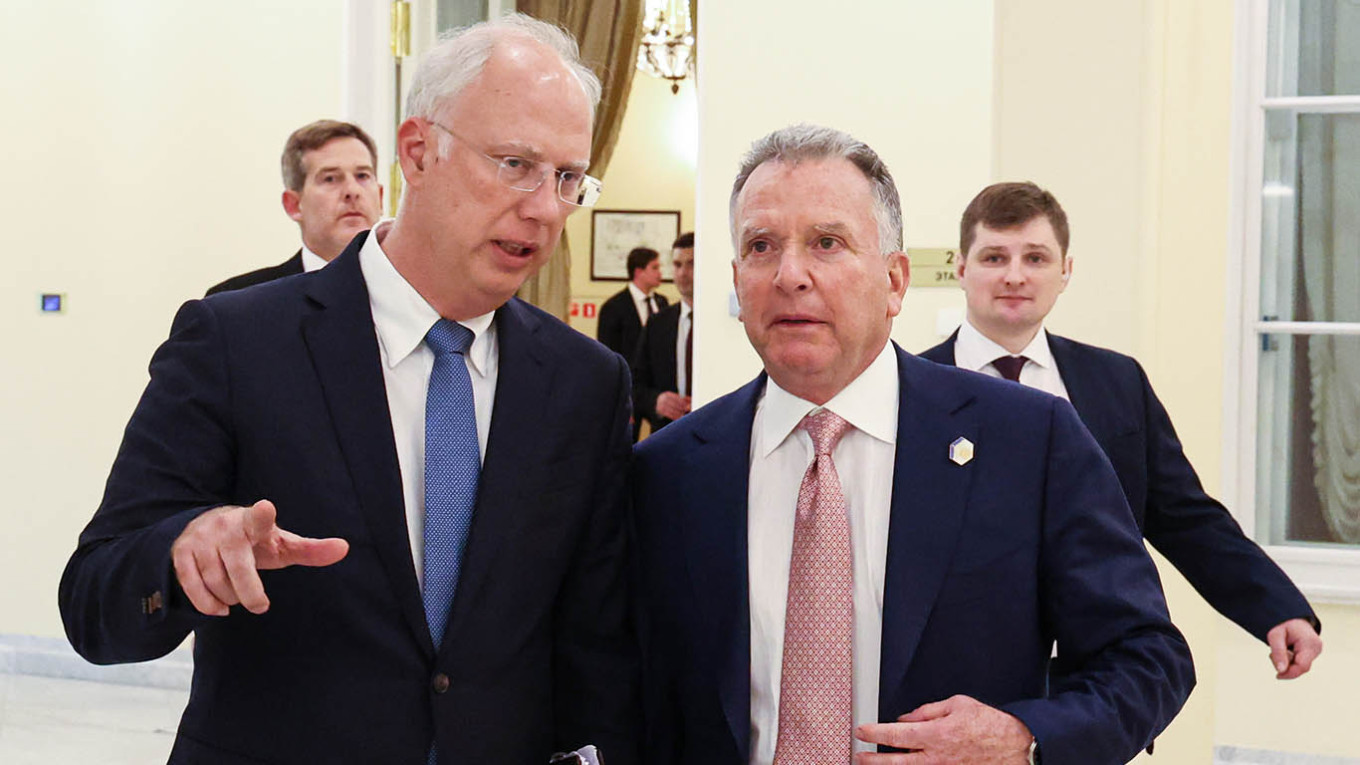
This report indicated that U.S. Special Envoy to the Middle East Steve Witkoff and Putin’s envoy Kirill Dmitriev convened in Miami late last month to talk about a framework inspired partly by Trump’s Gaza ceasefire agreement.
Dmitriev expressed optimism after spending three days collaborating with Witkoff and other Trump advisors during his visit to the United States, stating, “We feel the Russian position is really being heard.”
Moscow has consistently maintained that any peace arrangement must acknowledge its control over Ukrainian territories, enforce neutrality on Kyiv, restrict Ukraine’s military, and lift Western sanctions—demands that Ukraine has outright rejected.
Dmitriev mentioned that the potential ceasefire plan would expand upon unspecified principles established between Trump and Putin at their Alaska summit in August and lead to a written proposal before their next anticipated meeting in Budapest, Hungary.
Describing it as a broader framework, the Kremlin envoy explained that the proposal would not only tackle the ongoing war in Ukraine but also aim to mend U.S.-Russia relations and address Russia’s security concerns.
Axios did not disclose specific details of the 28-point plan but indicated it encompasses four primary areas: peace in Ukraine, security guarantees, European security, and future U.S. relations with both Russia and Ukraine.
Axios reported that the White House is optimistic about bringing Kyiv and European allies on board with the new initiative, anticipating revisions based on their feedback. An unnamed Ukrainian official observed, “We know the Americans are working on something.”
Although Witkoff was slated to meet with President Volodymyr Zelensky in Turkey on Wednesday, he canceled the trip at the last minute. The aforementioned Ukrainian official informed Axios that Witkoff had previously met with Zelensky’s national security advisor, Rustem Umerov, in Miami earlier this week.
In a separate development, media reports surfaced on Wednesday that two senior U.S. Army leaders undertook an unannounced visit to Kyiv for discussions with Zelensky, key military commanders, and lawmakers.
One report suggested that U.S. Army Secretary Dan Driscoll is anticipated to meet with Russian officials later to encourage increased responsiveness from U.S. military intermediaries, following shortcomings in earlier diplomatic channels.
AFP contributed to this report.