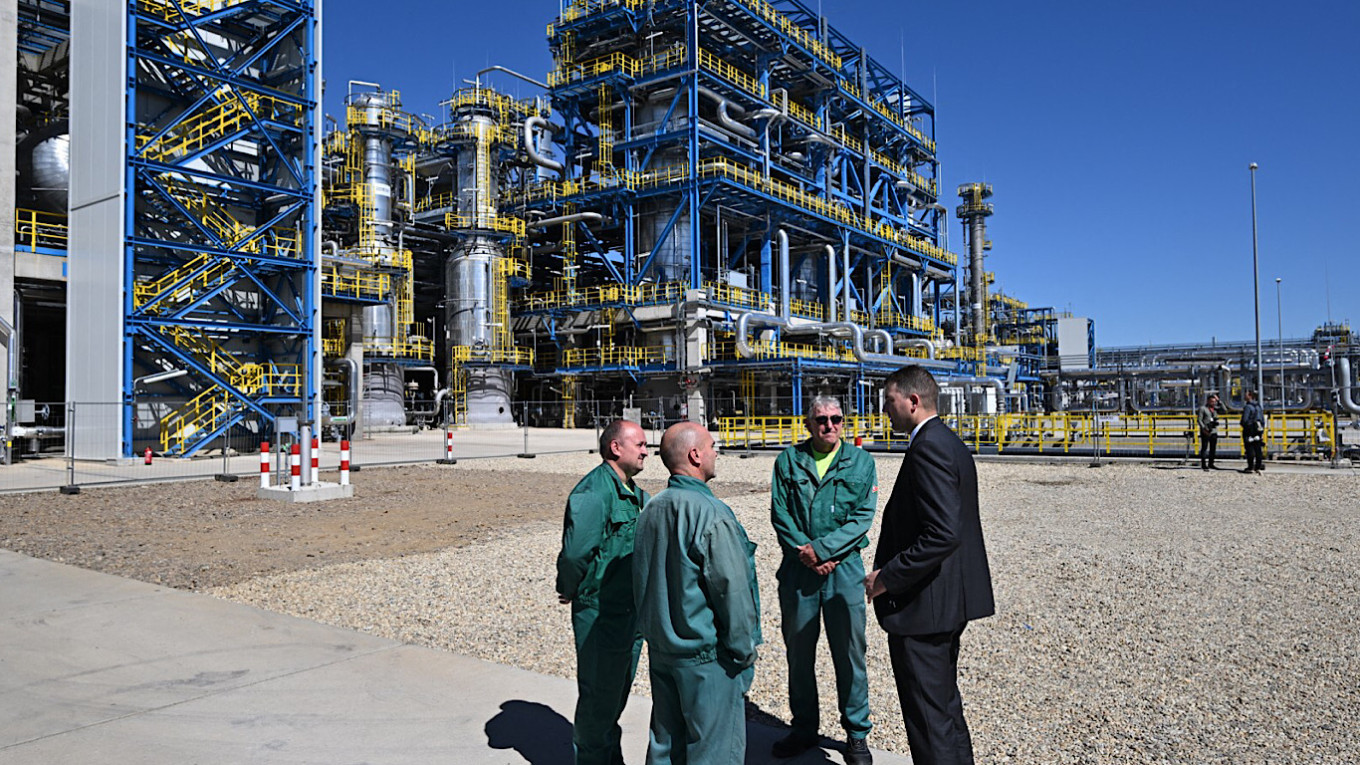
Hungary’s largest oil and gas firm, MOL, announced on Friday that it could source the majority of its crude oil from countries other than Russia if the Druzhba pipeline experiences disruptions. This marks a change from their earlier position, which held that Russian oil was indispensable.
In their third-quarter earnings report, MOL stated, “If there is a significant reduction in crude flow via the Druzhba pipeline, we can enhance our use of the Adriatic pipeline, allowing us to meet approximately 80% of the intake for our landlocked refineries.”
The Adriatic pipeline facilitates crude oil imports by sea into Hungary, subsequently transporting it via pipeline to refineries throughout Central and Eastern Europe.
Bloomberg referred to this announcement as a “turnaround” from the consistent messaging over recent months from Hungarian Prime Minister Viktor Orbán and MOL regarding the complete reliance of Hungary’s refineries on Russian crude oil.
The earnings report from MOL cautioned that this new direction could involve “increased technical risks and costs related to logistics.”
This news came just hours before Orbán’s meeting with U.S. President Donald Trump in Washington, where discussions were anticipated regarding Hungary’s dependence on Russian energy and potential waivers from U.S. sanctions. Zsolt Henádi, MOL’s executive chairman, was part of Orbán’s delegation.
Despite opposing the European Union’s plan to eliminate Russian oil imports by 2027, Hungary continues to acquire approximately 90% of its crude from Russia.
Following Russia’s invasion of Ukraine in 2022, the EU provided Hungary and Slovakia with temporary exemptions, and MOL has benefited from discounted Russian oil supplies.
MOL has committed up to $700 million towards upgrading its facilities to handle non-Russian crude, although reports from Reuters last year indicated that the completion of these upgrades has been postponed until 2026.