Hello and welcome to Regions Calling, your source for news about developments outside Moscow, brought to you by The Moscow Times.
Since the onset of the invasion of Ukraine in February 2022, the regions and ethnic republics of Russia have disproportionately contributed manpower to the front lines. Military recruitment figures have become a crucial metric for regional governors and heads of republics who aim to demonstrate their effectiveness and loyalty to the Kremlin.
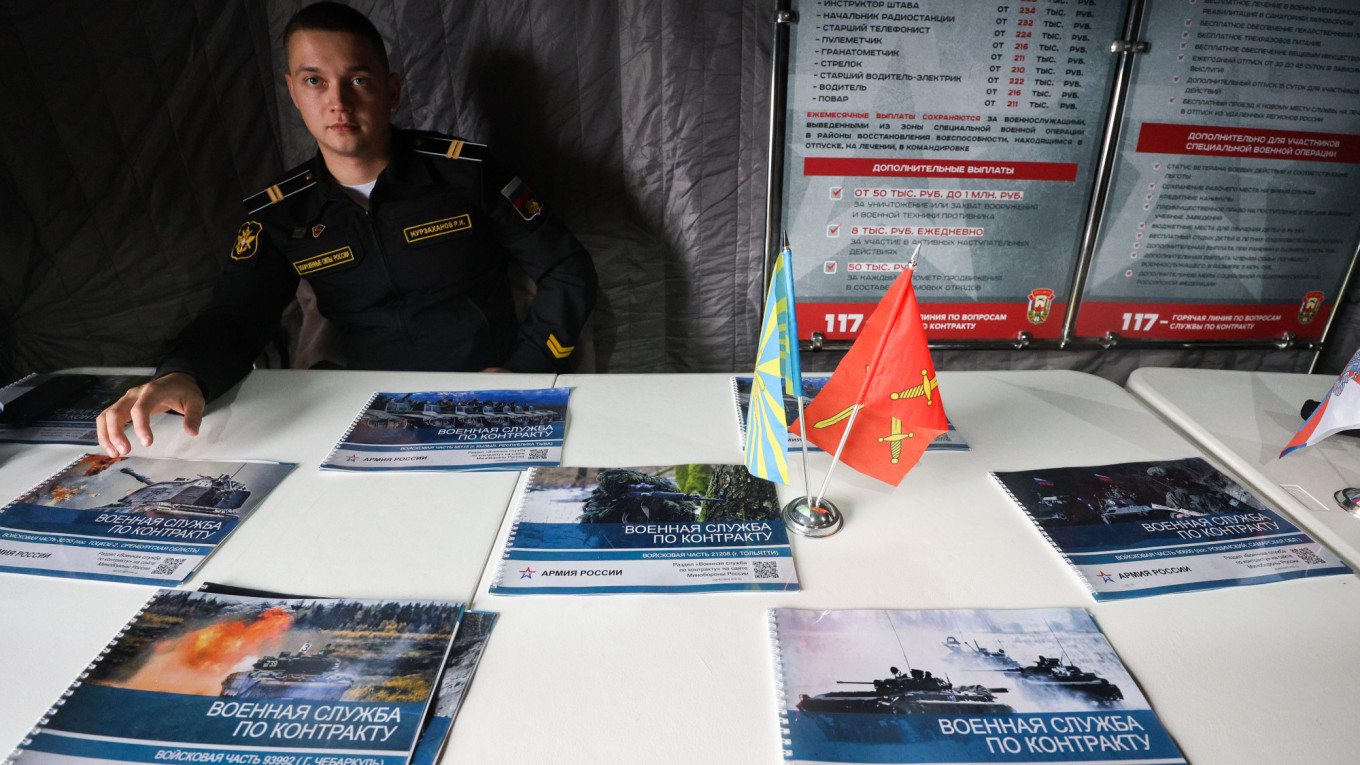
This competitive atmosphere has imposed significant financial strains on the regions themselves. Local governments have been compelled to allocate increasing portions of their budgets for military incentives to outbid neighboring areas and attract potential recruits from within Russia and abroad.
However, earlier this month, at least three regions unexpectedly cut the financial rewards associated with military contracts.
In this edition of Regions Calling, we will explore the possible motivations behind this shift and investigate emerging trends in military recruitment practices among the regions, alongside the latest information regarding Russia’s war casualties.
But first, let’s summarize the significant events that occurred across Russia’s regions in the past two weeks:
Around 500 individuals gathered in Vladivostok, a Pacific port city, to protest a government-imposed increase in fees for scrapping old vehicles. This gathering marked the largest protest in the city of 600,000 since the 2021 demonstrations supporting the late Kremlin critic Alexei Navalny.
The fee increase was expected to raise the cost of at least half of all vehicles imported into Russia by more than 800,000 rubles (approximately $10,000) starting November 1, according to analysts. In response to widespread public dissatisfaction, Deputy Prime Minister Denis Manturov directed the Ministry of Industry and Trade on Tuesday to postpone the fee hike for an additional month.
In the Republic of Altai, activist and human rights advocate Aruna Arna was sent to a pre-trial detention center after a local court ruled that she had violated her parole. Arna, a 39-year-old mother of three, was a prominent figure in ongoing protests against a contentious local self-government reform. You can find more details about her and the current state of affairs in the southern Siberian republic in the previous edition of Regions Calling.
Meanwhile, officials in the Republic of Sakha (Yakutia), Russia’s largest region, have proposed constitutional amendments aimed at consolidating power for its Kremlin-aligned leader. If ratified, these changes would grant Sakha’s head, Aysen Nikolayev, near-total authority over the region’s extensive natural resource reserves, further diminish the limited autonomy of local municipalities, and deny residents their constitutional right to access free secondary education.
These proposed amendments have drawn sharp criticism from independent activists both in Sakha and in exile, as well as from members of Russia’s so-called “systemic opposition.”
In a separate matter, an online vote regarding the design of Russia’s new 500-ruble note (approximately $5), which is dedicated to the North Caucasus Federal District, ignited a feud between Chechen officials and pro-war bloggers. You can read more about this contentious vote, along with the wave of memes it generated, here.
**‘Concerning Signal’: Why Russian Regions Are Cutting Military Recruitment Incentives**
This month, Tatarstan’s authorities significantly reduced the one-time financial incentive for individuals signing contracts with the Russian army, slashing it from a record 2.7 million rubles (approximately $34,000) to just 400,000 rubles (around $5,000).
While prior increases in payments had been promoted through state-affiliated media, this latest reduction was not publicly announced and was instead uncovered by RFE/RL’s Volga-Ural service, Idel.Realii.
Neighboring republics such as Chuvashia and Mari El have tacitly followed Tatarstan’s lead, lowering their military recruitment incentives to 400,000 rubles from previous amounts of 2.1 million and 2.6 million rubles, respectively.
“There have been several similar incidents since the beginning of this year,” noted researcher Maria Vyushkova, mentioning cases in Belgorod and the Yamal-Nenets autonomous district.
“This was primarily due to the finite nature of regional budgets,” she elucidated, adding that she specializes in analyzing regional and ethnic disparities in Russia’s wartime casualties.
**‘Exploiting Desperation’**
With military service offering enlistment bonuses and salaries that exceed regional averages, financial incentives are often the decisive reason for men choosing to participate in Russia’s military efforts in Ukraine.
A decree from President Vladimir Putin last year mandates that all regions provide soldiers who sign contracts to serve in Ukraine with a minimum bonus of 400,000 rubles, supplemented by an additional 400,000 from the federal budget.
“The average salary in Buryatia is around $600. [Buryatia’s head] Alexei Tsydenov is prepared to offer $12,700 upfront to individuals recruited for this war,” remarked Anna Zueva, an independent journalist from Buryatia.
Buryatia, which has a population of under 1 million, ranks among the top regions in Russia for war casualties per 10,000 working-age men. It also sits in the top ten for total casualties, with over 3,500 confirmed deaths as reported by the BBC’s Russian service and the Mediazona news outlet.
According to Vyushkova’s analysis, the scale of the mobilization campaign in Buryatia in 2022 was unmatched in Russia.
With a casualty rate of 20.48 per 10,000 working-age men among those mobilized, Buryatia’s losses were nearly double that of the next hardest-hit region, Tyva.
In April, Buryatia increased its enlistment bonuses from 1 million to 1.6 million rubles, which included 1 million from the regional budget and an additional 200,000 from local businesses.
This month, the Republic of Adygea, along with the Voronezh and Tyumen regions, followed suit, with Tyumen offering 3 million rubles for a military contract—the highest compensation among Russian regions.
“Increasing government payments exploits economic hardship. While people may not currently be queuing at military enlistment offices, financial incentives often outweigh the fear of death for residents in poorer regions with limited job prospects,” Zueva explained to The Moscow Times.
Vyushkova echoed this sentiment, stating, “Greed and desperation serve as vastly different motivations for joining the military.”
**‘Concerning Sign’**
Although generous enlistment bonuses have been vital in helping Russia maintain its troop levels throughout nearly four years of war, coercion has played an equally significant role.
The decision by regions such as Tatarstan, which has one of the highest casualty rates in the country, to reduce recruitment incentives is not an indication that officials intend to scale back recruitment efforts.
“This is a worrying trend that suggests they may shift towards coercive methods instead of relying solely on financial incentives,” Vyushkova cautioned.
In their push to meet quotas established by Moscow, local authorities have implemented a range of recruitment strategies, including targeting labor migrants, homeless individuals, unemployed men, and even prisoners.
Recent reports indicate that individuals apprehended for minor offenses are being pressured to sign military contracts under the threat of harsh legal consequences, according to Vyushkova.
She suspects that this scheme is being orchestrated extrajudicially by judges and state-appointed lawyers working in collusion.
In a similar vein, Vyushkova believes that regional leaders intentionally reduced payments in hopes of deceiving men into signing up for the war with the expectation of financial rewards.
“Once a man walks through the doors of the military enlistment office, there’s a likelihood he could be coerced into signing a contract, even if he later realizes the payment isn’t so generous,” Vyushkova explained. “There are no established rules or laws that are followed after he crosses that threshold.”
For more on this topic…
Activists display the flag of Tatarstan near a memorial stone for Tatar warriors who were killed during Tsar Ivan the Terrible’s siege of Kazan in 1552.
Every year on October 15, Volga Tatars around the world observe Xäter köne (translated as “Remembrance Day” in Tatar), a memorial date created after the dissolution of the Soviet Union to honor the defenders of Kazan and to commemorate the Tatars’ loss of their sovereignty.