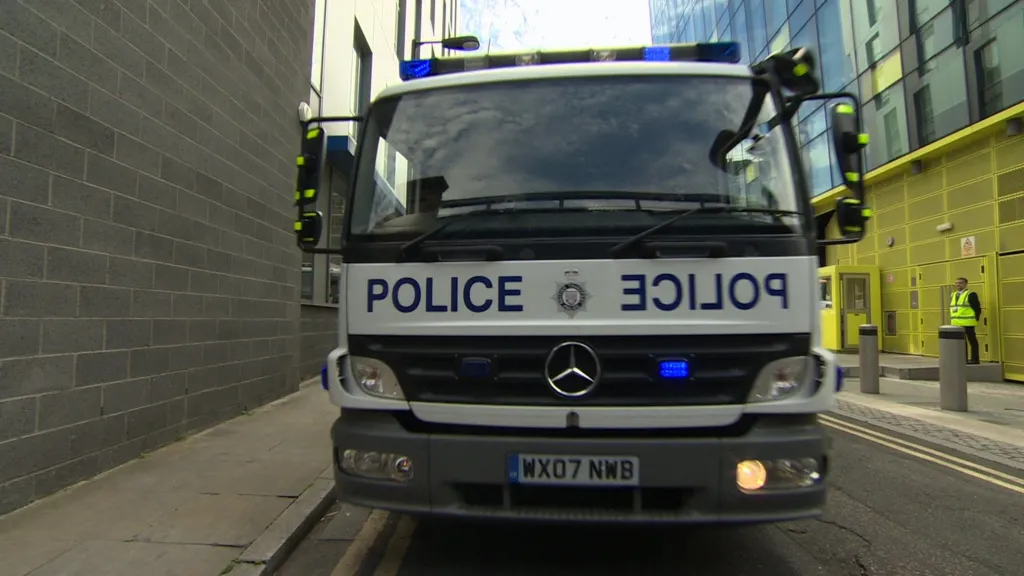
A significant suggestion aimed at enhancing passenger safety following the 7/7 bombings in London has been abandoned, according to BBC London.
From its initiation until 2024, vehicles operated by Transport for London’s Emergency Response Unit (ERU) were manned by a British Transport Police (BTP) officer, enabling them to use blue lights to expedite the arrival of specialized engineers to emergency situations.
This blue light functionality was implemented in 2012 in response to a report by the London Assembly Transport Committee on the events of 7/7. However, this privilege was rescinded in 2024. A document from Transport for London (TfL), reviewed by BBC London, stated that the withdrawal aimed to reduce the risk of collisions. The BTP has been contacted for their input on the matter.
On July 7, 2005, explosions were carried out on London’s public transit during the busy morning commute, resulting in the deaths of 52 individuals and injuring over 770 more.
The committee conducted a thorough investigation to pinpoint “lessons learned.”
In its findings, it acknowledged the essential role the ERU played in responding to the 7/7 attacks, noting their expertise in managing emergencies involving trains. Notably, the committee expressed surprise that the ERU vehicles did not possess blue lights, couldn’t automatically access bus lanes, and were required to pay the congestion charge. It urged TfL to advocate for obtaining blue light status for ERU vehicles.
Following this, a trial for blue light use commenced in 2012 and was made permanent until its discontinuation in 2024.
The TfL document indicates that the blue lights were removed last year as part of a review process. It states: “The capability for blue light response was revoked to reduce collision risks.”
The BTP’s evaluation determined that the circumstances requiring deployment of the Emergency Response Units do not align with national guidelines for Grade I dispatch.
The ERU vehicles still retain the ability to operate within bus lanes and are exempt from the congestion charge, consistent with the committee’s recommendations.
Claire Mann, TfL’s Chief Operating Officer, reassured Londoners, stating, “I want to confirm that our Emergency Response Unit vehicles can still respond rapidly and effectively to any incidents on London’s transport network, collaborating closely with other emergency service partners.”
The committee’s report emphasized that ERU teams are highly skilled in handling emergencies related to trains and equipped with specialized tools for assisting in tunnels, dismantling trains, and performing rescues from compromised trains.
They are frequently deployed to manage incidents involving individuals on the tracks and various other emergencies.
When the blue light trial was first introduced in 2012, TfL intended to significantly reduce response times to incidents and minimize disturbances and delays for passengers.
In 2012, Mike Brown, who was then the managing director of London Underground and London Rail, remarked that “being able to operate with blue lights and sirens would allow our Emergency Response Unit’s specialist engineers to navigate through heavy traffic more effectively, enabling faster incident responses and quicker service restoration for our customers.”
At that time, Alan Pacey, who was the BTP Assistant Chief Constable, commented on the initiative: “Utilizing blue lights to expedite the arrival of engineers and equipment will enhance passenger safety by swiftly addressing stuck trains in tunnels. The sooner we restore service, the fewer safety concerns will arise related to crowding around stations. Once on-site, the officer in the ERU vehicle will carry out regular policing duties, collaborating with colleagues to tackle any crime or safety issues and facilitate the resumption of service.”
Most other recommendations from the report, along with those proposed by a coroner, have been enacted, including the rollout of new radio communication systems and designated meeting points for emergency services during incidents.