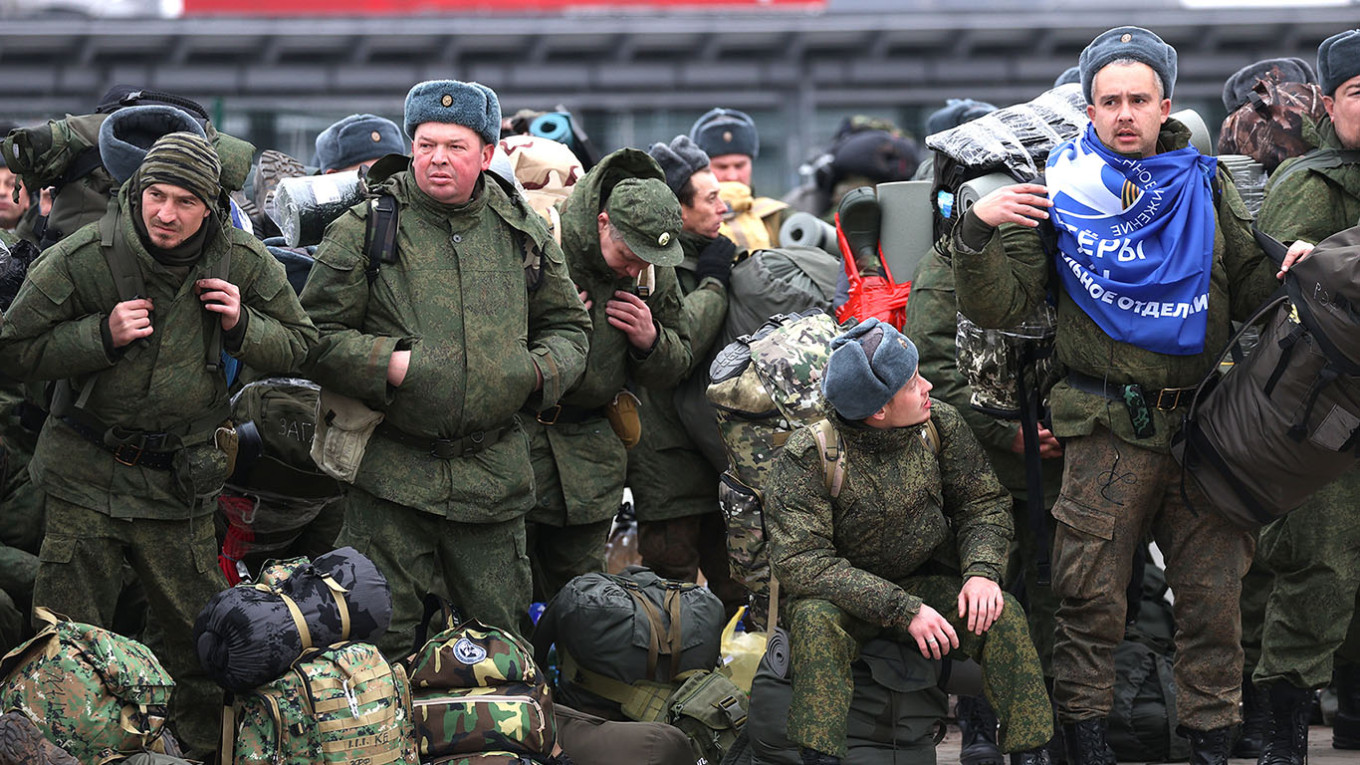
Since the beginning of Moscow’s full-scale invasion of Ukraine, Russia’s regions and ethnic republics have disproportionately shouldered the burden of supplying troops to the front lines.
With no peace agreement on the horizon, regional leaders are preparing for yet another year of striving to meet the military recruitment quotas imposed by the Kremlin—an increasingly challenging task.
The Moscow Times spoke with Maria Vyushkova, a prominent researcher specializing in regional and ethnic disparities in Russia’s war casualties, to gain insights on how Moscow will seek new recruits in 2026.
This interview has been condensed for brevity and clarity.
**The Moscow Times:** Do you anticipate that officials in Russia’s regions and ethnic republics will adopt new strategies for military recruitment in the upcoming year?
**Maria Vyushkova:** Absolutely.
The year 2025 saw the highest number of military casualties for the Russian army since the initiation of the full-scale invasion of Ukraine. To sustain the war efforts, the Russian military requires a steady stream of new soldiers.
At the same time, both federal and regional budgets in Russia are experiencing significant strains. Authorities are running low on the funds necessary to incentivize men to enlist in the military, leading to reductions in contract payments in some areas.
As a result, we can expect to see a rise in recruitment tactics that rely on coercion and deceit. Companies may be mandated to supply a certain number of ‘volunteers’ for the front lines, which they will then push their male employees to join. There might also be unlawful detentions aimed at coercing detained men into signing contracts.
Moreover, conscripts will face increased pressure to sign contracts directly from military officials. In 2024, experts estimated that around 30% of conscripts ended up agreeing to these contracts, indicating potential for this percentage to rise.
Enlistment in Russia has become incredibly perilous, with reported physical abuse, sleep deprivation torture, forgery of signatures on contracts, and even fatal consequences for those who refuse to enlist. I believe that such practices will become widespread in 2026.
**MT:** Do you foresee any shifts in the regions most affected by military casualties?
**MV:** The republics of Bashkortostan and Tatarstan, which experienced the highest total regional losses in 2025, are likely to remain at the forefront. Conversely, despite its large population, Moscow is expected to remain relatively unaffected.
In 2025, military losses surged significantly in the Perm and Kirov regions, and this trend is anticipated to continue next year.
I expect that most major trends will remain consistent unless a second mobilization takes place, which would drastically change the scenario.
**MT:** How about the per capita military death rates?
**MV:** Ethnic republics will continue to dominate the top ranks for deaths per capita.
The republics of Tyva, Buryatia, and Altai, along with the Chukotka autonomous district, will persist as leaders. These regions were hit disproportionately hard by the 2022 mobilization, and the same could occur if a second mobilization is announced.
Interestingly, the North Caucasus republics, except for North Ossetia, report relatively low per capita war fatalities. Only Moscow and St. Petersburg rank lower in this regard.
One can only speculate why this is the case. Perhaps the Kremlin is concerned about instability erupting in the Caucasus if numerous individuals with military experience become armed? Yet, the more pressing question is whether this situation will change next year due to the soldier shortages at the front.
**MT:** What is the current situation in Buryatia, your home region?
**MV:** The situation in Buryatia is truly distressing for me. At the start of 2025, Buryatia was no longer among the top 10 regions for total war deaths, leading me to hope that its people had effectively ceased their involvement in this conflict.
However, the republic has now re-entered this unfortunate list at eighth place, a development I attribute to the increase in financial incentives for signing military contracts introduced in April.
This policy shift is noteworthy. Buryatia was already economically challenged prior to the latest budget crisis. While some regions opted to lower compensation, Buryatia chose to raise its payments and maintain them at elevated levels.
This decision likely stems from regional leaders monitoring recruitment trends for contract soldiers in Buryatia. When they noticed a decline, they opted to increase financial incentives to motivate residents to enlist.
Alexei Tsydenov, Buryatia’s leader, is relatively young and ambitious, yet he has few resources to offer Moscow aside from manpower—Buryatia lacks significant oil reserves and essential industries.
Currently, providing troops for the conflict is seen as a key measure of effectiveness for Russian governors. Hence, the fact that Buryat officials have not decreased military payments clearly signals their political priorities.