Picture Jamie Dimon of JPMorgan Chase accusing Jeff Bezos of defrauding the U.S. government out of billions in tax revenue by providing discounts to Amazon customers. Now imagine Federal Reserve Chair Jerome Powell releasing a letter supporting Dimon, which gets leaked to the media, prompting Bezos to respond with his own open letter in The Wall Street Journal.
It may sound complex, but something similar has recently unfolded in Russia.
A debate that began as a niche policy discussion has evolved into a significant public dispute between Russia’s largest banks and financial authorities and the country’s leading e-commerce players regarding the issue of discounts.
The conflict ignited in mid-November when German Gref, the powerful CEO of state-owned Sberbank, used an industry conference to accuse online marketplaces of undermining traditional banks. Gref contended that e-commerce platforms were unfairly providing customers with incentives to use their own banking services instead of conventional bank cards.
Prominent banks like Sber, VTB, and T-Bank had previously expressed concerns to lawmakers, arguing that these discounts distorted competition.
However, Gref intensified the debate, asserting that such practices artificially lowered retail prices and, consequently, deprived the government of tax revenue. He projected the potential revenue loss for 2025 to be around 1.5 trillion rubles (approximately $19.4 billion).
“To put it simply, all these discounts are funded by you and me,” the CEO stated, claiming that e-commerce companies were gaining market share due to “non-competitive conditions created by the state.”
Gref further declared, “Marketplaces operate without regulation in our country. We need to place them under proper regulatory oversight.”
The notion that Russian e-commerce firms run their own banks may be surprising, as most nations have laws against such arrangements. A notable exception is China, where Alibaba operates its bank, MyBank, through its financial affiliate Ant Group.
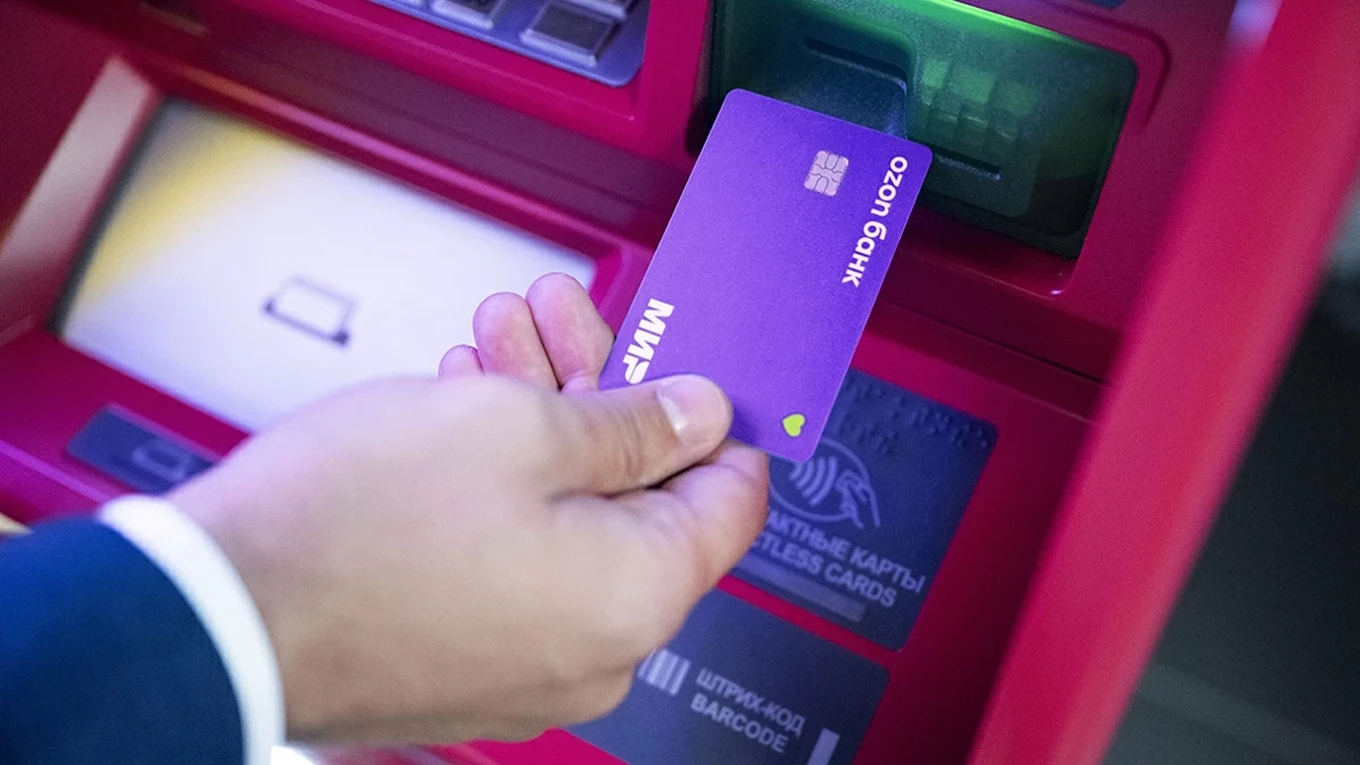
In Russia, online marketplaces ventured into finance in 2021, not by establishing banks from the ground up but by acquiring smaller, existing institutions. Consequently, entities like Wildberries Bank, Ozon Bank, and Yandex Bank have emerged as fully licensed lending establishments within extensive retail ecosystems.
This development has been rapid. By late 2024, marketplaces commanded 17% of the banking market based on the number of active cards and 4.7% of consumer loans, according to research firm Frank RG. The major marketplace banks issued 57 million cards in just 2024, though only around half of the users activated them.
Disputes similar to those currently occurring in Russia are not uncommon when non-bank entities start offering banking-like services, noted economist Nick Trickett, who specializes in Russia.
“This is a fairly frequent issue in antitrust and competition regulations,” Trickett explained to The Moscow Times. “There’s also the matter of regulating platforms that essentially function as financial institutions, despite lacking deposit insurance.”
For example, in the U.S., airlines can collaborate with banks but are prohibited from owning them. In Russia, these platforms own fully licensed financial entities, leading to markedly different degrees of integration, control, and risk.
Moreover, Trickett suggested that by framing discounts as lost tax revenue, Gref might be seeking to “tap into patriotic sentiments” as the Russian government searches for methods to enhance revenue in the face of declining oil and gas profits alongside soaring military costs.
“He would likely garner support from regulators and perhaps even the presidential administration, should they take an interest,” Trickett added.
While Gref’s remarks rattled the industry, tensions with e-commerce platforms escalated significantly days later, triggered by a leaked letter from Central Bank Governor Elvira Nabiullina to Economic Development Minister Maxim Reshetnikov.
In this correspondence, Nabiullina, aligning with the banks, urged the Federal Anti-Monopoly Service to prohibit discounts linked to in-platform banking products and even suggested banning platforms from promoting their financial services on their websites.
Ozon refuted these claims, asserting that it had previously engaged with banks on providing equal access to loyalty programs and was in discussions with over a dozen lenders about standardizing them.
The Association of E-Commerce Companies, which represents platforms like Wildberries, Ozon, and Yandex.Market, countered that banks had utilized card-linked cash-back incentives within their own ecosystems for years without facing similar scrutiny.
Government ministries and agencies seemed hesitant to take a definitive stance following the leak of Nabiullina’s letter.
The Economic Development Ministry told Kommersant it was reviewing her recommendations, but pointed out that Russia’s framework for platform economics already allows for government regulation of marketplace pricing. Any new measures would need careful assessment to avoid adverse impacts on sellers, consumers, or the digital economy.
The Anti-Monopoly Service echoed a cautious sentiment.
“The largest platforms are already subject to competition law,” stated the agency’s deputy head Adilya Vyaseleva, noting that practices such as differentiated pricing and ecosystem cash-backs “are not explicitly prohibited.”
According to Trickett, beneath the surface of this public dispute lies a deeper systemic conflict.
“Banks are frustrated by their lack of monopoly status, especially state banks that seek to solidify their role as central players in controlling credit flow,” he remarked.
In the wake of the leak of Nabiullina’s proposals, Tatiana Kim, the billionaire founder of Wildberries and the richest woman in Russia, published an open letter in Kommersant directed at the Central Bank, parliament, and the government. She accused banks of attempting to eliminate competition under the pretense of tax concerns.
Kim claimed that Russia’s major banks earned 24 times more than e-commerce banking in the first ten months of 2025, while also spending significantly on their own loyalty programs.
“Sber alone spent approximately 790 billion rubles on non-banking assets in 2024, the majority of which went towards loyalty programs,” Kim wrote, arguing that traditional banks were not driven by fairness but by a desire to protect their commission income and avoid offering discounts to clients purchasing through e-commerce.
However, some analysts have pointed out inconsistencies in her comparisons. Semyon Novoprudsky, a business commentator at BFM, highlighted that Kim compared profits from marketplace banking services with overall bank profits — an unfair comparison, as banking constitutes only a small segment of marketplace revenues.
Still, like Trickett, Novoprudsky believes that the conflict reflects a more profound struggle.
With declining card limits and slowing credit demand in Russia, conventional banks continue to be profitable but are increasingly concerned about the ambitions of marketplaces to evolve into comprehensive ecosystems, a role that banks have developed over the last decade.
“The Central Bank doesn’t oversee trade, but it does oversee marketplace banks. The government regulates trade but not banking,” Novoprudsky noted. “These governmental entities will inevitably need to come to an agreement at some point.”
For banks, the concern likely isn’t merely that marketplaces own banks, but that the data advantage of marketplaces provides them with power that traditional banks lack, analysts contend.
“Marketplaces can offer discounts tailored specifically to each user, owing to their insights into customer behavior,” said Oleg Abelev, head of analytics at investment firm Rikom-Trust. “Traditional banks are unable to do that.”
In the meantime, marketplaces may be bracing for regulatory actions.
Analysts predict that if the government restricts bank-associated discounts, platforms might pivot by expanding subscription services akin to Amazon Prime, like Ozon Premium, which offer free shipping, rewards, and in-platform currencies.
As officials deliberate on their options in this ongoing debate, the public dispute underscores a significant breakdown in the communication between Russia’s business community and its regulators, Trickett asserted.
“There’s a history of major businesses becoming so frustrated, feeling they have no one to talk to, that they essentially panic,” he commented to The Moscow Times. “And e-commerce platforms have not been seen as strategically crucial by the Kremlin.”
Kim’s letter implies that companies “lack clarity on whom to approach because there’s no one actually listening,” he noted. “The feedback systems that existed a decade ago are now broken. They simply no longer function.”